Comparing Healthcare Benefits Packages: Job Offer Insights

When evaluating job offers, understanding and comparing healthcare benefits packages is crucial to ensure you secure comprehensive coverage that aligns with your needs and financial situation in the United States.
Navigating the complexities of job offers goes beyond salary; the healthcare benefits package can significantly impact your financial well-being and access to medical care. For many, understanding and effectively comparing healthcare benefits packages: what to look for in job offers is as critical as the compensation itself. This guide will help you dissect these crucial components, ensuring you make an informed decision that secures your health and financial future.
Understanding the Basics of Health Insurance Plans
Before diving into the specifics of a job offer, it is essential to grasp the fundamental types of health insurance plans available. Each plan type comes with its own set of rules regarding network providers, referrals, and cost-sharing, directly influencing your out-of-pocket expenses and access to care. Knowing these distinctions empowers you to ask the right questions and accurately assess a package’s value.
Healthcare in the U.S. can be complex, and understanding the core differences between plans will serve as your foundation. This knowledge will help you determine which plan best fits your individual or family’s healthcare needs and preferences. It’s not just about having insurance; it’s about having the right insurance.
Key Health Insurance Plan Types
Most employer-sponsored health plans fall into a few primary categories. Understanding these will be your first step in comparing offers.
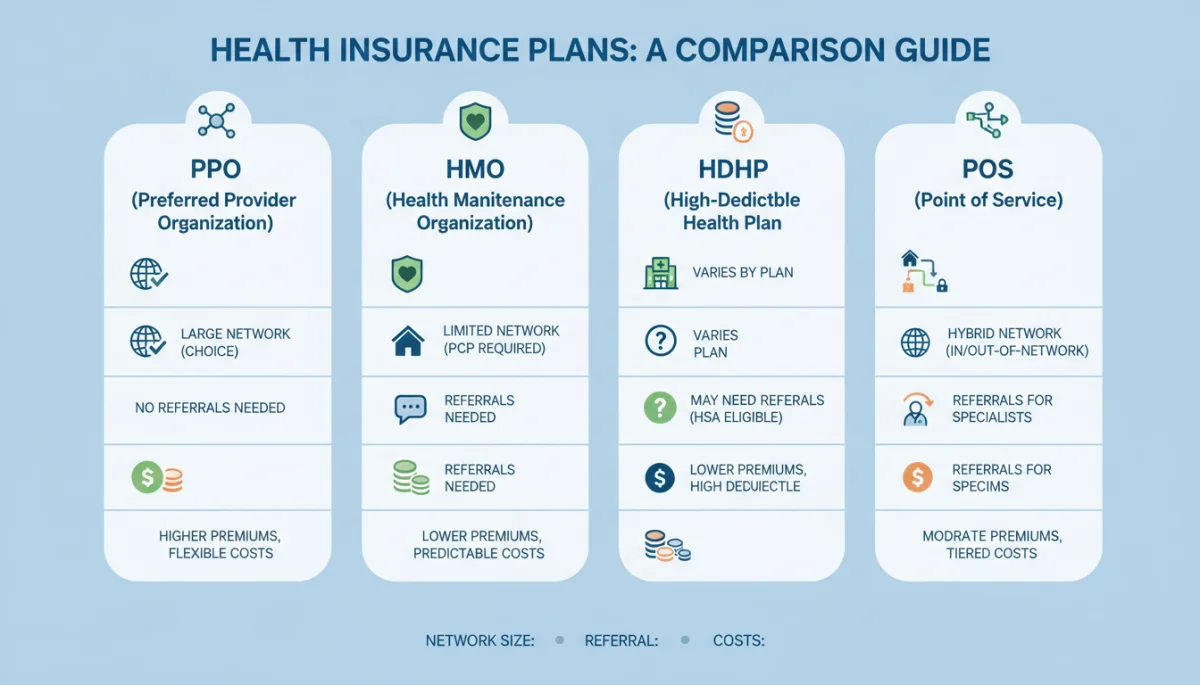
- HMO (Health Maintenance Organization): Typically requires you to choose a primary care physician (PCP) within the network who then refers you to specialists. Generally has lower premiums and out-of-pocket costs but less flexibility in choosing providers.
- PPO (Preferred Provider Organization): Offers more flexibility in choosing doctors and hospitals, even outside the network, though at a higher cost. You usually don’t need a referral to see a specialist, but out-of-network care will be more expensive.
- POS (Point of Service): A hybrid plan combining elements of both HMO and PPO. You may need a PCP referral for in-network care, but you can also go out-of-network for certain services, usually at a higher cost.
- HDHP (High-Deductible Health Plan): Features higher deductibles than traditional plans but often comes with lower monthly premiums. These plans are often paired with a Health Savings Account (HSA), allowing you to save and pay for qualified medical expenses tax-free.
Each plan type has trade-offs concerning cost, flexibility, and access. Your personal healthcare needs, frequency of doctor visits, and financial situation should guide your preference. A thorough review of these basic structures is crucial before delving into the finer details of any offer.
Decoding Deductibles, Co-pays, and Coinsurance
Beyond the plan type, understanding the financial terminology associated with healthcare benefits is paramount. These terms directly dictate how much you will pay out-of-pocket for medical services before your insurance begins to cover costs fully. A seemingly attractive premium can hide substantial costs if these elements are high.
Many job seekers focus solely on the monthly premium, which is only one piece of the financial puzzle. The deductible, co-pay, and coinsurance are equally, if not more, important when calculating the true cost of your healthcare coverage. Being well-versed in these terms allows for a more accurate comparison of overall value.
Essential Cost-Sharing Terms
These are the financial mechanisms that determine your share of healthcare costs.
- Deductible: This is the amount you must pay for covered healthcare services before your insurance plan starts to pay. For example, if your deductible is $2,000, you’ll pay the first $2,000 of covered services yourself.
- Co-pay (Co-payment): A fixed amount you pay for a covered healthcare service, usually when you receive the service. For example, you might pay a $30 co-pay for a doctor’s visit, and your insurance pays the rest.
- Coinsurance: Your share of the cost of a covered healthcare service, calculated as a percentage (e.g., 20%) of the allowed amount for the service. You pay coinsurance after you’ve met your deductible.
- Out-of-Pocket Maximum: The most you’ll have to pay for covered services in a plan year. Once you reach this limit, your health plan pays 100% of the cost of covered benefits. This is a critical figure for understanding your maximum financial exposure.
It is vital to consider how these costs align with your expected healthcare usage. If you anticipate frequent doctor visits or potential medical procedures, a plan with a lower deductible and out-of-pocket maximum might be more financially advantageous, even if it has a slightly higher premium. Always look at the complete picture of potential expenses.
Assessing Provider Networks and Coverage Limitations
The best health insurance plan is only effective if you can use it to see your preferred doctors and access necessary facilities. The provider network defines which doctors, hospitals, and pharmacies are covered by your plan. A restricted network could mean changing long-standing providers or paying significantly more for out-of-network care.
Beyond network size, it’s crucial to understand any specific coverage limitations or exclusions. Some plans may not cover certain treatments, medications, or alternative therapies that are important to you. Always scrutinize the plan’s formulary (list of covered drugs) and service exclusions.
Key Aspects of Network and Coverage
These details can significantly impact your access to care and overall satisfaction with a benefits package.
- In-Network vs. Out-of-Network: Confirm if your current doctors and hospitals are within the plan’s network. Out-of-network care typically incurs much higher costs, if covered at all.
- Referral Requirements: Determine if you need a referral from a primary care physician to see specialists. This is common in HMO plans and can affect how quickly you access specialized care.
- Geographic Coverage: Especially important if you travel frequently or have dependents living in different areas. Ensure the plan offers adequate coverage where you and your family reside or might need care.
- Specific Service Exclusions: Review the plan documents for any services explicitly not covered, such as certain types of dental work, vision care (beyond basic screenings), or experimental treatments.
A comprehensive review of the provider network and coverage limitations will prevent unexpected costs and ensure you maintain access to the healthcare professionals and services you value. Don’t assume all plans cover everything; due diligence here is critical.
Beyond Medical: Dental, Vision, and Other Ancillary Benefits
While medical insurance is often the primary focus, a holistic healthcare benefits package extends to dental, vision, and other ancillary benefits. These components are vital for overall health and can represent significant savings. A job offer with robust medical but weak dental or vision coverage might not be as appealing as one with a more balanced offering.
Many individuals overlook these benefits, only realizing their importance when a dental emergency or vision correction is needed. These benefits can often be negotiated or supplemented, but it’s always better to start with a strong employer-provided package.
Evaluating Additional Health Benefits
Consider these elements when comparing the full scope of a benefits package.
- Dental Insurance: Look at coverage for preventative care (cleanings, X-rays), basic procedures (fillings, extractions), and major procedures (root canals, crowns). Understand deductibles, co-pays, and annual maximums.
- Vision Insurance: Check for coverage on eye exams, prescription glasses, contact lenses, and discounts on laser eye surgery. Review the frequency limits for these benefits.
- Life Insurance: Many employers offer basic group life insurance as a standard benefit, often a multiple of your salary. Evaluate if this coverage is sufficient for your family’s needs or if supplemental options are available.
- Disability Insurance (Short-term and Long-term): This provides income replacement if you become unable to work due to illness or injury. Understand the waiting periods, benefit duration, and percentage of income replaced.
- Wellness Programs: Some companies offer wellness initiatives, gym memberships, or health coaching, which can contribute to overall well-being and potentially lower healthcare costs.
A strong ancillary benefits package demonstrates an employer’s commitment to the comprehensive well-being of its employees. These benefits can add substantial value to your total compensation and should not be overlooked during your comparison.
Understanding Prescription Drug Coverage (Formulary)
For many, prescription medications are a regular and necessary part of healthcare. The quality of a healthcare plan’s prescription drug coverage, often outlined in its formulary, can significantly impact your out-of-pocket costs. A plan that covers your essential medications generously is far more valuable than one with high co-pays or exclusions for your specific prescriptions.
It’s not uncommon for individuals to have ongoing prescriptions for chronic conditions. Therefore, a detailed review of the formulary is a non-negotiable step in evaluating any healthcare benefits package. Generic alternatives and preferred drug lists can also play a role in managing costs.
Key Considerations for Prescription Coverage
Delve into these details to understand your potential medication costs.
- Formulary Tiers: Most plans categorize drugs into tiers (e.g., generic, preferred brand, non-preferred brand, specialty). Each tier has a different co-pay or coinsurance level. Your existing medications should be checked against these tiers.
- Mail-Order Pharmacy Options: Many plans offer cost savings and convenience for maintenance medications through mail-order pharmacies.
- Prior Authorization Requirements: Some medications, especially specialty drugs, may require prior authorization from your insurance company before they will be covered.
- Quantity Limits and Step Therapy: Understand if there are limits on the amount of medication you can receive at one time or if you must try a less expensive drug first before a more expensive one is covered (step therapy).
Thoroughly examining the prescription drug coverage is a critical step, especially if you or your family members rely on specific medications. Don’t hesitate to contact the plan administrator directly to inquire about coverage for your particular prescriptions.

Evaluating HSAs, FSAs, and Other Savings Accounts
Beyond direct insurance coverage, many employers offer tax-advantaged savings accounts that can significantly reduce your healthcare expenses. These accounts, such as Health Savings Accounts (HSAs) and Flexible Spending Accounts (FSAs), allow you to set aside pre-tax money for qualified medical expenses, offering substantial financial benefits.
These accounts are powerful tools for managing healthcare costs, especially when paired with high-deductible health plans. Understanding the differences and benefits of each can make a substantial difference in your overall financial planning for health.
Understanding Healthcare Savings Accounts
These accounts provide strategic ways to save and pay for medical costs.
- Health Savings Account (HSA): Available only with a high-deductible health plan (HDHP). Contributions are tax-deductible, funds grow tax-free, and withdrawals for qualified medical expenses are tax-free. Unused funds roll over year to year and are portable if you change jobs. Many employers contribute to HSAs.
- Flexible Spending Account (FSA): Available with most health plans. Contributions are pre-tax, reducing your taxable income. Funds must generally be used within the plan year (some plans offer a grace period or limited rollover). FSAs are employer-sponsored and not portable.
- Dependent Care FSA: Similar to a health FSA but for childcare or dependent care expenses, allowing you to pay for these costs with pre-tax dollars.
- Limited Purpose FSA: Often paired with an HSA, this FSA can be used for dental and vision expenses only, allowing you to save your HSA funds for future medical costs.
The availability and employer contributions to HSAs or FSAs can add considerable value to a job offer. These accounts not only help manage current medical expenses but also provide a powerful long-term savings vehicle for healthcare costs in retirement, especially with an HSA.
Negotiating and Making Your Final Decision
Once you have thoroughly evaluated all aspects of the healthcare benefits package, you might find areas for negotiation or areas that require further clarification. Don’t be afraid to ask questions. A clear understanding of your benefits is crucial before accepting any offer.
Making a final decision involves weighing the entire compensation package, including salary, bonuses, and all benefits, against your personal and family needs. Remember that a higher salary might not always compensate for a subpar benefits package, especially concerning healthcare.
Strategies for Decision-Making
Approaching the final stages of your job offer evaluation with confidence.
- Clarify All Doubts: Before accepting, ensure you understand every detail of the benefits package. Request benefit summaries, plan documents, and ask specific questions to HR or a benefits administrator.
- Quantify the Value: Try to put a monetary value on the benefits. For example, employer contributions to premiums, HSAs, or 401(k) matches are direct financial gains.
- Consider Future Needs: Think about potential future healthcare needs, such as starting a family, managing a chronic condition, or upcoming surgeries. Does the plan adequately cover these possibilities?
- Negotiation Points: While direct negotiation of health insurance plans is rare, you might be able to negotiate other aspects, like a signing bonus that could offset higher out-of-pocket healthcare costs in the first year, or a higher base salary to cover premium differences.
Your final decision should be a well-informed one, reflecting a comprehensive understanding of how the entire compensation and benefits package aligns with your financial goals and healthcare requirements. A strategic approach to comparing healthcare benefits packages ensures you secure an offer that truly serves your best interests.
| Key Aspect | Description |
|---|---|
| Plan Types | Understand HMO, PPO, POS, and HDHP to match your access and cost preferences. |
| Cost-Sharing | Evaluate deductibles, co-pays, coinsurance, and out-of-pocket maximums for true costs. |
| Network & Coverage | Check if your doctors are in-network and review any specific service exclusions. |
| Savings Accounts | Assess HSA and FSA options for tax-advantaged savings on medical expenses. |
Frequently Asked Questions About Healthcare Benefits
An HMO typically requires you to choose a primary care physician (PCP) for referrals to specialists and has a more restricted network. A PPO offers greater flexibility to see specialists without referrals and allows out-of-network care, though usually at a higher cost.
The out-of-pocket maximum is extremely important as it represents the absolute most you will pay for covered healthcare services in a year. Once this limit is reached, your insurance covers 100% of additional costs, providing financial protection against catastrophic medical events.
This depends on your expected healthcare usage. If you anticipate frequent medical needs, a lower deductible might be better, even with a higher premium. If you expect minimal healthcare use, a higher deductible with a lower premium could save you money, especially if paired with an HSA.
An HSA is a tax-advantaged savings account available with high-deductible health plans. It offers a triple tax benefit: tax-deductible contributions, tax-free growth, and tax-free withdrawals for qualified medical expenses. Funds roll over annually and are portable, making it a powerful long-term savings tool.
Direct negotiation of the specific health plan offered is usually not possible as it’s a group plan. However, you can negotiate other compensation elements like salary or a signing bonus to help offset any perceived shortcomings in the benefits package or to cover initial out-of-pocket costs.
Conclusion
Comparing healthcare benefits packages: what to look for in job offers is a critical exercise that demands careful attention to detail. Beyond the enticing salary, the true value of a job offer is often hidden within the nuances of its health and wellness provisions. By thoroughly understanding plan types, cost-sharing mechanisms, provider networks, ancillary benefits, prescription coverage, and tax-advantaged savings accounts, you empower yourself to make a decision that not only advances your career but also safeguards your health and financial future. Taking the time to evaluate these elements ensures you secure a comprehensive package that genuinely meets your needs and provides peace of mind in the dynamic U.S. healthcare landscape. Your well-being is an investment, and choosing the right benefits is a key part of that investment.
