HVAC Technicians: Advanced Troubleshooting Techniques for Success
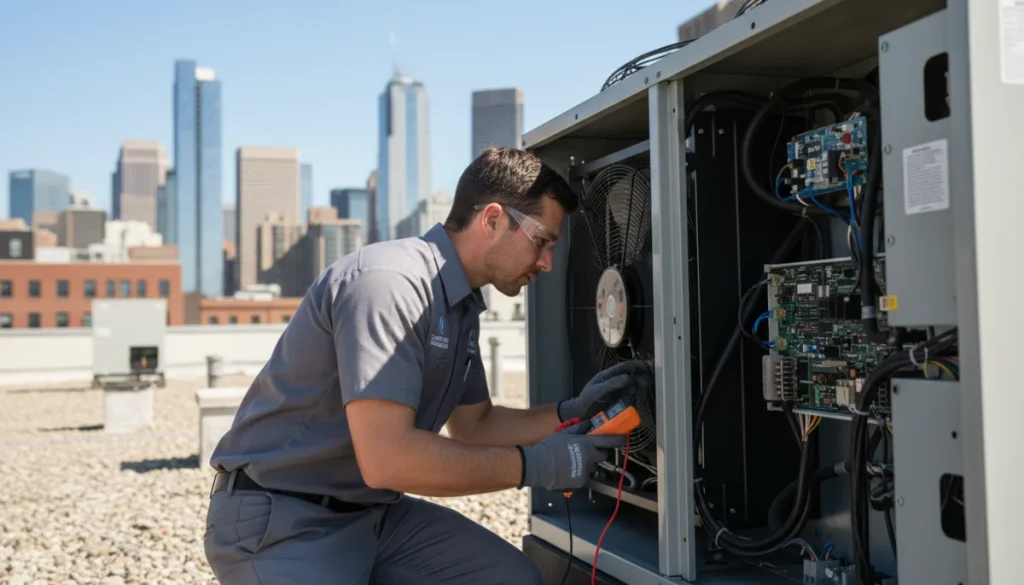
HVAC technicians utilize advanced troubleshooting techniques to accurately identify and resolve intricate heating, ventilation, and air conditioning system malfunctions, ensuring optimal performance and client satisfaction across diverse residential and commercial settings.
Are you an HVAC technician looking to elevate your diagnostic skills? Understanding advanced HVAC troubleshooting techniques is paramount in today’s complex systems. This article delves into the methodologies and tools that distinguish a competent technician from an exceptional one, guiding you through the intricacies of modern HVAC diagnostics.
The foundation of effective HVAC troubleshooting
Effective HVAC troubleshooting begins long before any tools are picked up. It starts with a methodical approach, keen observation, and a thorough understanding of system fundamentals. Technicians must first establish a comprehensive baseline of system operation to accurately identify deviations.
This foundational knowledge encompasses electrical principles, refrigerant cycles, airflow dynamics, and control logic. Without a solid grasp of these core concepts, even the most advanced tools can lead to misdiagnoses. A systematic approach ensures that no stone is left unturned, moving from general observations to specific component checks.
Understanding system schematics and operational sequences
Before any physical inspection, reviewing the system’s wiring diagrams, operational sequences, and manufacturer specifications is crucial. These documents provide a roadmap to the system’s design and intended function, often revealing potential problem areas or specific diagnostic procedures. Familiarity with these blueprints saves valuable time and prevents costly errors.
- Wiring Diagrams: Essential for tracing electrical paths and identifying component connections.
- Operational Sequences: Details the order of operations, helping to pinpoint where a cycle might be failing.
- Manufacturer Specifications: Provides critical data such as pressures, temperatures, and current draws.
- Service Manuals: Offers specific troubleshooting guides and error codes for particular models.
In conclusion, building a strong foundation in system knowledge and documentation review is the bedrock upon which all successful advanced troubleshooting rests. It allows technicians to form educated hypotheses and approach problems with a clear strategy, rather than relying on guesswork.
Advanced electrical diagnostics and control systems
Modern HVAC systems are increasingly reliant on sophisticated electrical and electronic control systems. Diagnosing issues in these intricate networks requires more than just checking for continuity; it demands a deep understanding of circuit theory, sensor operation, and microprocessor logic. Technicians must be adept at interpreting complex control signals and power flows.
Problems often manifest as intermittent failures or cryptic error codes, necessitating a systematic approach to electrical diagnostics. This involves isolating circuits, testing individual components under load, and analyzing communication protocols between different system modules. Precision and patience are vital when dealing with these sensitive systems.
Troubleshooting variable frequency drives (VFDs) and motor controls
Variable Frequency Drives (VFDs) are common in commercial HVAC for energy efficiency, but they also introduce new diagnostic challenges. Understanding their input, output, and control signals is essential. Technicians must be able to test VFD components, interpret fault codes, and verify proper programming to ensure optimal motor operation.
- Input Voltage/Current: Verify stable power supply to the VFD.
- Output Voltage/Frequency: Check if the VFD is delivering correct power to the motor.
- Control Signals: Ensure proper communication from the building management system (BMS) or thermostat.
- Motor Parameters: Confirm motor is correctly configured within the VFD’s programming.
The complexity of these systems necessitates a continuous learning curve for HVAC technicians. Staying updated on the latest control technologies and diagnostic tools is crucial for effectively resolving electrical and control system malfunctions, ensuring reliable system performance.
Refrigerant circuit analysis and optimization
The refrigerant circuit is the heart of any HVAC system, and its proper function is critical for heating and cooling. Advanced troubleshooting in this area goes beyond simply checking pressures. It involves a detailed analysis of superheat and subcooling, understanding refrigerant flow dynamics, and identifying subtle signs of undercharge, overcharge, or contamination.
Accurate diagnosis requires meticulous data collection, including suction and liquid line pressures, corresponding temperatures, and ambient conditions. These readings, when compared against manufacturer specifications, provide a comprehensive picture of the refrigerant’s state and performance throughout the cycle. Improper refrigerant levels or flow can significantly impact efficiency and component longevity.
Diagnosing obscure refrigerant issues
Some refrigerant issues are not immediately obvious. For example, non-condensable gases can lead to high head pressures and reduced capacity without a clear leak. Similarly, oil logging in evaporators can starve the system of refrigerant, mimicking an undercharge. Identifying these requires a deeper understanding of thermodynamics and system dynamics.
- Non-condensable Gases: Indicated by abnormally high head pressure relative to ambient temperature.
- Oil Logging: Often causes reduced cooling capacity and can be identified by specific temperature differentials.
- Refrigerant Contamination: May lead to unusual pressure/temperature relationships or component failures.
- Metering Device Malfunction: Can cause incorrect superheat/subcooling readings, impacting system efficiency.
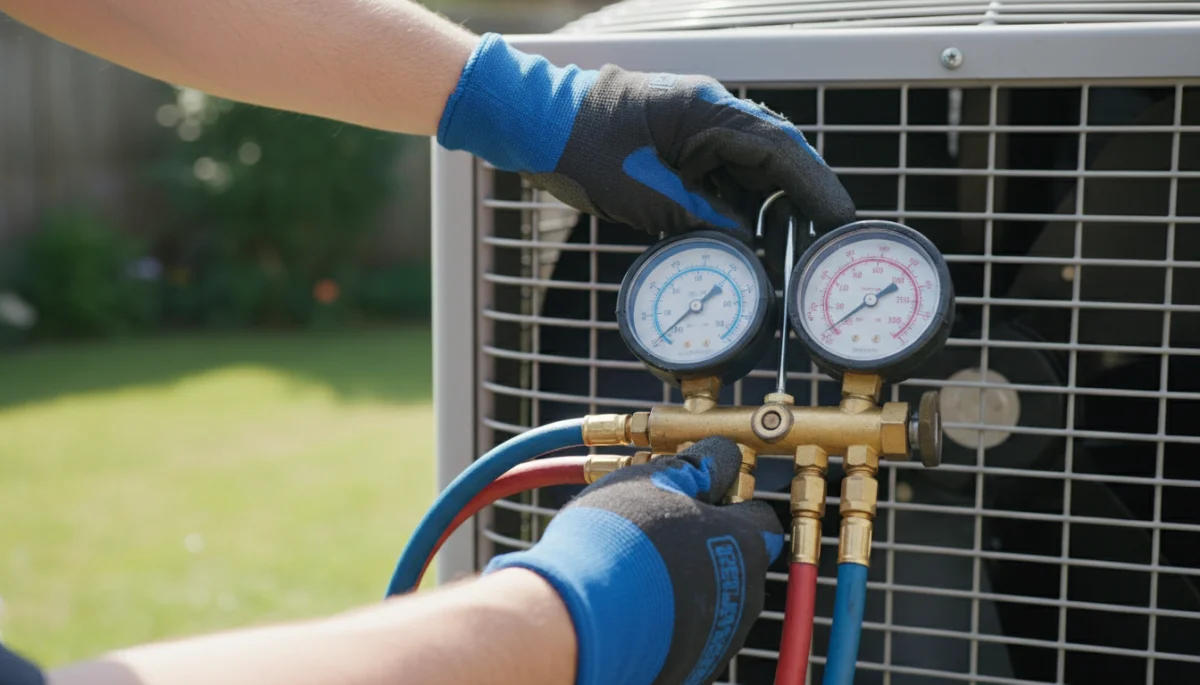
Mastering refrigerant circuit analysis means being able to interpret subtle deviations from normal operation and applying theoretical knowledge to practical observations. This level of expertise ensures that systems are not just repaired, but optimized for peak performance and longevity.
Advanced airflow diagnostics and balancing
Airflow is often overlooked but is as critical as refrigerant and electrical systems in HVAC performance. Poor airflow can lead to comfort issues, reduced efficiency, and premature equipment failure. Advanced diagnostics involve more than just checking filter cleanliness; it includes measuring static pressure, airflow velocity, and balancing the distribution across various zones.
Technicians must utilize specialized tools like manometer gauges, anemometers, and balometers to accurately quantify airflow characteristics. Interpreting these measurements in relation to system design and load requirements is key to identifying restrictions, leaks, or imbalances within the ductwork and air handling units. Proper airflow ensures that conditioned air reaches its intended destination effectively.
Addressing common and uncommon airflow challenges
Common airflow issues include dirty coils or clogged filters, but more complex problems can arise from poorly designed ductwork, leaky connections, or improperly sized components. Less common issues might involve collapsed flexible ducts, closed internal dampers, or even building pressurization problems affecting return air paths. Each scenario requires a tailored diagnostic approach.
- Static Pressure Measurement: Crucial for identifying restrictions in ductwork or coils.
- Air Velocity Readings: Helps determine actual CFM (Cubic Feet per Minute) moving through ducts.
- Duct Leakage Testing: Pinpoints areas where conditioned air is escaping, wasting energy.
- Zoning System Analysis: Ensures proper damper operation and thermostat communication in multi-zone systems.
By thoroughly understanding and diagnosing airflow dynamics, HVAC technicians can significantly improve system efficiency, occupant comfort, and indoor air quality. This advanced skill set is invaluable in delivering comprehensive HVAC solutions.
Utilizing diagnostic tools and technology
The landscape of HVAC troubleshooting has been revolutionized by advanced diagnostic tools and technology. From sophisticated digital multimeters to thermal imaging cameras and smart probes, these tools empower technicians to diagnose problems with unprecedented accuracy and speed. However, merely possessing these tools is not enough; understanding how to effectively interpret their data is paramount.
Integrating data from multiple sources, such as smart gauges, wireless sensors, and building management systems (BMS), allows for a holistic view of system performance. This data-driven approach moves beyond reactive repairs to proactive maintenance and predictive diagnostics, identifying potential failures before they escalate into major breakdowns. Continuous training on the latest equipment is essential.
Integrating smart tools and wireless sensors
Smart tools, often connected to mobile apps, provide real-time data logging and analysis, allowing technicians to monitor system parameters remotely or over extended periods. Wireless sensors can be placed strategically throughout a system to capture data from hard-to-reach areas, reducing diagnostic time and improving safety. This integration creates a more efficient and accurate diagnostic process.
- Digital Manifold Gauges: Offer precise pressure and temperature readings with automatic superheat/subcooling calculations.
- Thermal Imaging Cameras: Visualize temperature differences, revealing electrical hot spots, refrigerant leaks, or insulation deficiencies.
- Combustion Analyzers: Essential for optimizing furnace efficiency and ensuring safe operation by measuring flue gas components.
- Vibration Analyzers: Detect imbalances or wear in motors and fans, predicting mechanical failures.
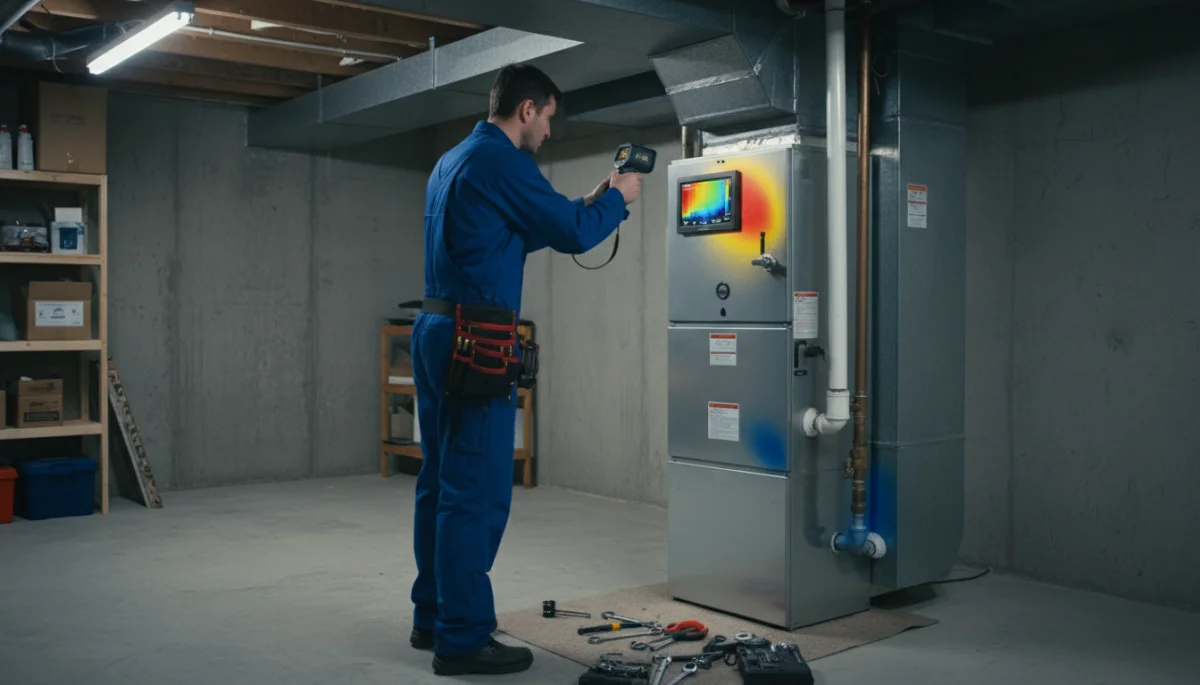
Leveraging these advanced diagnostic tools and technologies not only enhances troubleshooting capabilities but also elevates the professionalism and efficiency of HVAC service delivery. It allows technicians to provide more comprehensive and reliable solutions to their clients.
Continuous learning and professional development
The HVAC industry is in a constant state of evolution, driven by advancements in technology, energy efficiency standards, and environmental regulations. For HVAC technicians, continuous learning and professional development are not just beneficial; they are essential for staying competitive and providing top-tier service. This involves regularly updating knowledge and skills to keep pace with new equipment, refrigerants, and diagnostic methodologies.
Engaging in ongoing education, attending industry seminars, and pursuing certifications demonstrate a commitment to excellence and expertise. This dedication not only enhances individual career prospects but also contributes to the overall quality and trustworthiness of the HVAC profession. Lifelong learning is the hallmark of a truly advanced technician.
Certifications and specialized training programs
While foundational certifications like EPA Section 608 are mandatory, pursuing specialized certifications can open doors to more complex and lucrative opportunities. These might include certifications in commercial refrigeration, building automation systems (BAS), or specific manufacturer training. Such programs provide in-depth knowledge that goes beyond general troubleshooting.
- NATE Certification: Demonstrates a technician’s competency in specific HVACR areas.
- Manufacturer Training: Provides detailed knowledge on proprietary equipment and diagnostic tools.
- Building Automation System (BAS) Courses: Essential for technicians working with integrated building controls.
- Renewable Energy Certifications: Prepares technicians for emerging technologies like geothermal and solar HVAC.
Investing in continuous learning and professional development is a strategic move for any HVAC technician aiming for a successful and long-lasting career. It ensures they remain at the forefront of the industry, capable of tackling any challenge that comes their way.
| Key Troubleshooting Area | Brief Description |
|---|---|
| Electrical & Controls | Diagnosing complex circuits, sensors, VFDs, and communication protocols. |
| Refrigerant Circuits | Analyzing superheat/subcooling, identifying contamination, and optimizing charge. |
| Airflow & Ductwork | Measuring static pressure, velocity, and balancing air distribution. |
| Diagnostic Tools | Proficient use of thermal imagers, smart gauges, and combustion analyzers. |
Frequently asked questions about advanced HVAC troubleshooting
The most common mistake is jumping to conclusions without a systematic diagnostic process. Technicians often replace parts based on assumptions rather than thorough testing, leading to misdiagnoses and repeat service calls. Always verify your hypothesis with data and eliminate other possibilities before replacing components.
Improving diagnostic skills requires continuous learning, hands-on experience, and mentorship. Attend advanced training courses, work alongside experienced technicians, and make it a habit to thoroughly review system schematics and operational sequences. Practice using advanced diagnostic tools regularly to hone your interpretation skills.
Essential advanced tools include digital manifold gauges, thermal imaging cameras, combustion analyzers, advanced digital multimeters, and wireless vacuum gauges. These tools provide precise data, enabling technicians to identify issues that are invisible to the naked eye or traditional analog instruments, improving diagnostic accuracy.
Troubleshooting intermittent problems requires patience and data logging. Use smart tools with data logging capabilities to capture system parameters over time. Look for patterns or specific conditions (e.g., temperature, humidity, time of day) that trigger the fault. Interviewing the client for detailed observations is also crucial.
A BMS provides a centralized interface for monitoring and controlling various building systems, including HVAC. It offers real-time data, alarm notifications, and historical trends, which are invaluable for diagnosing complex system interactions, optimizing performance, and identifying root causes of issues in large commercial settings.
Conclusion
Mastering advanced HVAC troubleshooting techniques is a continuous journey that combines foundational knowledge with the adoption of cutting-edge tools and a commitment to lifelong learning. For HVAC technicians in the United States, this expertise is not merely a competitive advantage but a necessity for thriving in an industry that constantly evolves. By embracing systematic diagnostics, understanding complex control systems, and leveraging advanced technology, technicians can ensure optimal performance, enhance client satisfaction, and solidify their professional reputation. The demand for highly skilled technicians who can confidently tackle intricate HVAC challenges will only continue to grow, making this investment in expertise invaluable for career longevity and success.
