M&A Synergy Gains: U.S. Market Consolidation Strategies

Achieving substantial synergy gains in U.S. market consolidations through mergers and acquisitions requires meticulous planning, precise execution, and a clear understanding of integration challenges and opportunities for value creation.
Embarking on mergers and acquisitions (M&A) in the competitive U.S. market demands a robust framework to ensure success. The pursuit of significant M&A synergy gains is often the primary driver, yet realizing these benefits is a complex endeavor that requires more than just financial acumen. Let’s delve into the strategic approaches that can transform ambitious M&A deals into tangible value creation.
Understanding the Foundation of M&A Synergy Gains
The concept of synergy in mergers and acquisitions is simple: the combined value and performance of two companies will be greater than the sum of their individual parts. However, achieving this is rarely straightforward. It requires a deep dive into operational, financial, and cultural aspects before, during, and after the deal closes.
Synergy can manifest in various forms, from cost reductions to revenue enhancements and strategic advantages. Identifying the most promising areas for synergy early in the M&A process is critical. This involves rigorous due diligence to uncover potential overlaps and complementary strengths that can be leveraged post-acquisition. A clear understanding of these foundational elements sets the stage for a successful integration that delivers on its promise.
Types of Synergy to Target
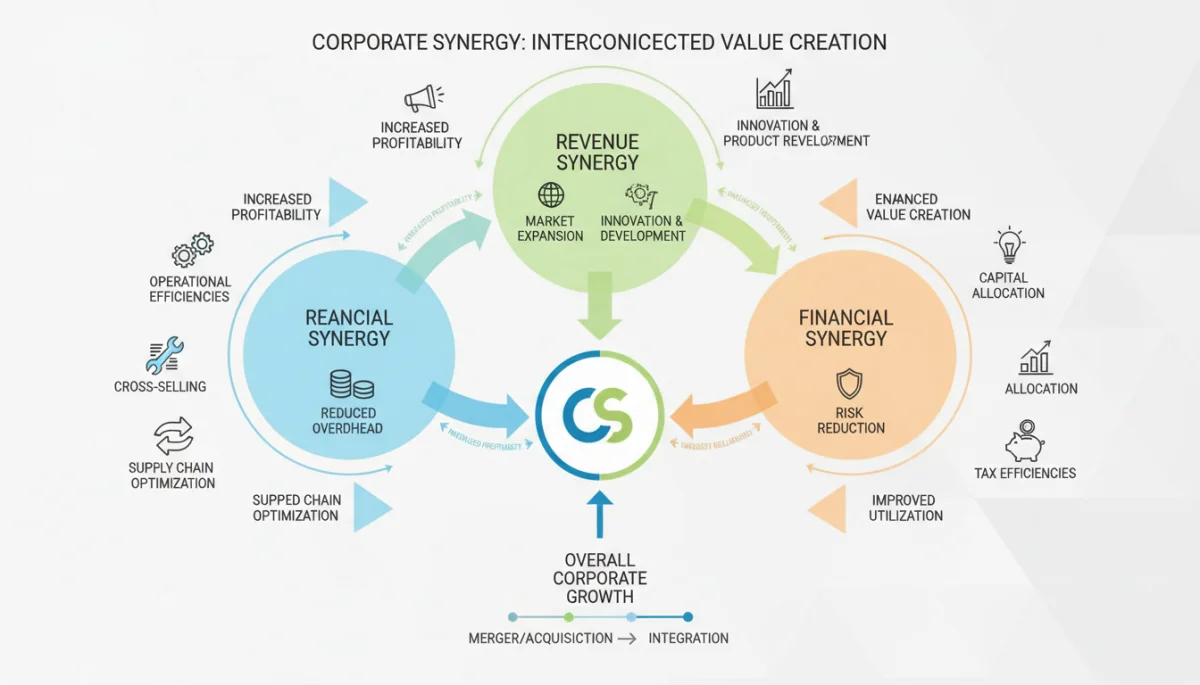
When considering M&A, businesses typically look for several distinct categories of synergy. Each offers unique pathways to increased value and efficiency, and a comprehensive strategy often involves pursuing multiple types simultaneously.
- Cost Synergies: These are often the easiest to identify and quantify, stemming from eliminating redundant operations, consolidating facilities, and achieving economies of scale in purchasing, administration, and supply chains.
- Revenue Synergies: More challenging to realize but potentially more impactful, these arise from cross-selling products or services, expanding into new markets, leveraging combined distribution networks, or enhancing product offerings.
- Financial Synergies: These can include optimizing capital structure, improving credit ratings, or utilizing tax advantages, leading to a lower cost of capital and increased shareholder value.
- Operational Synergies: Gaining efficiencies through shared best practices, improved processes, or technological integration that boosts productivity and reduces waste.
The successful realization of these synergies depends heavily on a clear strategic vision and a detailed integration plan. Without a precise roadmap for how these benefits will be achieved, even the most promising M&A deals can fall short of expectations, leaving value on the table. It’s about more than just combining; it’s about optimizing the combination.
In conclusion, a thorough grasp of the different synergy types provides a crucial framework for evaluating potential M&A targets. Identifying and prioritizing these areas during the initial stages ensures that the deal aligns with the overarching strategic goals and sets realistic expectations for post-merger performance. This foundational understanding is the bedrock upon which successful U.S. market consolidations are built.
Strategic Due Diligence: Unlocking Hidden Value and Risks
Effective due diligence is the cornerstone of any successful M&A transaction aimed at achieving significant synergy gains. It moves beyond mere financial audits to encompass a comprehensive evaluation of operational, legal, cultural, and market aspects. This meticulous investigation is crucial for validating assumptions about potential synergies and identifying any hidden liabilities or integration challenges that could derail the deal.
A robust due diligence process requires a multidisciplinary team, including financial analysts, legal experts, operational consultants, and human resources specialists. Their combined insights provide a holistic view of the target company, enabling informed decision-making and a clearer understanding of the path to value creation. Ignoring this critical phase can lead to costly surprises and a failure to realize projected benefits.
Key Areas of Due Diligence for Synergy Identification
Beyond standard financial reviews, strategic due diligence focuses specifically on areas that will either enable or impede synergy realization. This targeted approach ensures that the M&A team understands the true potential of the combination.
- Operational Assessment: Evaluating the efficiency of the target’s processes, supply chain, manufacturing capabilities, and technology infrastructure to identify areas for cost reduction or performance improvement.
- Market and Commercial Review: Analyzing the target’s market position, customer base, sales channels, and product portfolio to assess revenue synergy potential and market expansion opportunities.
- Human Capital and Culture: Understanding the organizational structure, key talent, compensation plans, and cultural compatibility. Cultural misalignment is a frequent cause of M&A failure, making this a vital area of inquiry.
- Legal and Regulatory Compliance: Ensuring the target complies with all relevant U.S. laws and regulations, and identifying any potential legal risks that could impact post-merger operations or synergy achievement.
The insights gathered during this phase are instrumental in refining the M&A strategy, adjusting valuation, and developing a realistic integration plan. It’s not just about finding problems; it’s about uncovering opportunities for enhanced value that might not be immediately apparent. Diligence serves as a critical filter, separating viable deals from those with insurmountable challenges.
Ultimately, strategic due diligence is an investment that pays dividends by mitigating risk and maximizing the likelihood of achieving projected synergy gains. It provides the data and understanding necessary to build a compelling business case for the acquisition and to navigate the complexities of integration with confidence. A well-executed due diligence process transforms uncertainty into clarity, paving the way for successful U.S. market consolidations.
Crafting an Effective Integration Plan for Synergy Realization
Even the most promising M&A deal can falter without a meticulously crafted integration plan. This plan is the blueprint for how the two entities will merge operations, cultures, and systems to unlock the anticipated synergy gains. It should be developed in parallel with due diligence and be ready for immediate execution once the deal closes. A reactive approach to integration almost guarantees delays and a failure to capture value.
An effective integration plan addresses every aspect of the combined business, from leadership structures and technology systems to employee communication and customer retention strategies. It requires clear objectives, defined roles and responsibilities, and measurable milestones to track progress. The success of an M&A transaction hinges as much on its execution as on its initial conception.
Key Components of a Robust Integration Plan
A comprehensive integration plan should be dynamic and adaptable, anticipating challenges while remaining focused on strategic objectives. It’s a living document that guides the entire post-merger journey.
- Leadership and Governance: Establishing clear leadership for the integration process, defining reporting lines, and forming integration teams responsible for specific workstreams (e.g., IT, HR, finance, operations).
- Communication Strategy: Developing a transparent communication plan for employees, customers, suppliers, and other stakeholders to manage expectations, alleviate concerns, and maintain morale.
- Operational Integration: Mapping out the consolidation of systems, processes, and facilities, including supply chain optimization, manufacturing rationalization, and shared services implementation.
- Technology Integration: Planning the migration and consolidation of IT systems, software applications, and data infrastructures to ensure seamless operations and data integrity.
- Cultural Integration: Identifying cultural differences and developing strategies to foster a unified organizational culture that leverages the strengths of both companies while minimizing friction.
The integration plan must also include a robust risk management framework to identify potential roadblocks and develop contingency plans. Flexibility is key, as unforeseen issues inevitably arise. Regular monitoring and adjustments are essential to keep the integration on track and ensure that synergy targets are met within the projected timelines.
In essence, an effective integration plan transforms strategic intent into operational reality. It is the critical bridge between deal announcement and value realization, ensuring that the promise of synergy is not just a theoretical concept but a tangible outcome of the M&A process. This meticulous planning is vital for any U.S. market consolidation aiming for sustained success.
Navigating Cultural Integration: A Critical Success Factor
While financial models and operational blueprints are essential, the human element—specifically cultural integration—often proves to be the most challenging yet critical factor in achieving M&A synergy gains. Merging two distinct corporate cultures is not merely an HR exercise; it’s a strategic imperative that can make or break the entire deal. A failure to address cultural differences can lead to talent drain, decreased productivity, and ultimately, a failure to realize projected synergies.
Cultural integration requires empathy, clear communication, and a proactive approach. It involves understanding the values, norms, and behaviors that define each organization and then deliberately fostering a new, unified culture that leverages the best of both. This process takes time and sustained effort, extending far beyond the initial integration phase.
Strategies for Harmonizing Corporate Cultures
Successful cultural integration doesn’t happen by accident; it’s the result of intentional strategies designed to bridge divides and build a cohesive new identity. Ignoring this aspect is a common pitfall in U.S. market consolidations.
- Early Cultural Assessment: Conduct a thorough assessment of both companies’ cultures during due diligence to identify potential areas of alignment and conflict. This informs the integration strategy.
- Visible Leadership Commitment: Senior leadership must visibly champion the new combined culture, demonstrating commitment through their actions and communications. Their example sets the tone for the entire organization.
- Open Communication and Dialogue: Create forums for employees to express concerns, ask questions, and contribute to the new culture. Transparency helps build trust and reduces anxiety.
- Identify and Preserve Best Practices: Recognize and integrate the best operational practices, policies, and employee benefits from both organizations. This demonstrates respect for both legacies.
- Training and Development: Provide training on new systems, processes, and cultural expectations. Invest in leadership development to equip managers with the skills to lead through change.
The goal is not to erase one culture in favor of another, but to forge a stronger, more adaptive culture that propels the combined entity forward. This often involves identifying shared values and building upon them, while also respectfully addressing and mitigating areas of conflict. Employee engagement is paramount throughout this process.
Ultimately, navigating cultural integration successfully means creating an environment where employees from both companies feel valued, understood, and motivated to contribute to the new organization’s success. When done right, it accelerates synergy realization and builds a more resilient and innovative enterprise. This human-centric approach is indispensable for achieving lasting M&A synergy gains in the U.S. market.
Measuring and Maximizing Synergy Realization Post-Acquisition
The true measure of M&A success lies not just in closing the deal, but in the actual realization of projected synergy gains post-acquisition. Many companies excel at identifying potential synergies but fall short in tracking and maximizing their capture. A robust framework for measuring and monitoring synergy achievement is essential to ensure accountability and to make timely adjustments to the integration plan.
This involves establishing clear key performance indicators (KPIs) for each synergy type, assigning ownership, and regularly reporting on progress against targets. Without a systematic approach to measurement, it becomes difficult to assess the effectiveness of the integration efforts and to course-correct when necessary. Proactive management of synergy realization is what separates successful M&A outcomes from underperforming ones.

Establishing a Synergy Tracking Framework
A well-defined framework ensures that synergy targets are not forgotten amidst the complexities of integration. It provides the visibility needed to drive continuous improvement and accountability.
- Define Clear KPIs: For each identified synergy, establish specific, measurable, achievable, relevant, and time-bound (SMART) KPIs. For example, for cost synergies, this could be ‘reduction in procurement costs by X% within 12 months.’
- Assign Ownership: Designate specific individuals or teams responsible for each synergy stream. This ensures accountability and drives focused effort toward achieving targets.
- Implement Tracking Systems: Utilize project management software or custom dashboards to monitor synergy realization progress. This allows for real-time tracking and identification of deviations.
- Regular Reporting and Reviews: Conduct frequent reviews with leadership to assess progress, discuss challenges, and make necessary adjustments to strategies or resources. Transparency is key.
- Celebrate Successes: Acknowledge and reward teams or individuals who contribute significantly to synergy realization. This reinforces positive behavior and maintains momentum.
Beyond tracking, maximizing synergy realization often involves a continuous improvement mindset. This means being open to new opportunities for value creation that may emerge during the integration process and being agile enough to pivot strategies as market conditions evolve. The post-acquisition phase is not merely about executing a plan but about dynamically managing the combined business to achieve its full potential.
In conclusion, a rigorous approach to measuring and maximizing synergy realization is paramount for delivering on the promise of M&A. It transforms theoretical gains into tangible financial and operational benefits, ensuring that the investment in consolidation yields significant returns. This commitment to ongoing evaluation and optimization is a hallmark of successful U.S. market consolidations.
The Role of Technology in Driving M&A Synergy Gains
In today’s digital landscape, technology plays an increasingly pivotal role in driving M&A synergy gains, particularly in complex U.S. market consolidations. Beyond simply integrating IT systems, technology acts as an enabler for cost efficiencies, revenue growth, and operational excellence. Leveraging advanced analytics, cloud platforms, and automation tools can significantly accelerate synergy realization and enhance the overall value of the merged entity.
However, technology integration also presents significant challenges, including data migration complexities, system incompatibilities, and cybersecurity risks. A strategic approach to technology integration, planned well in advance and executed with expertise, is crucial to harness its full potential and avoid costly disruptions that could erode anticipated synergies.
Leveraging Technology for Enhanced Synergy
Strategic technology deployment can unlock new levels of efficiency and innovation, directly contributing to M&A synergy gains. It’s about more than just IT; it’s about business transformation through technology.
- Data Analytics and AI: Utilize advanced analytics and artificial intelligence to identify new revenue opportunities from combined customer data, optimize pricing strategies, and predict market trends more accurately.
- Cloud Migration and Consolidation: Moving disparate systems to a unified cloud environment can reduce infrastructure costs, improve scalability, and enhance data accessibility for better decision-making.
- Automation of Processes: Implement robotic process automation (RPA) and other automation tools to streamline redundant administrative tasks, accelerate operational workflows, and reduce labor costs across the merged organization.
- Cybersecurity Harmonization: Consolidate and upgrade cybersecurity protocols to protect combined assets, ensure compliance, and mitigate risks associated with expanded digital footprints.
- Customer Relationship Management (CRM) Integration: Unifying CRM systems allows for a 360-degree view of the combined customer base, enabling more effective cross-selling, improved customer service, and targeted marketing campaigns.
Effective technology integration is not just about merging systems; it’s about creating a more agile, data-driven organization capable of adapting quickly to market changes and maximizing competitive advantage. It requires a clear understanding of both companies’ existing technological landscapes and a forward-looking vision for the combined entity’s digital future.
In conclusion, technology is a powerful catalyst for achieving significant M&A synergy gains, but its successful deployment requires careful planning, skilled execution, and continuous optimization. By strategically leveraging digital tools and platforms, companies can accelerate integration, unlock new efficiencies, and drive substantial value in their U.S. market consolidations. Ignoring the technological dimension is a missed opportunity for maximizing deal value.
Overcoming Common Pitfalls in M&A Synergy Realization
While the pursuit of M&A synergy gains is a compelling driver for U.S. market consolidations, numerous pitfalls can derail even the most carefully planned transactions. Recognizing and proactively addressing these common challenges is crucial for increasing the likelihood of success. These pitfalls often stem from underestimating complexities, failing to anticipate human reactions, or a lack of rigorous execution post-deal.
From cultural clashes to integration delays and overestimated synergies, understanding these obstacles allows companies to build more resilient M&A strategies. The goal is not to avoid challenges entirely, which is often impossible, but to develop robust contingency plans and agile management approaches to navigate them effectively.
Strategies to Mitigate M&A Risks
Proactive risk mitigation is a cornerstone of successful M&A, transforming potential roadblocks into manageable hurdles. A strategic approach can significantly improve the chances of realizing projected synergy gains.
- Realistic Synergy Projections: Avoid overestimating synergy potential during the valuation phase. Base projections on conservative, thoroughly vetted assumptions rather than optimistic forecasts.
- Strong Integration Leadership: Appoint experienced leaders for the integration process who possess both strategic vision and operational expertise. Empower them with the authority and resources needed to execute the plan.
- Early Stakeholder Engagement: Engage key employees, customers, and suppliers early in the process. Address their concerns and communicate transparently to minimize disruption and retain critical relationships.
- Focus on Quick Wins: Identify and prioritize a few high-impact, achievable synergy targets that can be realized early in the integration. This builds momentum and demonstrates tangible progress.
- Post-Merger Audit and Adjustment: Conduct regular post-merger audits to evaluate actual synergy realization against projections. Be prepared to adjust strategies, reallocate resources, or even divest non-performing assets if necessary.
Another critical pitfall is the neglect of the ‘day one’ readiness. Ensuring that essential functions continue seamlessly immediately after the close is vital for maintaining employee morale and customer confidence. Any disruption can quickly erode value and trust, making synergy realization far more challenging.
Ultimately, overcoming common pitfalls in M&A synergy realization requires a combination of meticulous planning, disciplined execution, and adaptive leadership. By anticipating potential problems and implementing proactive mitigation strategies, companies can significantly increase their chances of achieving substantial M&A synergy gains and building stronger, more competitive enterprises in the U.S. market. It’s a journey of continuous vigilance and strategic adjustment.
| Key Strategy | Brief Description |
|---|---|
| Strategic Due Diligence | Thoroughly evaluate operational, cultural, and market aspects to validate synergy assumptions and identify risks. |
| Integration Planning | Develop a detailed roadmap for merging operations, cultures, and systems to unlock value. |
| Cultural Harmonization | Proactively merge corporate cultures to retain talent and foster a unified, productive environment. |
| Synergy Measurement | Establish KPIs and tracking systems to monitor and maximize actual synergy realization post-acquisition. |
Frequently Asked Questions About M&A Synergy
The primary types of synergy include cost synergies, achieved through operational efficiencies and reduced redundancies; revenue synergies, gained from cross-selling or market expansion; financial synergies, optimizing capital structure; and operational synergies, improving processes and productivity. Identifying these early is crucial for successful integration.
Cultural integration is challenging because it involves merging distinct values, norms, and behaviors of two organizations. Misalignment can lead to employee dissatisfaction, talent loss, and decreased productivity, directly impacting the realization of anticipated M&A synergy gains. Proactive strategies are essential for success.
Technology drives synergy gains by enabling cost efficiencies through cloud migration and automation, and revenue growth via advanced data analytics and unified CRM systems. Strategic technology integration accelerates operational excellence and allows for better decision-making, maximizing the value of the combined entity.
Common pitfalls include overestimating synergy potential, neglecting cultural integration, integration delays due to poor planning, and a lack of clear accountability for synergy targets. Avoiding these requires realistic projections, strong leadership, early stakeholder engagement, and rigorous post-merger tracking and adjustment.
Due diligence is fundamental as it validates synergy assumptions and identifies potential risks or liabilities. A comprehensive review of operational, financial, legal, and cultural aspects ensures a realistic understanding of value creation opportunities and helps in crafting an effective integration plan, mitigating post-acquisition surprises.
Conclusion
The pursuit of significant M&A synergy gains within U.S. market consolidations is a multifaceted endeavor, demanding far more than just financial transactions. It requires a holistic strategy encompassing rigorous due diligence, meticulous integration planning, empathetic cultural harmonization, and precise post-acquisition measurement. By understanding the various forms of synergy, proactively addressing common pitfalls, and strategically leveraging technology, businesses can transform complex mergers and acquisitions into powerful engines for growth and enhanced shareholder value. The journey to successful consolidation is challenging, yet with a well-orchestrated approach, the rewards of true synergy are well within reach.
