Construction Trades Outlook: In-Demand Specialties
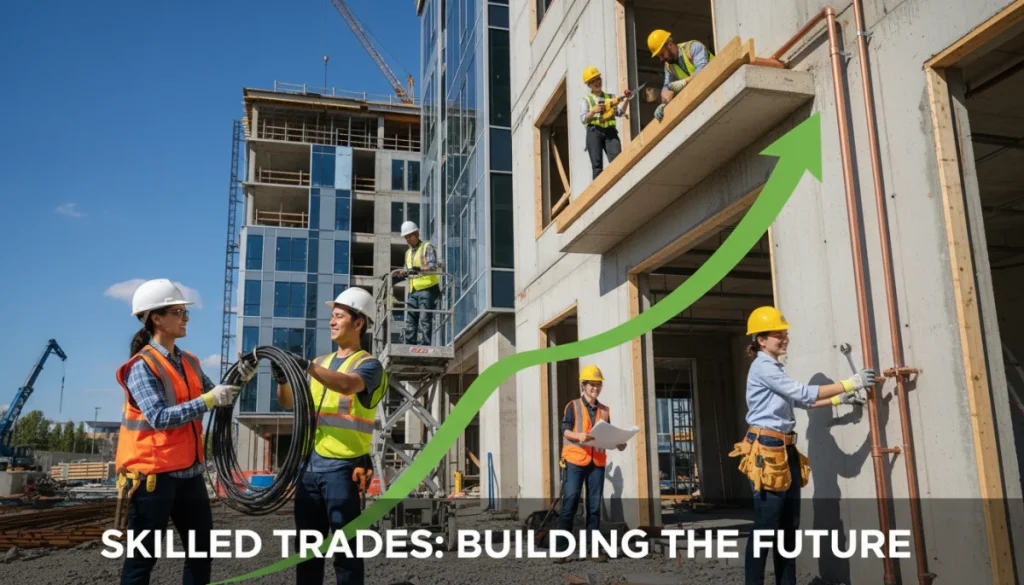
The construction trades outlook in the United States is robust, with significant demand for skilled professionals in various specialties, offering promising career paths and stable employment opportunities across the nation.
Navigating the job market can be challenging, but understanding the construction trades outlook reveals a sector ripe with opportunity. This article will delve into the most in-demand specialties, providing insights into a rewarding and stable career path within the United States.
The evolving landscape of construction trades
The construction industry in the United States is undergoing a significant transformation, driven by technological advancements, sustainable building practices, and a persistent demand for new infrastructure and housing. This evolution is reshaping the types of skills and specialties that are most sought after, creating a dynamic environment for those entering or advancing within the trades.
Understanding these shifts is crucial for anyone considering a career in construction. The traditional image of a construction worker is expanding to include roles that require digital literacy, specialized certifications, and a commitment to energy efficiency. This blend of traditional craftsmanship with modern innovation makes the current construction landscape particularly exciting and full of potential.
Technological integration in construction
Technology is no longer a peripheral aspect of construction; it’s central to efficiency, safety, and project delivery. From Building Information Modeling (BIM) to drone surveying and robotic automation, these tools are changing how projects are planned, executed, and managed.
- Building Information Modeling (BIM): Essential for collaborative design and project management, BIM specialists are increasingly valuable.
- Drone Technology: Used for site mapping, progress monitoring, and safety inspections, requiring skilled operators.
- Robotics and Automation: Emerging in tasks like bricklaying and demolition, demanding new programming and maintenance skills.
Sustainability and green building practices
The push for environmentally friendly construction is creating new niches and increasing demand for specific expertise. Green building isn’t just a trend; it’s becoming a standard, influencing everything from material selection to energy systems.
This includes roles focused on installing solar panels, implementing efficient HVAC systems, and utilizing sustainable materials. Workers with certifications in green building practices, such as LEED accreditation, find themselves with a competitive edge in the job market.
In conclusion, the construction trades are far from static. They are evolving rapidly, requiring workers to adapt and acquire new skills. Those who embrace technology and sustainable practices will be well-positioned for long-term success in this dynamic industry.
Electricians: power to the people and projects
Electricians remain at the forefront of in-demand construction specialties, playing a critical role in residential, commercial, and industrial projects. Their expertise is indispensable for installing, maintaining, and repairing electrical systems, ensuring safety and functionality in every structure. The continuous need for power infrastructure, coupled with advancements in smart home technology and renewable energy, solidifies their position as a vital trade.
The complexity of modern electrical systems requires electricians to be highly skilled and knowledgeable in various codes and regulations. From intricate wiring diagrams to troubleshooting complex circuits, their work demands precision and a deep understanding of electrical principles. This specialization ensures that electricians are not just installing wires but are integral to the operational integrity of any building.
Growing demand in renewable energy
The shift towards renewable energy sources like solar and wind power has significantly expanded the scope of work for electricians. They are essential for installing solar panels, connecting them to grid systems, and maintaining the electrical components of wind turbines. This sector offers exciting growth opportunities for those willing to specialize.
Furthermore, the increasing adoption of electric vehicles (EVs) is driving demand for electricians to install charging stations in homes, workplaces, and public spaces. This emerging market segment adds another layer of opportunity and specialization within the electrical trade, requiring knowledge of specific charging infrastructure and safety standards.
Smart home technology and automation
As smart home technology becomes more prevalent, electricians are increasingly involved in integrating these advanced systems. This includes installing smart lighting, automated climate control, security systems, and networked appliances. The ability to work with low-voltage systems and integrate them seamlessly into a building’s electrical infrastructure is a valuable skill.
- Smart Lighting Systems: Installation and configuration of energy-efficient, programmable lighting.
- Home Automation Networks: Setting up integrated systems for climate, security, and entertainment.
- Energy Management Systems: Implementing solutions for monitoring and optimizing energy consumption.
In summary, the role of an electrician is evolving beyond traditional wiring, encompassing cutting-edge technologies and sustainable energy solutions. This continuous expansion ensures a robust career outlook with diverse opportunities for skilled professionals.
Plumbers, pipefitters, and steamfitters: vital for infrastructure
Plumbers, pipefitters, and steamfitters are fundamental to public health and modern infrastructure, responsible for installing and maintaining systems that carry water, waste, gases, and other fluids. Their work is critical in residential buildings, commercial complexes, and industrial facilities, ensuring efficient and safe operation of essential services. The continuous need for new construction, coupled with the aging infrastructure of many urban areas, ensures a steady and increasing demand for these skilled trades.
These professionals must possess a detailed understanding of complex piping systems, hydraulic principles, and strict safety regulations. Their ability to read blueprints, troubleshoot problems, and perform precise installations is vital for preventing leaks, ensuring proper drainage, and delivering potable water. The intricate nature of their work makes them indispensable to any construction project.

Water conservation and efficiency
With a growing emphasis on water conservation, plumbers are increasingly involved in installing and maintaining water-efficient fixtures and systems. This includes low-flow toilets, water-saving showerheads, and graywater recycling systems. Expertise in these areas not only helps clients reduce their environmental footprint but also lowers utility costs.
Furthermore, the detection and repair of leaks are crucial for water conservation. Plumbers equipped with advanced leak detection technology and repair techniques are highly valued, as they help prevent significant water waste and potential structural damage.
Industrial and commercial applications
Pipefitters and steamfitters specialize in high-pressure piping systems used in industrial settings, power generation plants, and large commercial buildings. Their work involves welding, brazing, and joining pipes that transport steam, chemicals, and other substances under various pressures and temperatures. This requires a high level of technical skill and adherence to stringent safety protocols.
- HVAC Systems: Installation and maintenance of piping for heating, ventilation, and air conditioning.
- Process Piping: Constructing systems for chemical plants, refineries, and manufacturing facilities.
- Fire Sprinkler Systems: Ensuring proper installation and functionality for safety compliance.
In conclusion, plumbers, pipefitters, and steamfitters are essential for maintaining the health and functionality of our built environment. Their diverse skill set, ranging from residential repairs to complex industrial installations, guarantees a strong and stable career path.
HVAC technicians: comfort and energy efficiency
HVAC (Heating, Ventilation, and Air Conditioning) technicians are critical to ensuring comfortable and healthy indoor environments in both residential and commercial settings. Their expertise in installing, maintaining, and repairing heating, cooling, and ventilation systems is consistently in high demand, driven by climate control needs and the increasing focus on energy efficiency. As buildings become more sophisticated, so too do the systems that regulate their internal climate, making skilled HVAC technicians indispensable.
The complexity of modern HVAC systems, which often integrate with smart building technology, requires technicians to possess a broad range of skills. This includes understanding thermodynamics, electrical circuits, refrigeration cycles, and digital controls. Their ability to diagnose problems accurately and implement effective solutions directly impacts occupant comfort and operational costs.
Demand in new construction and retrofits
New construction projects continuously require the installation of advanced HVAC systems, designed to meet current energy efficiency standards. Simultaneously, older buildings often undergo retrofits to upgrade outdated systems, reducing energy consumption and improving indoor air quality. Both scenarios fuel a steady demand for qualified HVAC technicians.
The move towards greener buildings also means a greater need for technicians proficient in installing and servicing heat pumps, geothermal systems, and other energy-efficient solutions. This specialization allows technicians to contribute to sustainable building practices while expanding their career opportunities.
Indoor air quality and smart systems
Beyond temperature control, HVAC technicians play a crucial role in maintaining indoor air quality (IAQ). This involves installing and servicing air filtration systems, humidifiers, and dehumidifiers, which are vital for health and comfort. Public awareness of IAQ has increased, leading to greater demand for these specialized services.
- Advanced Filtration: Installation of HEPA filters and UV-C light systems for air purification.
- Smart Thermostats: Integration and programming of energy-saving, internet-connected thermostats.
- Ductwork Optimization: Ensuring efficient airflow and minimizing energy loss through proper duct design and sealing.
In summary, HVAC technicians are at the intersection of comfort, health, and energy efficiency. Their evolving role, driven by technological advancements and environmental concerns, ensures a robust and essential career within the construction trades.
Carpenters: foundational skills for every build
Carpenters are the backbone of the construction industry, providing foundational skills essential for nearly every building project. Their work encompasses a wide range of tasks, from framing structures and installing fixtures to crafting custom cabinetry and finishing interiors. The versatility of carpentry ensures a consistent demand for skilled professionals across residential, commercial, and industrial sectors. Despite advancements in prefabricated components, the need for hands-on craftsmanship and problem-solving remains paramount.
A carpenter’s ability to interpret blueprints, measure precisely, cut accurately, and assemble components correctly is critical to a project’s structural integrity and aesthetic appeal. Their expertise extends beyond wood, often involving work with various materials like metal studs, drywall, and composite decking. This broad skill set makes them adaptable and indispensable on any job site.

Residential and commercial framing
Framing is one of the most critical stages of construction, laying the skeletal structure of a building. Carpenters specializing in framing must work efficiently and accurately to ensure the stability and safety of the entire project. This includes wall framing, floor joists, and roof trusses, often working with diverse materials such as traditional lumber and engineered wood products.
In commercial construction, carpenters also work with metal studs and specialized framing systems, requiring a different set of tools and techniques. The demand for new housing and commercial spaces ensures a continuous need for skilled framers who can execute complex designs.
Finish carpentry and custom work
Finish carpentry involves the visible elements of a building, such as trim, molding, doors, windows, and cabinetry. This specialty requires a keen eye for detail and a high level of craftsmanship, as the quality of finish work significantly impacts a building’s overall appearance and value. Custom carpentry, in particular, offers opportunities for creative expression and specialized skills.
- Cabinet Installation: Crafting and installing custom or pre-fabricated cabinets for kitchens and bathrooms.
- Trim and Molding: Precision work on baseboards, crown molding, and door/window casings.
- Staircase Construction: Building and installing complex stair systems that combine functionality with aesthetic appeal.
In conclusion, carpenters provide fundamental skills that are always in demand. Their adaptability, precision, and broad range of expertise make them indispensable professionals in the ever-evolving construction trades.
Construction managers: leading projects to success
Construction managers are vital orchestrators of building projects, overseeing every aspect from inception to completion. They are responsible for planning, budgeting, scheduling, and supervising construction activities, ensuring projects are delivered on time, within budget, and to the required quality standards. Their leadership and organizational skills are crucial in coordinating diverse teams, managing resources, and navigating the complexities of large-scale construction.
The role requires a unique blend of technical knowledge, strong communication abilities, and problem-solving acumen. Construction managers must be adept at risk management, contract negotiation, and maintaining compliance with safety regulations. As projects become more intricate and regulations more stringent, the demand for highly competent construction managers continues to grow, making it a pivotal role in the industry.
Project planning and scheduling
Effective planning and scheduling are cornerstones of successful construction projects. Managers utilize advanced software and methodologies to create detailed timelines, allocate resources, and coordinate subcontractors. This proactive approach minimizes delays, optimizes workflow, and ensures efficient use of labor and materials.
They must also anticipate potential challenges and develop contingency plans, adapting schedules as unforeseen issues arise. This involves continuous monitoring of progress against the plan, making adjustments to keep the project on track and within its budgetary constraints.
Safety and regulatory compliance
Ensuring a safe working environment and adhering to regulatory compliance are paramount responsibilities for construction managers. They implement and enforce safety protocols, conduct regular inspections, and provide training to prevent accidents and injuries. Compliance with local, state, and federal building codes and environmental regulations is also a critical aspect of their role.
- OSHA Standards: Ensuring all site activities meet Occupational Safety and Health Administration requirements.
- Building Codes: Verifying that construction practices align with local and national building codes.
- Environmental Regulations: Managing waste disposal, pollution control, and sustainable practices on site.
In summary, construction managers are indispensable leaders who drive project success through meticulous planning, effective resource allocation, and unwavering commitment to safety and quality. Their expertise ensures that complex construction endeavors are completed efficiently and effectively.
Emerging trends and future opportunities
The construction industry is constantly evolving, with new trends and technologies shaping its future. Staying abreast of these developments is crucial for professionals seeking long-term career growth and stability. From advanced materials to innovative construction methods, the landscape of opportunities is continuously expanding, creating specialized niches that were once unimaginable.
This forward-looking perspective allows individuals to proactively acquire skills that will be highly valued in the coming years. Embracing change and continuous learning are key attributes for anyone aiming to thrive in the dynamic world of construction trades.
Modular and prefabricated construction
Modular and prefabricated construction methods are gaining significant traction due to their efficiency, reduced waste, and faster project completion times. This approach involves manufacturing building components off-site in controlled environments and then assembling them on-site. This trend creates demand for skilled workers in factory settings, as well as specialized installers on construction sites.
These methods also require a different type of planning and coordination, often involving precision engineering and logistics management. Carpenters, electricians, and plumbers working in modular factories need to adapt their skills to a more standardized, assembly-line approach, while on-site teams focus on rapid integration.
Advanced materials and techniques
The development of new materials, such as self-healing concrete, advanced composites, and smart glass, is transforming how buildings are constructed and perform. Workers who understand how to work with these innovative materials and apply new installation techniques will be highly sought after.
- 3D Printing in Construction: Emerging technology for rapid prototyping and even building entire structures.
- Sustainable Materials: Expertise in installing and working with recycled, low-carbon, and locally sourced materials.
- High-Performance Insulation: Application of advanced insulation techniques for superior energy efficiency.
In conclusion, the future of construction trades is bright and full of innovation. By staying informed about emerging trends and acquiring new skills, professionals can position themselves for exciting and rewarding career opportunities in this ever-changing industry.
| Key Specialty | Brief Outlook |
|---|---|
| Electricians | High demand due to renewable energy, smart tech, and infrastructure needs. |
| Plumbers & Pipefitters | Essential for water systems, waste management, and industrial fluid transport. |
| HVAC Technicians | Crucial for comfort, energy efficiency, and indoor air quality in all buildings. |
| Construction Managers | Key leaders for project planning, execution, and safety compliance. |
Frequently asked questions about construction trades
Electricians, plumbers, HVAC technicians, and carpenters consistently rank among the most in-demand construction trades. These roles are essential for both new construction and maintenance of existing infrastructure, driven by technological advancements and sustainable building practices.
Beyond traditional craftsmanship, modern construction increasingly values skills in digital literacy, Building Information Modeling (BIM), sustainable building practices, and the ability to work with smart technologies. Adaptability and continuous learning are also crucial for success in evolving roles.
Renewable energy trends significantly boost demand for electricians specializing in solar panel installation and EV charging stations, as well as HVAC technicians knowledgeable in geothermal and heat pump systems. This sector offers substantial growth opportunities for skilled professionals.
Yes, construction management roles are experiencing strong growth. As projects become more complex and regulations more stringent, skilled managers are essential for overseeing planning, budgeting, scheduling, and ensuring projects are completed safely and efficiently, driving demand.
The long-term career outlook for skilled trades in construction is very positive. Ongoing infrastructure projects, housing demand, and the adoption of new technologies and sustainable practices ensure a steady and growing need for qualified professionals across various specialties.
Conclusion
The construction trades outlook in the United States presents a landscape of robust opportunities and sustained growth. From the foundational skills of carpenters to the specialized expertise of electricians, plumbers, and HVAC technicians, these professions are not only essential for modern society but are also evolving to meet new demands for sustainability and technological integration. Construction managers, in particular, play a crucial role in orchestrating these complex projects. For individuals seeking stable, rewarding careers with continuous learning potential, the skilled trades within construction offer a promising and impactful path forward. Embracing ongoing training and adapting to emerging trends will be key to unlocking long-term success in this dynamic industry.
