Navigating US Remote Worker Classification: A Comprehensive Guide
Understanding US remote worker classification is crucial for businesses and remote professionals to ensure legal compliance, correctly manage taxes, and define employment relationships accurately, avoiding significant legal and financial repercussions.
The landscape of remote work has expanded dramatically, transforming how businesses operate and individuals contribute. However, this evolution brings with it a complex challenge: understanding US remote worker classification. Misclassifying a remote worker, whether intentionally or inadvertently, can lead to substantial legal and financial penalties for employers. This guide aims to demystify the intricacies of worker classification, providing clarity for both companies and remote professionals navigating the American employment ecosystem.
The foundational difference: employee vs. independent contractor
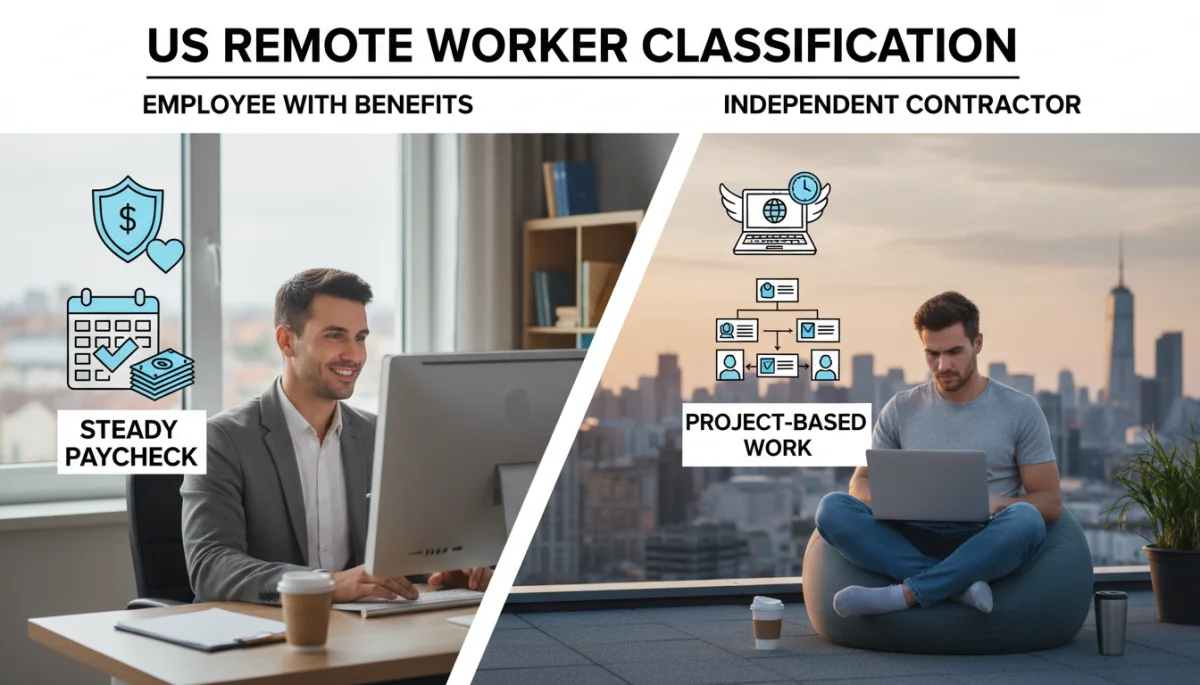
At the heart of US remote worker classification lies the distinction between an employee and an independent contractor. This is not merely a semantic difference; it dictates tax obligations, benefits eligibility, and legal protections. The Internal Revenue Service (IRS) and various state labor departments use specific criteria to determine the appropriate classification, focusing primarily on the degree of control and independence.
Understanding these fundamental differences is paramount for any entity engaging remote talent. Incorrect classification can result in back taxes, penalties, and even lawsuits, making a proactive approach essential for compliance.
IRS common law rules for classification
The IRS provides a set of common law rules that examine the relationship between the worker and the business. These rules fall into three main categories: behavioral control, financial control, and the type of relationship. Each category offers insights into the nature of the working arrangement.
- Behavioral Control: This refers to whether the business has the right to direct or control how the worker does the work. This includes instructions about when, where, and how to do the work, training, and the tools or equipment used. A high degree of behavioral control typically indicates an employer-employee relationship.
- Financial Control: This aspect looks at whether the business controls the business aspects of the worker’s job. Key factors include how the worker is paid, whether expenses are reimbursed, who provides tools and supplies, and the worker’s ability to seek other business opportunities. Workers who can realize a profit or incur a loss are often independent contractors.
- Type of Relationship: This category considers how the worker and the business perceive their relationship. Factors include written contracts, whether the business provides employee benefits, the permanency of the relationship, and whether the services provided are a key aspect of the business.
These three categories are not exhaustive, and no single factor is decisive. Instead, the IRS examines the entire relationship to make a determination. It’s a nuanced assessment that requires careful consideration of all facts and circumstances.
Ultimately, the correct classification hinges on a comprehensive review of the working arrangement. Businesses must avoid making assumptions and instead conduct a thorough analysis based on established legal guidelines to ensure proper classification of their remote workforce.

State-specific considerations for remote workers
While the IRS provides federal guidelines, individual states often have their own, sometimes more stringent, criteria for worker classification. Businesses with remote workers across multiple states face the added complexity of adhering to varying state laws, which can differ significantly from federal standards and from each other. This mosaic of regulations makes understanding US remote worker classification a multi-layered challenge.
Many states, for instance, utilize the ‘ABC test’ for determining independent contractor status, which is generally more challenging for businesses to meet than the IRS common law rules. The ABC test requires a business to satisfy all three conditions for a worker to be classified as an independent contractor.
The ‘ABC test’ explained
The ABC test is a stricter standard used by many states, including California, Massachusetts, and New Jersey, to determine if a worker is an independent contractor. All three conditions must be met:
- (A) The worker is free from the control and direction of the hiring entity in connection with the performance of the work, both under the contract for the performance of the work and in fact. This criterion emphasizes the worker’s autonomy, both contractually and practically.
- (B) The worker performs work that is outside the usual course of the hiring entity’s business. This means the worker’s services are not central to the company’s primary operations. For example, a plumbing company hiring an independent accountant would likely satisfy this, but hiring an independent plumber would not.
- (C) The worker is customarily engaged in an independently established trade, occupation, or business of the same nature as the work performed. This condition requires the worker to be truly operating their own independent business, offering similar services to other clients.
Failing to meet even one of these criteria typically results in the worker being classified as an employee under state law, regardless of federal guidelines. This can create a significant compliance burden for companies employing remote workers across state lines, as they must navigate a patchwork of regulations.
Businesses must research and understand the specific classification laws of every state where their remote workers reside. This often necessitates legal counsel to ensure compliance and mitigate potential risks associated with misclassification. The complexity only underscores the importance of a meticulous approach to worker classification in the remote era.
The implications of misclassification: risks and penalties
Misclassifying remote workers carries severe consequences for businesses, ranging from significant financial penalties to reputational damage and legal disputes. The stakes are high, making accurate US remote worker classification a critical business imperative. Government agencies, both federal and state, are increasingly scrutinizing worker classifications, especially with the surge in remote work arrangements.
The financial repercussions alone can be crippling. Employers found to have misclassified workers may be liable for unpaid employment taxes, including federal and state income tax withholding, Social Security, and Medicare taxes, as well as unemployment insurance contributions. Additionally, they may face penalties for failing to provide mandated benefits, such as workers’ compensation and health insurance, which are typically afforded to employees.
Common penalties for misclassification
The penalties for misclassification vary depending on the jurisdiction and the severity of the offense. However, some common consequences include:
- Back Taxes and Interest: Employers may be required to pay all back employment taxes (federal and state) that should have been withheld, along with interest.
- Penalties for Failure to File: There can be penalties for not filing proper tax forms (e.g., W-2s instead of 1099s).
- Fines for State Labor Law Violations: States often impose their own fines for violations related to minimum wage, overtime, workers’ compensation, and unemployment insurance.
- Lawsuits from Workers: Misclassified workers can sue for unpaid overtime, benefits, and other damages they would have been entitled to as employees.
- Reputational Damage: Public exposure of misclassification can harm a company’s reputation, making it difficult to attract and retain talent.
Beyond the direct financial hits, misclassification can lead to increased administrative burdens, legal fees, and ongoing compliance challenges. It can also foster an environment of distrust among workers, impacting morale and productivity. Therefore, investing time and resources into proper classification is not merely a legal obligation but a strategic business decision to safeguard long-term stability and success.
Best practices for accurate remote worker classification
Given the complexities and potential pitfalls of misclassification, adopting best practices for US remote worker classification is essential. Proactive measures can help businesses navigate the legal landscape confidently, ensuring compliance and fostering positive working relationships. It’s not enough to simply understand the rules; consistent application and regular review are key.
A systematic approach, involving legal counsel and clear internal policies, can significantly reduce the risk of errors. Companies should treat worker classification as an ongoing process, not a one-time event, especially as roles and responsibilities evolve.
Key strategies for employers
- Conduct Regular Audits: Periodically review your remote worker classifications to ensure they align with current federal and state laws. Laws can change, and so can the nature of a worker’s engagement.
- Document Everything: Maintain detailed records of contracts, job descriptions, and communication regarding the worker’s role, autonomy, and compensation. Clear documentation serves as crucial evidence in case of an audit or dispute.
- Seek Legal Counsel: When in doubt, consult with an employment law attorney specializing in worker classification. Their expertise can provide invaluable guidance, especially for complex or multi-state arrangements.
- Educate Managers: Ensure that hiring managers and team leads understand the criteria for worker classification. Their day-to-day interactions can inadvertently shift the nature of a worker’s role, impacting their classification.
- Use Clear Contracts: Draft comprehensive contracts that explicitly define the relationship, responsibilities, and expectations for both employees and independent contractors. These contracts should reflect the actual working arrangement.
By implementing these best practices, businesses can establish a robust framework for managing their remote workforce, minimizing legal exposure, and fostering a fair and compliant work environment. It’s an investment in long-term stability and a commitment to ethical employment practices.
Tools and resources for compliance
Navigating the intricate world of US remote worker classification doesn’t have to be a solo endeavor. A variety of tools and resources are available to assist businesses in maintaining compliance, from government publications to specialized legal and HR software. Leveraging these resources can streamline the classification process and provide much-needed clarity.
Staying informed about the latest regulatory changes is crucial, as employment laws are dynamic. Subscribing to relevant legal newsletters, attending webinars, and consulting official government websites can help businesses stay ahead of potential compliance issues.
Helpful resources for employers
- IRS Publications: The IRS provides extensive guidance, including Publication 15-A, Employer’s Supplemental Tax Guide, and Publication 1779, Independent Contractor or Employee. These documents detail the common law rules and offer illustrative examples.
- State Labor Department Websites: Each state’s labor department website offers specific information on their worker classification laws, including details on the ABC test where applicable. These are essential for multi-state employers.
- Legal Counsel and Consultants: Engaging employment law attorneys or HR consultants specializing in worker classification can provide tailored advice and conduct thorough audits to ensure compliance.
- HR and Payroll Software: Many modern HR and payroll systems incorporate features designed to assist with worker classification and compliance, often integrating with tax regulations and reporting requirements.
- Professional Organizations: Associations like the Society for Human Resource Management (SHRM) offer resources, training, and networking opportunities that can help HR professionals stay informed on classification best practices.
By proactively utilizing these tools and resources, businesses can build a strong foundation for accurate remote worker classification. This strategic approach not only mitigates risks but also empowers companies to confidently embrace the benefits of a flexible, remote workforce while adhering to all legal obligations.
The future of remote work and classification
The rapid growth of remote work is not a fleeting trend but a fundamental shift in how work is conducted. As technology continues to evolve and global talent pools become more accessible, the need for clear and adaptable guidelines for US remote worker classification will only intensify. Future legislative efforts may aim to harmonize federal and state laws, or introduce new categories of workers to better reflect the modern economy.
This ongoing evolution demands vigilance from businesses. What is compliant today may not be tomorrow, necessitating a continuous learning and adaptation process. The ability to correctly classify remote talent will remain a cornerstone of sustainable business operations in the digital age.
Anticipating future changes
Several factors suggest that the landscape of worker classification will continue to evolve:
- Technological Advancements: New platforms and tools for remote collaboration might blur the lines further between traditional employment and independent contracting.
- Gig Economy Expansion: The continued growth of the gig economy will likely prompt further legislative review and potential reforms to address the unique nature of these work arrangements.
- Increased Enforcement: Government agencies are likely to continue their focus on worker misclassification, potentially leading to more audits and stricter penalties.
- Worker Advocacy: As remote workers become a more significant portion of the workforce, there may be increased advocacy for clearer protections and benefits, potentially influencing legislative changes.
- International Considerations: For businesses expanding globally, the complexities of international remote worker classification will add another layer of challenge.
Businesses that proactively monitor these trends and engage with legal and HR experts will be best positioned to adapt. The future of remote work is bright, but its successful integration into the broader economy hinges on a clear and compliant approach to worker classification. Remaining informed and flexible will be key to navigating this dynamic environment.
| Key Point | Brief Description |
|---|---|
| Employee vs. Contractor | Distinction based on behavioral, financial control, and relationship type (IRS common law rules). |
| State-Specific Laws | Many states use the ‘ABC test,’ a stricter standard than federal guidelines, requiring compliance with all three conditions. |
| Misclassification Risks | Penalties include back taxes, fines, legal fees, and lawsuits from misclassified workers. |
| Best Practices | Regular audits, thorough documentation, legal counsel, and clear contracts are crucial for compliance. |
Frequently asked questions about remote worker classification
The primary difference lies in the degree of control and independence. Employees are typically subject to the employer’s control over how and when work is done, while independent contractors have more autonomy, setting their own hours and methods, and often providing services to multiple clients.
Accurate classification is vital to avoid significant legal and financial penalties, including back taxes, fines, and lawsuits. It also ensures compliance with federal and state labor laws, protects the company’s reputation, and fosters fair employment practices for all workers.
The ‘ABC test’ is a stricter state-level standard for classifying independent contractors, requiring three conditions to be met: freedom from control, work outside the usual course of business, and engagement in an independently established trade. States like California, Massachusetts, and New Jersey commonly use it.
No, a single worker cannot hold dual classifications for the same role with the same company. Their classification is determined by the specific criteria of the state where they perform their work, which can differ from federal standards or other states.
If uncertainty arises, businesses should seek legal counsel from an employment law attorney specializing in worker classification. Consulting legal experts helps ensure compliance with complex federal and state laws, mitigating risks and potential liabilities associated with misclassification.
Conclusion
Understanding US remote worker classification is an indispensable task for any business operating in today’s dynamic employment landscape. The distinctions between employees and independent contractors are not just bureaucratic hurdles; they are fundamental to legal compliance, financial stability, and ethical labor practices. By diligently adhering to federal and state guidelines, conducting regular reviews, and leveraging available resources, businesses can confidently navigate these complexities. Proactive classification not only mitigates significant risks but also enables companies to harness the full potential of a flexible, remote workforce, contributing to a more compliant and equitable future of work.
