Remote Work Visa & US Immigration Policy Changes

Navigating the complexities of remote work visas and US immigration policy changes is crucial for international professionals and employers adapting to a globally connected workforce.
The landscape of global employment is rapidly evolving, making the topic of remote work visa and immigration policy changes in the US more relevant than ever. As companies embrace distributed teams and individuals seek greater flexibility, understanding the nuanced legal framework governing international remote work in the United States is paramount. What do these shifts mean for foreign talent and American businesses?
Understanding the Basics of US Work Visas for Remote Workers
Before delving into policy changes, it’s essential to grasp the fundamental categories of US work visas that might apply to remote workers. The United States does not currently offer a dedicated ‘digital nomad’ or ‘remote work’ visa, unlike some other countries. This means remote workers must typically fit into existing immigration categories designed for traditional employment.
The complexity often arises because even if an individual is working remotely for a US-based company, their physical presence in the US for an extended period usually requires a specific visa that authorizes employment. Simply holding a tourist visa (B-1/B-2) is generally insufficient and could lead to serious immigration violations.
Common Visa Categories and Their Remote Work Relevance
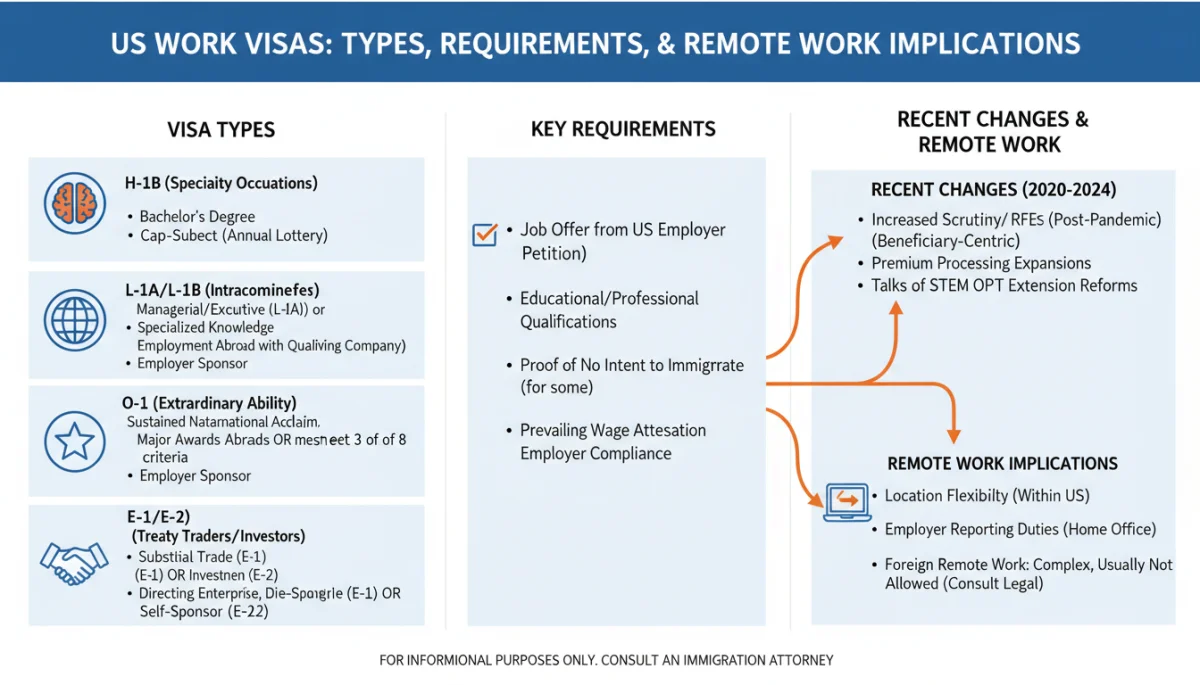
- H-1B Visa: This non-immigrant visa is for specialty occupations requiring a bachelor’s degree or higher. While traditionally associated with in-office roles, an H-1B holder can work remotely within the US for their sponsoring employer, provided the employer meets specific labor condition application (LCA) requirements for the remote work location.
- L-1 Intracompany Transferee Visa: For employees of international companies transferring to a US office. L-1A (managers/executives) and L-1B (specialized knowledge) visas allow remote work within the US for the US entity, often facilitating global team collaboration without requiring a daily commute to a physical office.
- O-1 Visa: For individuals with extraordinary ability in sciences, arts, education, business, or athletics. O-1 holders can work remotely within the US for their approved activities, offering flexibility for highly skilled professionals.
The key takeaway is that the ‘remote’ aspect of work does not exempt foreign nationals from standard US immigration requirements. Employers must still sponsor the appropriate visa, and the worker must maintain their authorized status.
Recent Immigration Policy Shifts Impacting Remote Work
The US immigration landscape is in constant flux, with policy changes often reflecting economic needs, national security concerns, and humanitarian considerations. For remote work, recent shifts have primarily focused on refining existing processes rather than introducing new visa categories. However, these refinements can have significant implications.
One notable trend has been the increased scrutiny of visa applications and petitions, particularly for H-1B visas. While this doesn’t directly target remote work, it indirectly affects the ability of US companies to onboard foreign talent, whether they work from an office or home. Administrative processing delays and increased requests for evidence (RFEs) have become more common, requiring employers and applicants to provide more robust documentation.
Telework and LCA Compliance
A critical area of focus for remote H-1B workers is compliance with Labor Condition Application (LCA) rules. If an H-1B employee moves to a new remote work location, especially in a different metropolitan statistical area (MSA), the employer might need to file a new LCA and potentially an amended H-1B petition. This ensures that the wage and working conditions for the remote role meet the prevailing wage standards for that specific geographic area.
This requirement, though not new, has gained prominence with the surge in remote work. Employers must meticulously track employee locations to remain compliant, avoiding costly penalties and disruptions to their workforce. Failing to address these location changes properly can lead to serious compliance issues.
Challenges for Employers Hiring International Remote Talent
Hiring international remote talent for US-based roles presents a unique set of challenges for employers. Beyond the visa process itself, companies must navigate tax implications, state labor laws, and the administrative burden of compliance. These complexities often deter smaller businesses from tapping into the global talent pool.
One major hurdle is understanding the various state-specific labor laws that might apply when an employee works remotely from a different state, even if they are on a federal visa. This can include minimum wage laws, overtime rules, workers’ compensation, and unemployment insurance. For foreign nationals working remotely within the US, their physical location dictates many of these state-level protections and obligations.
Taxation and Permanent Establishment Concerns
- Corporate Tax Nexus: If a foreign national works remotely from a US state where the company doesn’t have a physical presence, it could inadvertently create a ‘tax nexus’ for the employer in that state, potentially subjecting the company to state corporate income taxes.
- Individual Income Tax: Remote workers are generally subject to US federal and state income taxes on their US-sourced income, even if they are foreign nationals. Proper withholding and reporting are essential.
- International Tax Treaties: For remote workers based outside the US, but working for a US company, international tax treaties can play a role in determining tax obligations, preventing double taxation.
These intricate tax considerations require careful planning and often the advice of tax and immigration legal professionals to ensure full compliance and avoid unexpected liabilities for both the employer and the employee.
The Impact of Digital Nomad Visas on US Policy
While the US has not introduced a specific digital nomad visa, the proliferation of such visas in other countries (e.g., Portugal, Spain, Estonia) is creating a competitive landscape for global talent. These visas allow individuals to live in a country while working remotely for an employer based elsewhere, offering flexibility and tax advantages. This global trend could, over time, influence US immigration policy discussions.
The absence of a US digital nomad visa means that foreign nationals wishing to work remotely for a US company while residing in the US must qualify under traditional work visa categories. Conversely, US citizens working remotely for foreign companies abroad might find these digital nomad visas appealing, potentially leading to a ‘brain drain’ if the US doesn’t adapt its own policies to retain talent.
Discussions among policymakers and industry leaders are ongoing about how the US can remain competitive in attracting and retaining top global talent in the remote work era. This includes exploring potential new visa categories or streamlining existing ones to better accommodate flexible work arrangements. However, significant legislative changes often require broad political consensus, which can be a slow process.
Future Outlook: Potential Changes and Adaptations
Looking ahead, the landscape of remote work visa and immigration policy changes in the US is likely to continue evolving. The demand for remote work is not diminishing, and businesses will continue to seek global talent. This sustained pressure may eventually lead to more explicit policies or even new visa categories tailored to the realities of a distributed workforce.
One area that might see further refinement is the definition of ’employment’ and ‘presence’ for immigration purposes. As technology allows for seamless collaboration across borders, the physical location of a worker becomes less relevant to their productivity but remains critical for immigration compliance. Policymakers may need to reconcile these diverging realities.
Advocacy for Remote Work Visas
- Industry Coalitions: Tech companies and other industries reliant on global talent are increasingly advocating for immigration reforms that support remote and flexible work models.
- Economic Benefits: Arguments for new remote work visa categories often highlight the potential economic benefits, such as increased consumption by remote workers residing in the US and the retention of highly skilled professionals.
- Global Competitiveness: The need for the US to remain globally competitive in attracting talent is a significant driver behind calls for more flexible immigration policies.
While immediate, sweeping changes are unlikely, the conversation is gaining momentum. Employers and foreign nationals should stay informed about legislative proposals and administrative guidance that could impact remote work immigration.
Navigating Compliance for Remote Work in the US
For both employers and foreign nationals, navigating the current immigration framework for remote work in the US requires diligence and expert guidance. Proactive compliance is key to avoiding legal issues, fines, and disruptions to employment.
Employers must establish robust internal policies and procedures to track the physical location of their foreign national employees. This includes having systems in place to manage LCA amendments, H-1B petitions, and other visa-related documentation when remote work locations change. Regular audits of immigration compliance are highly recommended to identify and rectify potential issues before they escalate.
Best Practices for Employers
- Consult Immigration Counsel: Engage experienced immigration attorneys to advise on visa strategies, compliance requirements, and policy changes.
- Document Everything: Maintain thorough records of all immigration-related filings, employee locations, and compliance activities.
- Educate Employees: Ensure foreign national employees understand their visa limitations, reporting obligations, and the importance of communicating any changes in their remote work location.
For foreign nationals, it is crucial to understand the specific terms and conditions of their visa. Adhering to these terms, such as working only for the sponsoring employer and within the approved scope of employment, is paramount. Any planned changes, such as moving to a new state or altering job duties, should be discussed with their employer and immigration counsel well in advance.
The Role of Technology in Remote Work Immigration
Technology plays a dual role in the context of remote work visa and immigration policy changes in the US. On one hand, it enables remote work itself, making geographical boundaries less relevant for collaboration and productivity. Video conferencing, cloud-based tools, and secure networks facilitate distributed teams across continents, challenging traditional notions of a ‘workplace.’ This technological advancement is a primary driver behind the demand for more flexible immigration policies.
On the other hand, technology also aids in compliance and enforcement. Government agencies use sophisticated databases and analytics to process visa applications, track individuals’ movements, and detect potential fraud. For employers, HR software and global mobility platforms can help manage the complexities of international remote work, from tracking visa statuses and expiration dates to monitoring compliance with tax and labor laws in various jurisdictions.
Innovation and Policy Lag
The rapid pace of technological innovation often outstrips the ability of legal and policy frameworks to adapt. Immigration laws, by their nature, tend to be more rigid and slower to change. This creates a ‘policy lag’ where existing regulations struggle to accommodate new work models like widespread remote employment. Bridging this gap is a central challenge for governments worldwide.
However, technology also offers solutions. Digital identity verification, blockchain for secure document management, and AI-powered tools for compliance monitoring could streamline immigration processes in the future. These innovations could make it easier for both governments and businesses to manage remote work immigration effectively, potentially paving the way for more modern visa categories.
Ultimately, the synergy between technological advancements and policy evolution will determine how seamlessly global talent can integrate into the US workforce through remote arrangements. Both employers and foreign nationals must leverage technology while remaining grounded in the current legal realities.
| Key Point | Brief Description |
|---|---|
| No Dedicated Remote Visa | The US lacks a specific ‘digital nomad’ visa; remote workers use existing categories like H-1B or L-1. |
| LCA Compliance for H-1B | Changes in remote work location for H-1B holders often require new LCA filings and potentially amended petitions. |
| Employer Challenges | Companies face complexities in tax, labor law, and compliance when hiring international remote talent. |
| Future Outlook | Policy discussions are ongoing, with potential for new visa categories to adapt to global remote work trends. |
Frequently Asked Questions About Remote Work Visas
No, generally you cannot work remotely in the US on a tourist (B-1/B-2) visa. These visas are for temporary business or pleasure visits and do not authorize employment. Engaging in work activities typically requires a specific work-authorized visa to maintain legal status and avoid immigration violations.
An LCA (Labor Condition Application) amendment is often required for H-1B remote workers if their physical work location changes, particularly to a different metropolitan statistical area. This ensures the employer continues to meet prevailing wage and working condition requirements for the new location, maintaining compliance with immigration laws.
Yes, US companies must consider state tax implications for remote foreign employees. A foreign national working remotely from a US state could create a ‘tax nexus’ for the employer in that state, potentially subjecting the company to state corporate income taxes and other state-specific tax obligations. Expert advice is crucial here.
Currently, there are no specific ‘remote work’ or ‘digital nomad’ visas proposed or enacted in the US. While discussions occur among policymakers and industry groups to adapt to global remote work trends, any significant legislative changes to introduce new visa categories would likely require substantial political consensus and time.
Employers can ensure compliance by consulting immigration counsel, establishing robust internal tracking systems for employee locations and visa statuses, and maintaining detailed documentation. Regular audits and educating employees on their visa limitations and reporting obligations are also vital to navigate the complexities effectively.
Conclusion
The evolving landscape of remote work visa and immigration policy changes in the US presents both opportunities and complexities for global talent and American businesses. While the US currently lacks a dedicated remote work visa, existing categories like H-1B and L-1 can accommodate remote arrangements under strict compliance. Employers must navigate intricate federal and state regulations, including LCA amendments and tax implications, to avoid legal pitfalls. As remote work continues to redefine employment, ongoing policy discussions and technological advancements may pave the way for more streamlined processes or new visa categories. Staying informed and seeking expert legal guidance remains crucial for all stakeholders in this dynamic environment.
