Telehealth Expansion: Key Trends for Healthcare Job Seekers
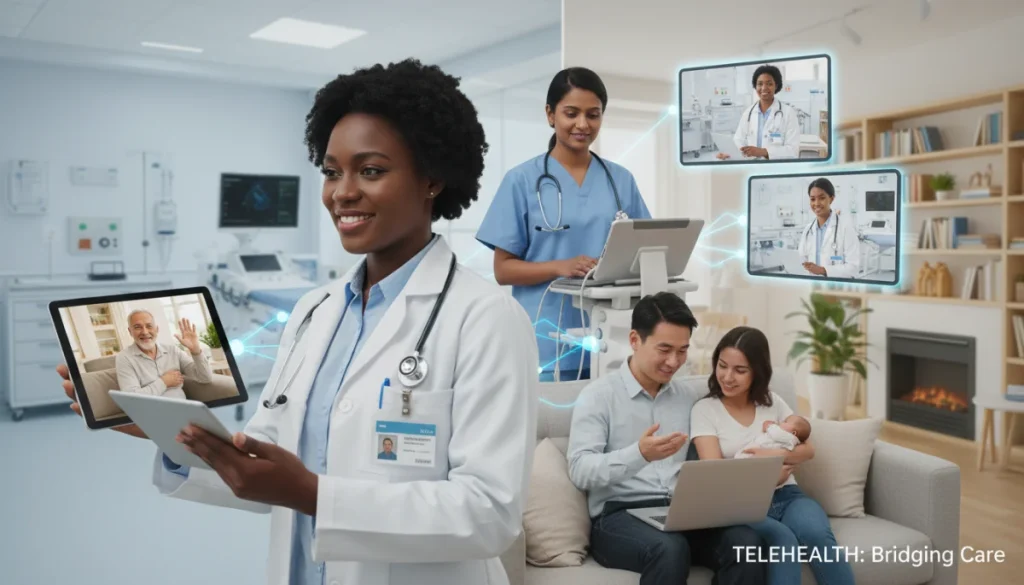
The expansion of telehealth is profoundly impacting healthcare job seekers by creating new roles, shifting demand for specific skills, and accelerating digital transformation across the industry.
The healthcare landscape is undergoing a monumental transformation, largely driven by the rapid adoption and expansion of telehealth services. For those navigating the job market, understanding the impact of telehealth expansion: key trends for healthcare job seekers is not just beneficial, but essential for career growth and stability in this evolving sector.
Understanding the Telehealth Revolution and Its Workforce Implications
Telehealth, once a niche offering, has rapidly become an integral component of healthcare delivery. This shift, accelerated by recent global events, has far-reaching implications for the entire healthcare workforce, from clinicians to administrative staff. The demand for flexible, digitally proficient professionals is at an all-time high.
The integration of telehealth is not merely about video calls; it encompasses a broad spectrum of digital health services, including remote patient monitoring, virtual consultations, e-prescribing, and digital health education. This comprehensive shift requires a workforce equipped with both traditional medical knowledge and advanced technological literacy.
The Genesis of Telehealth Growth
The pandemic acted as a catalyst, pushing telehealth into the mainstream. Regulatory barriers were relaxed, reimbursement policies adapted, and both providers and patients experienced its convenience and effectiveness firsthand. This rapid adoption has solidified telehealth’s place in the future of healthcare.
- Increased patient access to care, especially in rural areas.
- Improved efficiency for healthcare providers.
- Reduced exposure risks for both patients and staff.
- Lower healthcare costs in certain scenarios.
As telehealth continues to mature, its impact on employment trends becomes clearer. New roles are emerging, existing roles are being redefined, and certain skills are becoming indispensable. Job seekers must proactively adapt to these changes to remain competitive and successful in the evolving healthcare ecosystem.
In conclusion, the telehealth revolution is fundamentally reshaping how healthcare is delivered and, consequently, the skills and roles required within the industry. A deep understanding of these shifts is paramount for any healthcare professional looking to thrive in this new era.
Evolving Roles and New Job Opportunities in Telehealth
The expansion of telehealth is not just changing how existing roles operate; it is actively creating entirely new job categories and specialized positions. This presents both challenges and exciting opportunities for healthcare job seekers. Understanding these evolving roles is crucial for strategic career planning.
From dedicated telehealth coordinators to specialists in remote patient monitoring, the demand for professionals with specific telehealth expertise is growing. These roles often blend clinical acumen with technological proficiency and strong communication skills, highlighting a multidisciplinary approach to modern healthcare.
Emergence of Telehealth-Specific Positions
Several positions are either new or have been significantly amplified by telehealth’s rise. These roles require a unique blend of clinical understanding, technical aptitude, and patient engagement skills adapted for virtual environments.
- Telehealth Coordinator: Manages the scheduling, technology, and logistics of virtual appointments.
- Virtual Care Nurse: Provides direct patient care, education, and monitoring remotely.
- Remote Patient Monitoring Specialist: Oversees and interprets data from remote monitoring devices.
- Digital Health Educator: Teaches patients and staff how to effectively use telehealth platforms.
Beyond these direct care roles, the infrastructure supporting telehealth also requires a robust workforce. This includes IT professionals specializing in healthcare systems, cybersecurity experts focused on patient data privacy, and data analysts to interpret telehealth usage and outcomes. The breadth of opportunities spans clinical, technical, and administrative domains.
Furthermore, traditional roles like physicians, therapists, and counselors are increasingly incorporating telehealth into their daily practices. This means that even established professionals need to develop competencies in virtual care delivery to meet contemporary patient needs and employer expectations.
In summary, the growth of telehealth is diversifying the healthcare job market, introducing specialized roles while also transforming existing ones. Job seekers should explore these new avenues and prepare for the unique demands of a digitally integrated healthcare system.
Essential Skills for Success in a Telehealth-Driven Market
As telehealth continues its upward trajectory, the skill sets required for healthcare professionals are undergoing a significant evolution. Beyond traditional clinical competencies, a new array of technical, interpersonal, and adaptive skills are becoming indispensable for success in this digitally-focused environment.
Healthcare job seekers must proactively cultivate these essential skills to stand out in a competitive market. Employers are increasingly prioritizing candidates who can seamlessly transition between in-person and virtual care models, demonstrating proficiency in both domains.
Key Competencies for the Modern Healthcare Professional
The shift to telehealth emphasizes a blend of technological savvy, refined communication, and strong problem-solving abilities. These skills are critical for effective patient engagement and efficient care delivery in a virtual setting.
- Technological Proficiency: Comfort and expertise in using various telehealth platforms, electronic health records (EHR), and remote monitoring devices. This includes troubleshooting basic technical issues.
- Virtual Communication Skills: Ability to convey empathy, build rapport, and communicate complex medical information clearly and concisely through video calls, chat, and other digital mediums.
- Adaptability and Flexibility: Capacity to adjust to rapidly changing technologies, protocols, and patient needs within a dynamic virtual environment.
- Digital Literacy and Data Security: Understanding of data privacy regulations (like HIPAA in the US) and best practices for securing patient information in digital interactions.
Beyond these, critical thinking remains paramount, especially when diagnosing or managing conditions remotely where physical examination cues are limited. Professionals must be adept at gathering comprehensive patient histories and utilizing available digital tools effectively to inform clinical decisions.
Furthermore, cultural competence is crucial, as telehealth expands access to diverse patient populations. Understanding and respecting varied cultural backgrounds can significantly enhance the effectiveness of virtual care interactions. Continuous learning and professional development in these areas are vital for long-term career success.
In conclusion, the telehealth-driven market demands a broader skill set than ever before. Healthcare job seekers who invest in developing strong technological, communication, and adaptive capabilities will be well-positioned to thrive in this evolving landscape.
Impact on Healthcare Administration and Operations
The expansion of telehealth extends its influence far beyond direct patient care, profoundly reshaping healthcare administration and operational processes. This brings about new challenges and opportunities for administrative professionals, requiring a re-evaluation of traditional workflows and a focus on digital integration.
Healthcare systems are now tasked with managing virtual visit logistics, ensuring regulatory compliance across digital platforms, and optimizing the patient experience from a remote perspective. This necessitates administrative staff with strong organizational skills and an understanding of telehealth infrastructure.
Transforming Administrative Workflows
Telehealth integration often means redesigning patient intake processes, scheduling systems, and billing procedures to accommodate virtual encounters. This can lead to increased efficiency but also requires careful planning and execution.
- Digital Patient Onboarding: Streamlining the process for new patients to register and prepare for virtual appointments.
- Optimized Scheduling Systems: Implementing software that efficiently manages both in-person and virtual appointment slots.
- Telehealth Billing and Reimbursement: Navigating complex billing codes and reimbursement policies specific to virtual care services.
- Data Management and Analytics: Collecting and analyzing data on telehealth utilization, patient outcomes, and operational efficiency to inform strategic decisions.
The demand for healthcare IT professionals with expertise in telehealth platforms, electronic health records (EHR) integration, and data security has surged. These roles are critical for maintaining the technical backbone of telehealth services and ensuring compliance with stringent healthcare regulations.
Moreover, the focus on patient satisfaction in telehealth means administrative roles are increasingly involved in patient support, troubleshooting technical issues, and ensuring a smooth virtual care journey. This requires a customer-service oriented approach combined with technical literacy.
Ultimately, the administrative and operational aspects of healthcare are being redefined by telehealth. Professionals in these areas must embrace digital tools and adapt their expertise to support a hybrid model of care delivery, ensuring seamless integration and efficient service provision.
Regulatory Landscape and Policy Changes in Telehealth
The rapid expansion of telehealth has been closely accompanied by significant shifts in the regulatory landscape and healthcare policy. These changes are crucial for healthcare job seekers to understand, as they directly influence practice guidelines, reimbursement models, and the overall sustainability of virtual care services.
Policymakers have been working to balance innovation with patient safety, privacy, and equitable access. The evolving nature of these regulations means professionals must stay informed to ensure compliance and adapt their practices accordingly.
Navigating the Legal and Ethical Frameworks
Key regulatory changes, particularly in the United States, have facilitated telehealth’s growth. Understanding these frameworks is essential for all healthcare professionals involved in virtual care.
- State Licensure Portability: Efforts to allow practitioners to provide telehealth services across state lines, though still a complex area.
- HIPAA Compliance: Strict adherence to patient privacy and data security regulations remains paramount in telehealth.
- Reimbursement Parity: Policies aiming for equal payment for telehealth services compared to in-person visits have been critical for adoption.
- Prescribing Regulations: Rules governing the remote prescribing of controlled substances and other medications continue to evolve.

The temporary waivers and flexibilities introduced during the public health emergency have highlighted the potential for telehealth, prompting discussions about making many of these changes permanent. This ongoing dialogue shapes the future environment for telehealth practitioners.
For job seekers, understanding these regulatory nuances can be a significant advantage. It allows them to identify employers who are compliant and forward-thinking, and to tailor their own professional development to align with current and anticipated legal requirements. Advocacy for sensible, patient-centered telehealth policies is also an area where professionals can contribute.
In conclusion, the regulatory and policy environment for telehealth is dynamic and complex. Staying abreast of these changes is not just about compliance, but about understanding the foundational elements that will shape the long-term viability and growth of telehealth careers.
Future Outlook: Sustaining Growth and Innovation in Telehealth Careers
The future of telehealth appears robust, with expectations for sustained growth and continuous innovation. For healthcare job seekers, this translates into a dynamic career landscape where adaptability, continuous learning, and a forward-thinking mindset will be key to long-term success. The initial surge has settled into a steady integration, paving the way for more sophisticated applications.
The industry is moving beyond basic video consultations to embrace advanced technologies like artificial intelligence, virtual reality, and sophisticated remote monitoring tools. These innovations will further shape job roles and demand even more specialized skills from the workforce.
Anticipated Trends and Opportunities
Several trends are expected to define the next phase of telehealth expansion, creating new niches and expanding existing ones. These include greater integration with mental health services, personalized care models, and a focus on preventative health.
- AI-Powered Diagnostics and Support: Utilizing AI for preliminary symptom assessment, treatment recommendations, and administrative automation.
- Virtual Reality for Therapy and Training: Employing VR for mental health therapy, pain management, and medical education.
- Wearable Technology Integration: Seamlessly incorporating data from smartwatches and other wearables for continuous patient monitoring.
- Hybrid Care Models: A balanced approach combining in-person visits with virtual care, offering flexibility for both patients and providers.
The emphasis will increasingly be on value-based care, where telehealth can play a pivotal role in improving patient outcomes and reducing costs. This will require professionals who can leverage technology to deliver efficient, effective, and patient-centered care. Investment in digital health infrastructure and training will continue to be a priority for healthcare organizations.
Moreover, the global nature of health challenges may also drive further cross-border telehealth collaboration, potentially creating international job opportunities for highly skilled professionals. The push for health equity will also see telehealth expanding to underserved communities, requiring culturally sensitive and accessible digital health solutions.
In conclusion, the future of telehealth careers is bright and filled with innovation. Job seekers who embrace technological advancements, commit to lifelong learning, and understand the evolving needs of patients and healthcare systems will find themselves well-prepared for the opportunities ahead.
| Key Trend | Brief Description |
|---|---|
| Evolving Job Roles | New positions like Telehealth Coordinator and Virtual Care Nurse are emerging, alongside transformed traditional roles. |
| Essential Skill Shift | Demand for technological proficiency, virtual communication, and adaptability is increasing. |
| Administrative Transformation | Healthcare operations and administration are adapting to digital workflows and data management. |
| Regulatory Adaptations | Policy changes regarding licensure, reimbursement, and privacy are continually shaping telehealth practices. |
Frequently Asked Questions About Telehealth and Healthcare Jobs
Telehealth involves delivering healthcare services remotely using technology. For job seekers, it means a growing demand for digitally skilled professionals, new specialized roles, and a need for existing healthcare workers to adapt to virtual care delivery methods.
New roles include telehealth coordinators, virtual care nurses, remote patient monitoring specialists, and digital health educators. There’s also increased demand for IT professionals specializing in healthcare technology and data security to support telehealth infrastructure.
Essential skills include technological proficiency with telehealth platforms, strong virtual communication, adaptability to new technologies, and a deep understanding of digital literacy and patient data security protocols like HIPAA compliance.
Administrative roles are transforming to manage digital patient onboarding, optimize virtual appointment scheduling, handle telehealth-specific billing, and analyze data to improve operational efficiency. IT support and data management skills are increasingly vital.
No, telehealth is not expected to completely replace in-person care. Instead, it is evolving into a complementary component, fostering hybrid care models that blend virtual and traditional approaches to offer more flexible, accessible, and efficient healthcare services.
Conclusion
The impact of telehealth expansion on healthcare job seekers is undeniable and continues to grow. This transformative shift is redefining traditional roles, creating new opportunities, and demanding a dynamic blend of clinical expertise, technological proficiency, and adaptive skills. For professionals looking to thrive in this evolving landscape, understanding these key trends is paramount. By embracing continuous learning and developing competencies in virtual care delivery, job seekers can confidently navigate the future of healthcare, contributing to a more accessible, efficient, and patient-centered system.
