AI in Healthcare: New Job Roles Emerging

The integration of AI into healthcare is creating a paradigm shift, generating a host of new, specialized job roles that demand a blend of technological expertise and medical understanding, fundamentally reshaping the industry’s workforce.
The landscape of healthcare is undergoing a profound transformation, driven by the rapid advancements in artificial intelligence. This technological revolution isn’t just optimizing existing processes; it’s actively creating an entirely new ecosystem of career opportunities. Understanding AI in Healthcare Jobs is crucial for anyone looking to navigate or enter this evolving field, as it promises innovation and specialized roles that will redefine patient care and medical research for decades to come.
The AI Revolution in Healthcare: A New Era
The integration of artificial intelligence into healthcare is no longer a futuristic concept but a present-day reality, fundamentally reshaping how medical services are delivered, researched, and managed. This paradigm shift extends beyond mere automation, delving into complex areas like predictive analytics, personalized medicine, and advanced diagnostics. The sheer volume of data generated within healthcare, from electronic health records to genomic sequencing, provides fertile ground for AI algorithms to uncover patterns and insights that human analysis alone might miss.
This technological leap is not intended to replace human expertise but rather to augment it, empowering healthcare professionals with tools that enhance their capabilities, reduce diagnostic errors, and streamline administrative burdens. The result is a more efficient, precise, and patient-centric healthcare system. However, this evolution necessitates a workforce equipped with new skills, leading to the emergence of specialized roles that bridge the gap between clinical practice and advanced technology.
Redefining Diagnostics and Treatment
AI’s ability to process and interpret vast amounts of medical imaging data, such as X-rays, MRIs, and CT scans, with remarkable accuracy and speed is revolutionizing diagnostics. Early detection of diseases like cancer and retinal conditions is becoming more feasible, often surpassing human capabilities in consistency.
- Enhanced Imaging Analysis: AI algorithms can identify subtle anomalies in scans that might be overlooked by the human eye.
- Personalized Treatment Plans: By analyzing patient data, AI helps tailor treatment protocols, predicting responses to therapies.
- Drug Discovery Acceleration: AI significantly speeds up the identification of potential drug candidates and optimizes clinical trial designs.
\
Beyond diagnostics, AI is also transforming treatment strategies. From predicting disease progression to optimizing drug dosages, AI applications are paving the way for highly personalized and effective interventions. This level of precision medicine was once a distant dream but is now becoming an attainable standard, driven by intelligent systems that learn and adapt.
Emerging Job Roles: Bridging Tech and Medicine
As AI continues its ascent in healthcare, a new constellation of job roles is rapidly emerging, demanding professionals who possess a unique blend of technological acumen and medical understanding. These roles are critical for ensuring that AI solutions are not only technically sound but also ethically responsible, clinically relevant, and seamlessly integrated into existing healthcare workflows. The demand for these hybrid professionals is escalating, creating a dynamic job market for those prepared to embrace this interdisciplinary challenge.
The traditional boundaries between tech and medicine are blurring, giving rise to positions that require individuals to speak both languages. This means understanding complex algorithms while also grasping the nuances of patient care, regulatory compliance, and clinical outcomes. For healthcare organizations, attracting and retaining talent for these roles is paramount to successfully deploying and leveraging AI technologies.
AI Ethicist in Healthcare
With the power of AI comes the responsibility to ensure its ethical application. AI ethicists are crucial in navigating the complex moral and societal implications of AI in healthcare, from data privacy to algorithmic bias. They establish guidelines and policies to ensure AI systems are fair, transparent, and respectful of patient autonomy.
- Bias Mitigation: Identifying and addressing biases in AI algorithms that could lead to discriminatory outcomes.
- Privacy and Data Security: Ensuring patient data used by AI is protected and complies with regulations like HIPAA.
- Accountability Frameworks: Developing systems for accountability when AI makes critical decisions affecting patient health.
The role of an AI ethicist is not just reactive but proactive, anticipating potential ethical dilemmas and building safeguards into AI development from the ground up. This involves close collaboration with developers, clinicians, and legal experts to forge a path that maximizes AI’s benefits while minimizing its risks.
Data Scientists and AI Engineers: The Foundation of Innovation
At the core of AI’s transformative power in healthcare are the data scientists and AI engineers who build, refine, and deploy these intelligent systems. Their expertise is indispensable for extracting meaningful insights from the vast oceans of healthcare data, developing predictive models, and creating robust AI applications that can withstand the rigorous demands of clinical environments. These professionals are the architects of the future of healthcare, translating raw data into actionable intelligence.
The complexity of healthcare data—which includes everything from unstructured clinical notes to high-dimensional genomic data—requires highly specialized skills in machine learning, statistical modeling, and data visualization. Beyond technical prowess, these roles also demand an understanding of biological processes and medical terminology to ensure that the AI models are not only accurate but also clinically relevant and interpretable by healthcare practitioners.
Specialized Roles and Their Impact
The breadth of data in healthcare necessitates a range of specialized data science and engineering roles. Each plays a vital part in the AI ecosystem, contributing to different stages of development and deployment. Their collective efforts drive the innovation that is making healthcare more efficient, precise, and personalized.
- Medical Data Scientist: Specializes in analyzing clinical data, identifying trends, and developing predictive models for disease prognosis.
- Clinical AI Engineer: Focuses on building and deploying AI models within clinical settings, ensuring their seamless integration with existing systems.
- Bioinformatics Scientist: Works with genomic and proteomic data, using AI to uncover genetic markers for diseases and personalize treatments.
These roles are not just about coding; they involve a deep understanding of the problem domain, requiring constant collaboration with clinicians, researchers, and other stakeholders. Their work directly impacts patient outcomes, making accuracy, reliability, and validation paramount. The demand for these highly skilled professionals will only continue to grow as AI becomes more embedded in every facet of healthcare operations.

Clinical AI Specialists and Coordinators: Integrating AI into Practice
The successful integration of AI into daily clinical practice hinges on a new cadre of professionals: clinical AI specialists and coordinators. These individuals act as vital bridges between the technological capabilities of AI systems and the practical needs of healthcare providers and patients. Their role is to ensure that AI tools are not just developed but are effectively implemented, understood, and utilized within hospitals, clinics, and other care settings, maximizing their benefits while minimizing disruption.
This involves a unique blend of clinical knowledge, technical literacy, and strong communication skills. They train staff, troubleshoot issues, and gather feedback to continuously improve AI integration. Without these specialists, even the most advanced AI solutions risk remaining underutilized or misapplied, failing to deliver on their transformative potential.
Facilitating AI Adoption and Training
One of the primary responsibilities of clinical AI specialists is to educate and train healthcare staff on how to effectively use AI tools. This involves demystifying complex technologies and demonstrating their practical benefits in improving patient care and operational efficiency. They also play a key role in developing training materials and workshops.
- User Training: Conducting workshops and providing one-on-one training for doctors, nurses, and administrative staff on new AI platforms.
- Workflow Integration: Assisting in adapting clinical workflows to incorporate AI tools seamlessly, ensuring minimal disruption.
- Performance Monitoring: Tracking the effectiveness of AI systems in clinical use and providing feedback for continuous improvement.
These roles are crucial for fostering acceptance and proficiency with AI technologies among medical professionals. They address concerns, demonstrate value, and ensure that AI becomes an intuitive and indispensable part of the healthcare toolkit, rather than a challenging new addition. Their efforts are essential for realizing the full potential of AI in enhancing patient care.
Regulatory and Legal Experts for AI in Healthcare
As AI applications in healthcare become more sophisticated and widespread, the need for specialized regulatory and legal expertise grows exponentially. These professionals are tasked with navigating the intricate web of laws, regulations, and ethical guidelines governing the development, deployment, and use of AI technologies in a highly sensitive sector. Their work ensures that AI innovations comply with existing legal frameworks, uphold patient safety, and address emerging challenges related to data privacy, liability, and intellectual property.
The regulatory landscape for AI in healthcare is rapidly evolving, often struggling to keep pace with technological advancements. This creates a complex environment where legal experts must not only interpret current laws but also anticipate future regulatory requirements and contribute to the development of new policies. Their insights are critical for both developers and healthcare providers to avoid legal pitfalls and build trust in AI solutions.
Navigating Complex Compliance
The legal and regulatory challenges surrounding AI in healthcare are multifaceted, encompassing everything from FDA approvals for AI-driven medical devices to the ethical use of patient data. Experts in this field provide invaluable guidance to ensure that AI products and services meet stringent standards.
- FDA Approval Pathways: Guiding AI medical device developers through the complex regulatory approval process.
- Data Governance and Privacy: Ensuring AI systems comply with HIPAA, GDPR, and other data protection laws.
- Liability and Accountability: Addressing legal questions regarding responsibility when AI systems make errors or contribute to adverse events.
The role of regulatory and legal experts is not merely about compliance; it’s about building a framework of trust and safety for AI in healthcare. By ensuring adherence to the highest standards, they help foster public confidence and facilitate the responsible adoption of these powerful technologies, ultimately benefiting patients and the healthcare system as a whole.
Patient Experience and AI: New Human-Centric Roles
While AI often conjures images of machines and algorithms, its application in healthcare is increasingly focused on enhancing the human experience, particularly for patients. This shift is giving rise to new roles that blend technology with empathy, ensuring that AI solutions improve patient engagement, access to care, and overall satisfaction. These human-centric roles are vital for ensuring that AI serves to augment, rather than diminish, the personal connection inherent in healthcare.
These professionals work to design AI interfaces that are intuitive and accessible, develop AI-powered tools that empower patients with information, and manage the ethical considerations of AI in patient interactions. Their goal is to leverage AI to make healthcare more convenient, understandable, and responsive to individual patient needs, thereby fostering a more proactive and engaged patient population.
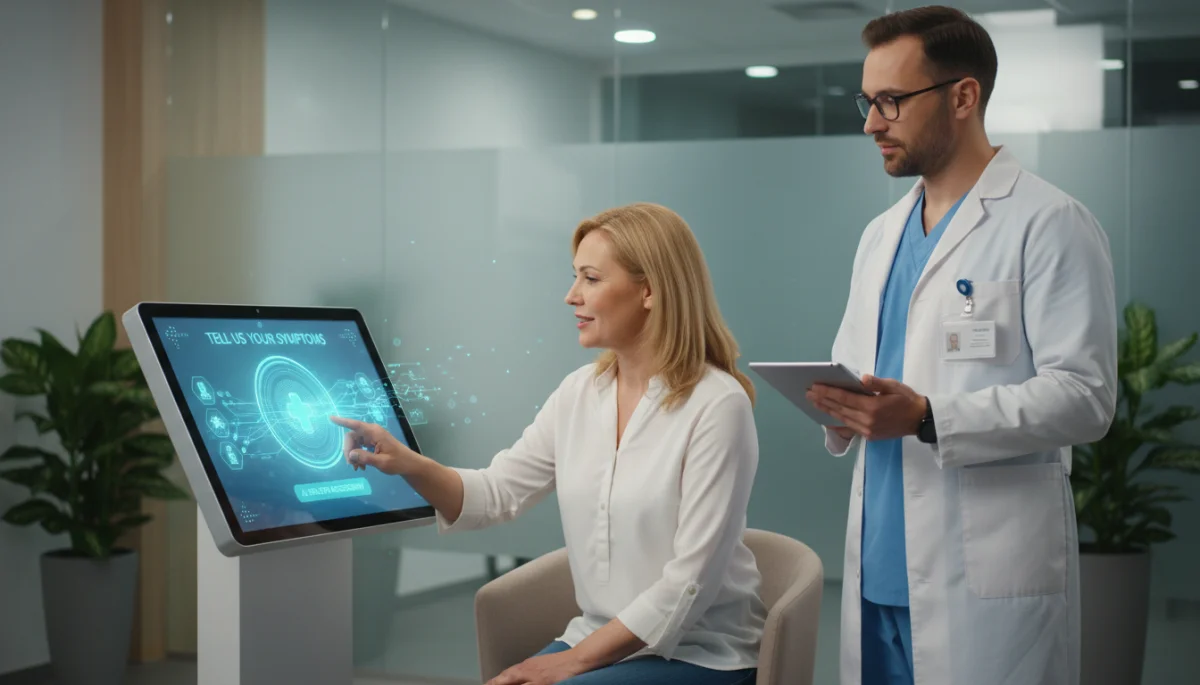
Designing for Patient Empowerment
AI’s potential to empower patients is vast, from personalized health coaching to intelligent symptom checkers. New roles are emerging to design and implement these tools, ensuring they are user-friendly, culturally sensitive, and genuinely beneficial to patients. These roles require a deep understanding of human-computer interaction and patient psychology.
- AI Patient Advocate: Helps patients understand AI-driven diagnoses and treatment plans, ensuring their preferences are considered.
- Digital Health Navigator: Guides patients through AI-powered health platforms, assisting with telemedicine and remote monitoring tools.
- UX/UI Designer for Medical AI: Creates intuitive and empathetic user interfaces for AI applications used by patients and clinicians.
These roles are critical in humanizing AI in healthcare, ensuring that technology serves to enhance the patient journey rather than complicate it. By focusing on user experience and patient advocacy, these professionals ensure that AI’s power is harnessed to create a more accessible, transparent, and ultimately more compassionate healthcare system, fostering better health outcomes through informed engagement.
The Future Workforce: Skills and Education for AI in Healthcare
The transformative impact of AI on healthcare necessitates a significant evolution in the skills and educational pathways required for the future workforce. Traditional medical and technical education alone will no longer suffice; instead, a multidisciplinary approach that blends clinical knowledge with advanced technological competencies will be paramount. Preparing for these emerging roles requires a forward-thinking perspective on curriculum development, continuous learning, and interdisciplinary collaboration.
Educational institutions, healthcare organizations, and technology companies must work in concert to develop programs that equip professionals with the necessary expertise. This includes not only technical skills in AI and data science but also critical thinking, ethical reasoning, and strong communication abilities to effectively bridge the gap between complex algorithms and human care.
Essential Skills for the AI Healthcare Era
Success in the evolving healthcare landscape demands a diverse skill set. Professionals will need to be adaptable, lifelong learners, capable of integrating new technologies into their practice while maintaining a strong ethical compass. The emphasis will be on problem-solving and understanding the broader implications of AI.
- Data Literacy and Analytics: Ability to understand, interpret, and work with complex healthcare datasets.
- Machine Learning Fundamentals: Basic understanding of AI algorithms and their application in medical contexts.
- Ethical AI Principles: Knowledge of ethical considerations, bias, privacy, and fairness in AI development and deployment.
- Interdisciplinary Communication: Ability to collaborate effectively with both technical and clinical teams.
Beyond these specific skills, a foundational understanding of healthcare systems, patient safety, and regulatory environments will remain crucial. The future workforce in healthcare AI will be characterized by its versatility, its commitment to ethical practice, and its capacity for continuous learning and adaptation in a rapidly changing technological landscape. This holistic approach to skill development will be key to unlocking the full potential of AI in improving global health.
| Key Role | Brief Description |
|---|---|
| AI Ethicist | Ensures ethical and responsible AI deployment in healthcare, addressing bias and privacy concerns. |
| Medical Data Scientist | Analyzes complex healthcare data to develop predictive models and insights for patient care. |
| Clinical AI Specialist | Facilitates the integration and adoption of AI tools into daily clinical practice for healthcare providers. |
| Regulatory & Legal Expert | Navigates legal and compliance frameworks for AI in healthcare, ensuring ethical and safe use. |
Frequently Asked Questions About AI in Healthcare Jobs
The primary drivers include the exponential growth of healthcare data, advancements in machine learning algorithms, the need for personalized medicine, and the demand for improved operational efficiencies. These factors collectively create opportunities for specialized professionals to develop and integrate AI solutions.
While AI will automate some routine tasks, it is more likely to augment existing roles and create new ones rather than completely replace them. The focus will shift towards human-AI collaboration, requiring healthcare professionals to develop new skills to work alongside intelligent systems for enhanced patient care.
Key skills include data literacy, machine learning fundamentals, ethical reasoning, interdisciplinary communication, and a strong understanding of clinical workflows. A blend of technical expertise and medical knowledge is crucial for navigating this evolving field effectively.
Transitioning into an AI healthcare role often involves pursuing specialized certifications, advanced degrees in data science or bioinformatics, or gaining practical experience through internships or projects. Networking with professionals in both tech and healthcare sectors is also highly beneficial for career advancement.
Ethical considerations include ensuring data privacy and security, mitigating algorithmic bias to prevent discriminatory outcomes, establishing clear accountability frameworks for AI-driven decisions, and maintaining transparency in AI’s functionalities. AI ethicists are emerging to address these critical challenges proactively.
Conclusion
The rise of AI in healthcare is not merely a technological trend; it represents a fundamental reshaping of the industry’s workforce and its approach to patient care. This evolution is creating a wealth of new, specialized job roles that demand a unique fusion of technical prowess, clinical understanding, and ethical foresight. For professionals and aspiring talents, embracing these emerging opportunities will be key to contributing to a more efficient, precise, and human-centric healthcare future. As BusqueJobs, we are committed to helping individuals navigate this dynamic landscape, connecting them with the pioneering roles that define the next generation of medical innovation.
