AI’s Impact on U.S. Hotels: Efficiency & Job Evolution
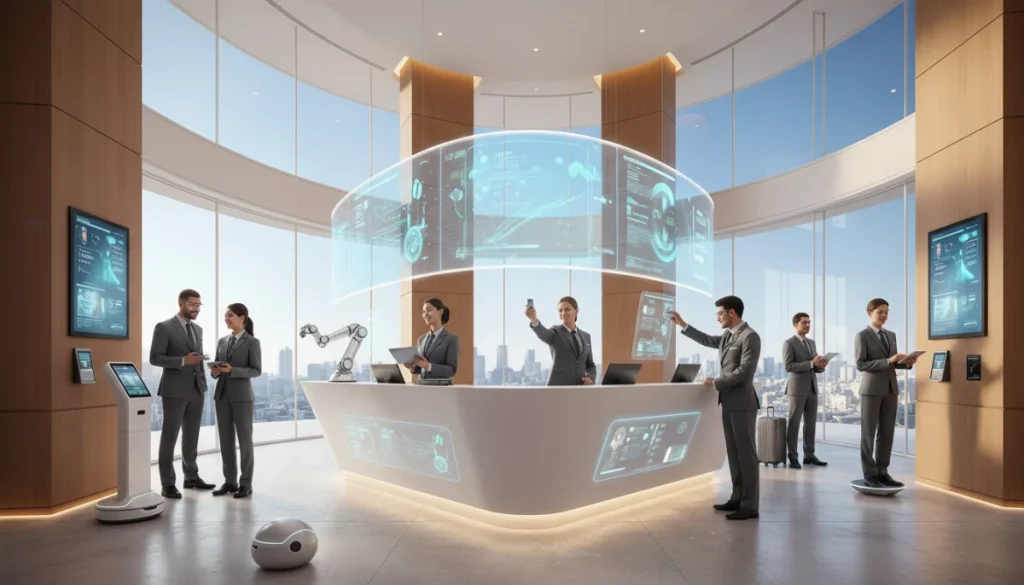
Artificial intelligence is revolutionizing U.S. hotel operations by automating tasks, personalizing guest experiences, and optimizing resource management, leading to significant efficiency gains and a dynamic evolution of job roles within the industry.
The hospitality sector in the United States is undergoing a profound transformation, with artificial intelligence emerging as a pivotal force. Understanding the impact of AI on U.S. hotel operations: efficiency gains and job evolution is crucial for stakeholders navigating this evolving landscape. How will this technology reshape guest experiences and redefine traditional roles?
The AI Revolution in Hotel Front Desk Operations
The front desk, traditionally the heart of hotel interaction, is experiencing a significant overhaul due to AI. From automated check-ins to virtual concierges, AI-powered solutions are streamlining processes, reducing wait times, and allowing human staff to focus on more complex guest needs.
AI’s integration into front desk operations extends beyond simple automation. It encompasses sophisticated systems that can predict guest preferences, manage room assignments based on intricate algorithms, and even handle multilingual communications seamlessly. This allows for a more personalized and efficient arrival and departure experience, setting a positive tone for the entire stay.
Automated Check-in and Check-out Systems
Guests increasingly prefer self-service options, and AI-driven kiosks or mobile apps provide just that. These systems can verify identities, issue digital keys, and process payments without human intervention, significantly speeding up the process during peak hours.
- Reduced queue times for guests upon arrival and departure.
- Increased operational efficiency by freeing up human staff.
- Enhanced guest privacy and convenience through self-service.
- 24/7 availability for check-in/check-out, regardless of staff presence.
The implementation of these systems requires robust cybersecurity measures and intuitive user interfaces to ensure a smooth and secure experience for all guests. Hotels must also maintain human oversight to assist guests who prefer traditional interactions or encounter technical difficulties.
Virtual Concierge and Chatbots
AI-powered chatbots and virtual concierges are becoming indispensable tools for instant guest support. These systems can answer frequently asked questions, provide local recommendations, assist with booking restaurant reservations, and even manage minor service requests.
The beauty of these AI assistants lies in their availability. Guests can receive immediate responses at any time, day or night, improving overall satisfaction. This also reduces the workload on human concierges, allowing them to dedicate their expertise to more nuanced and personalized requests that require human empathy and judgment.
In conclusion, AI at the front desk is not about replacing humans entirely, but rather augmenting their capabilities. It creates a more efficient, responsive, and personalized guest experience, while also optimizing staffing resources and allowing human employees to engage in higher-value interactions.
Optimizing Housekeeping and Maintenance with AI
Beyond guest-facing roles, AI is making substantial inroads into the often-unseen but critical areas of housekeeping and maintenance. These back-of-house operations are benefiting from AI’s ability to predict needs, optimize schedules, and enhance resource allocation, leading to significant cost savings and improved service quality.
The complexities of managing hundreds of rooms, each with unique cleaning and maintenance requirements, are ideal for AI optimization. Predictive analytics, smart sensors, and automated task assignments are transforming how hotels manage their physical assets and ensure guest comfort.
Predictive Maintenance and Smart Sensors
AI algorithms can analyze data from smart sensors installed in HVAC systems, plumbing, and other critical infrastructure to predict potential equipment failures before they occur. This proactive approach to maintenance prevents costly breakdowns and minimizes disruption to guests.
- Reduced downtime for essential hotel facilities.
- Lower repair costs through early intervention and preventative measures.
- Improved guest comfort by avoiding unexpected system malfunctions.
- Optimized lifespan of hotel equipment and infrastructure.
Implementing predictive maintenance requires an initial investment in sensor technology and data analytics platforms, but the long-term benefits in terms of cost savings and guest satisfaction are substantial. It shifts the paradigm from reactive repairs to proactive asset management.
AI-Enhanced Housekeeping Scheduling
Traditional housekeeping scheduling can be inefficient, leading to wasted time or delayed room readiness. AI can optimize schedules by considering factors such as expected check-out times, guest preferences (e.g., specific cleaning times), room occupancy, and the availability of staff.
This intelligent scheduling ensures that rooms are cleaned and prepared faster, leading to quicker turnaround times and the ability to accommodate early check-ins. It also helps in distributing workload more evenly among staff, improving morale and reducing burnout. AI can dynamically adjust schedules in real-time based on unforeseen events, such as late check-outs or sudden guest requests.
Ultimately, AI in housekeeping and maintenance ensures that hotel facilities are always in optimal condition, enhancing the guest experience and contributing to the hotel’s reputation for quality and efficiency. It transforms these vital operational areas into data-driven, highly responsive systems.
Personalized Guest Experiences through AI
One of the most exciting applications of AI in U.S. hotels is its ability to deliver hyper-personalized guest experiences. By analyzing vast amounts of data—from past stays and preferences to real-time interactions—AI can tailor services, recommendations, and communications, making each guest feel uniquely valued.
This level of personalization moves beyond basic loyalty programs, creating memorable and distinctive stays that foster greater guest satisfaction and repeat business. AI allows hotels to anticipate needs and offer relevant services even before a guest articulates them.
AI-Driven Recommendation Engines
Similar to how streaming services suggest movies, AI can recommend local attractions, dining options, or hotel services (like spa treatments or special events) based on a guest’s profile and past behavior. This proactive approach helps guests discover experiences they genuinely enjoy.
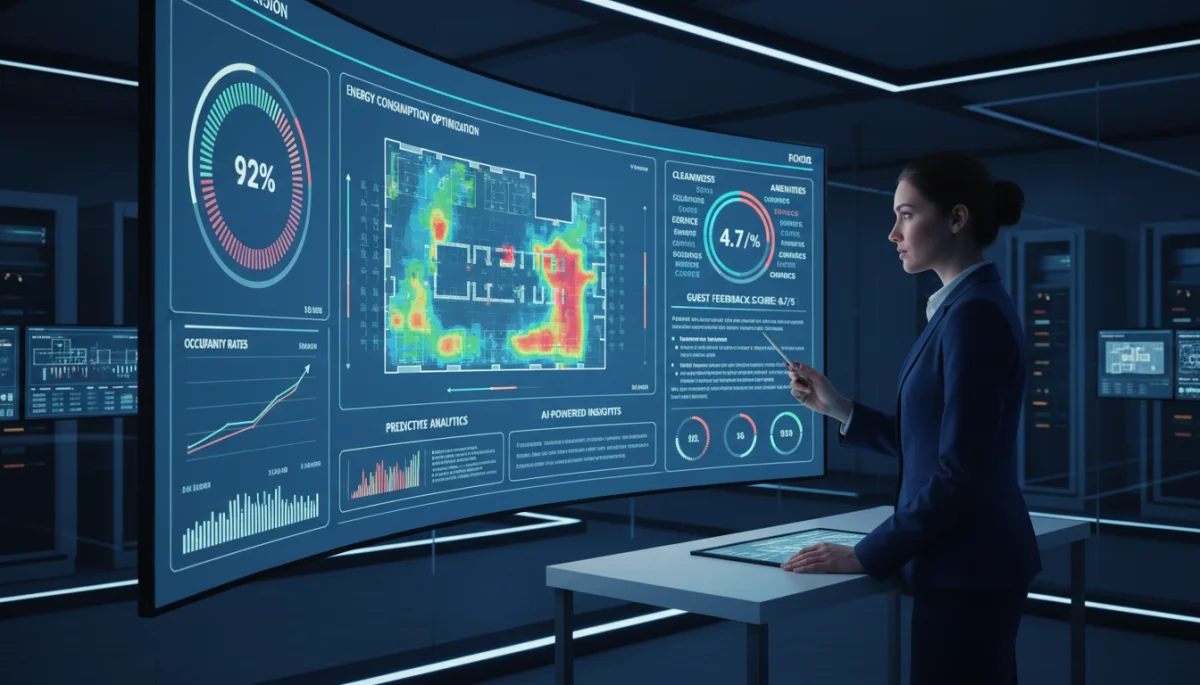
These recommendation engines can integrate with the hotel’s mobile app or in-room smart devices, providing a seamless and convenient way for guests to access personalized suggestions. This not only enhances the guest experience but also drives additional revenue for the hotel through upselling and cross-selling relevant services.
Dynamic Pricing and Offer Customization
AI enables hotels to implement dynamic pricing strategies that respond to real-time demand, competitor pricing, and even individual guest willingness to pay. This maximizes revenue while also offering guests competitive rates tailored to their booking patterns.
Furthermore, AI can customize offers and promotions for specific guest segments or even individual guests, ensuring that marketing efforts are highly targeted and effective. For example, a business traveler might receive an offer for discounted meeting room access, while a leisure traveler might get a package deal on local tours.
The power of AI in personalization lies in its ability to process complex data sets and derive actionable insights that human staff might miss. This leads to a more intuitive, responsive, and ultimately more satisfying experience for every guest, cementing loyalty and positive brand perception.
AI’s Role in Revenue Management and Marketing
AI is transforming how U.S. hotels approach revenue management and marketing, moving from traditional, often reactive strategies to highly predictive and proactive models. By leveraging advanced analytics, AI helps hotels optimize pricing, forecast demand, and tailor marketing campaigns for maximum impact.
In a highly competitive market, the ability to accurately predict demand and adjust strategies in real-time provides a significant advantage. AI tools analyze market trends, competitor data, local events, and even social media sentiment to inform crucial business decisions.
Advanced Demand Forecasting
Gone are the days of relying solely on historical data for demand forecasting. AI models can incorporate a multitude of external factors, such as weather forecasts, local event calendars, flight prices, and economic indicators, to provide highly accurate predictions of future occupancy and revenue.
- Improved accuracy in predicting peak and low demand periods.
- Better resource allocation based on anticipated guest volumes.
- Enhanced ability to adjust staffing levels proactively.
- Optimized inventory management for rooms and other amenities.
This sophisticated forecasting allows hotels to make smarter decisions about pricing, staffing, and inventory, ensuring they are always prepared to meet demand efficiently and profitably.
Targeted Marketing Campaigns
AI empowers marketing teams to move beyond broad campaigns to highly segmented and personalized outreach. By analyzing guest data, AI can identify specific customer segments and even individual guest preferences, allowing for the creation of highly relevant and effective marketing messages.
This precision marketing leads to higher conversion rates and a better return on investment for marketing spend. AI can also automate the delivery of these personalized messages across various channels, ensuring guests receive the right message at the right time.
In essence, AI helps hotels understand their market and their guests with unprecedented depth. This understanding translates into more effective revenue strategies and marketing efforts that resonate directly with potential and returning customers, driving both profitability and brand loyalty.
Job Evolution: New Roles and Skill Requirements
While some fear AI will lead to widespread job displacement, the reality in the U.S. hotel industry is more nuanced: AI is driving a significant evolution of job roles and creating demand for new skills. Rather than outright replacement, AI often augments human capabilities, shifting the focus of work.
The transition requires a proactive approach to workforce development, emphasizing retraining and upskilling to prepare employees for the demands of an AI-integrated environment. This ensures that the human element remains central to hospitality, even as technology advances.
Emergence of AI-Focused Positions
The adoption of AI necessitates roles that manage, maintain, and optimize these new technologies. Hotels will increasingly need:
- AI system managers: overseeing the implementation and performance of AI tools.
- Data analysts: interpreting the vast amounts of data generated by AI systems.
- Guest experience designers: focusing on integrating AI to enhance human interactions.
- Robotics technicians: maintaining and troubleshooting automated hardware.
These new positions require a blend of technical expertise and an understanding of hospitality operations. Hotels must invest in training programs or recruit external talent with these specialized skills to fully leverage their AI investments.
Upskilling for Existing Staff
For existing hotel staff, the focus shifts from routine, repetitive tasks to roles that require uniquely human skills. Employees will need to develop competencies in:
- Complex problem-solving: addressing issues that AI cannot handle.
- Emotional intelligence: providing empathetic and personalized service.
- Technological literacy: comfortably interacting with and leveraging AI tools.
- Creative thinking: innovating new ways to use AI to enhance guest experiences.
This means front desk staff might spend less time on check-ins and more time resolving unique guest requests or building rapport. Housekeeping staff might use AI-powered apps to manage their workload more efficiently, allowing them to focus on quality control and guest interaction.
The evolution of jobs in the U.S. hotel sector is about adapting to a new collaborative environment where humans and AI work hand-in-hand. It’s an opportunity for employees to take on more engaging, higher-value tasks, enhancing both their career satisfaction and the overall guest experience.
Challenges and Ethical Considerations of AI Adoption
While the benefits of AI in U.S. hotel operations are clear, its widespread adoption also presents significant challenges and ethical considerations that must be carefully navigated. These range from data privacy concerns to the potential for algorithmic bias and the critical need for human oversight.
Addressing these issues proactively is essential for ensuring that AI integration is not only efficient but also responsible and equitable. Hotels must balance technological advancement with their commitment to guest trust and employee well-being.
Data Privacy and Security
AI systems thrive on data, particularly personal guest information. This raises critical questions about how this data is collected, stored, and protected. Hotels must adhere to stringent data privacy regulations (like CCPA) and implement robust cybersecurity measures to prevent breaches.
Transparency with guests about data usage is also paramount. Hotels should clearly communicate their data policies and ensure guests have control over their personal information. A breach of trust in this area can have severe reputational and financial consequences.
Algorithmic Bias and Fairness
AI algorithms are trained on data, and if that data reflects existing biases, the AI can perpetuate or even amplify them. This could manifest in discriminatory pricing, room assignments, or even in how guest requests are prioritized. Ensuring fairness and preventing algorithmic bias requires careful design, testing, and continuous monitoring of AI systems.
Hotels must actively work to diversify their training data and implement ethical AI guidelines to ensure all guests are treated equitably, regardless of their background or characteristics. Human oversight remains crucial to identify and correct any emerging biases.
Maintaining the Human Touch
A core tenet of hospitality is the human connection. While AI can enhance efficiency, there’s a risk of dehumanizing the guest experience if technology is overused or poorly integrated. Guests still value genuine human interaction, empathy, and the ability to resolve complex issues with a person.
The challenge for hotels is to find the right balance—using AI for repetitive tasks and data analysis, while empowering human staff to focus on creating meaningful, personalized connections. AI should complement, not completely replace, the human element that defines true hospitality.
Navigating these challenges requires a thoughtful, strategic approach to AI adoption. Hotels that prioritize ethical considerations, data security, and the preservation of human connection will be best positioned to reap the full benefits of AI while maintaining guest trust and satisfaction.
| Key Aspect | Impact of AI |
|---|---|
| Operational Efficiency | Automates routine tasks like check-in, optimizes housekeeping, and predicts maintenance needs. |
| Guest Experience | Enables hyper-personalization, tailored recommendations, and instant support via virtual concierges. |
| Job Evolution | Shifts roles to higher-value tasks, creating demand for AI specialists and requiring upskilling for existing staff. |
| Revenue & Marketing | Utilizes dynamic pricing, advanced demand forecasting, and targeted marketing campaigns for profitability. |
Frequently Asked Questions About AI in U.S. Hotels
AI enhances efficiency by automating repetitive tasks like check-in/out, optimizing housekeeping schedules, and enabling predictive maintenance for hotel infrastructure. This reduces manual workload, minimizes errors, and streamlines various operational processes, leading to significant time and cost savings.
While AI automates some routine tasks, it’s more likely to evolve job roles rather than eliminate them entirely. New positions focusing on AI management and data analysis are emerging, and existing staff will upskill to handle more complex, human-centric tasks requiring emotional intelligence and problem-solving skills.
AI personalizes experiences by analyzing guest data to offer tailored recommendations for local attractions, dining, or hotel services. It also powers virtual concierges and chatbots that provide instant, customized support, making each guest’s stay feel more unique and responsive to their individual preferences.
Key challenges include ensuring data privacy and cybersecurity, addressing potential algorithmic biases, and maintaining the essential human touch in hospitality. Hotels must strategically integrate AI to complement human interaction, rather than diminish it, while also investing in robust data protection measures.
Absolutely. AI excels in revenue management by providing advanced demand forecasting, dynamic pricing adjustments, and competitor analysis. For marketing, AI enables highly targeted campaigns by identifying specific guest segments and personalizing offers, leading to increased bookings and profitability.
Conclusion
The integration of AI into U.S. hotel operations represents a significant leap forward, offering unparalleled efficiency gains, deeply personalized guest experiences, and a dynamic evolution of job roles. While challenges related to data privacy and maintaining the human touch persist, the strategic adoption of AI promises a future where hospitality is more responsive, sustainable, and tailored to individual needs. Hotels embracing this transformation are not just optimizing their operations; they are redefining the very essence of guest service for the 21st century.
