Cloud Migration: Smart Cost Management Solutions

Cloud migration cost management involves strategic planning and continuous optimization to reduce infrastructure expenses and enhance operational efficiency, ensuring a strong return on investment for businesses transitioning to the cloud.
Embarking on a cloud migration journey can transform your business, but without a clear strategy for cloud migration cost management, the promised savings can quickly evaporate. This article delves into practical solutions to ensure your transition to the cloud is not only seamless but also financially prudent.
Understanding the Cloud Cost Landscape
Before diving into solutions, it is crucial to grasp the complexities of cloud costs. Unlike traditional on-premise infrastructure, cloud expenses are dynamic, influenced by usage, service types, and regional pricing. Many organizations underestimate these variables, leading to unexpected budget overruns post-migration. A comprehensive understanding of your current infrastructure spending, coupled with an accurate projection of cloud consumption, forms the bedrock of effective cost control.
The cloud environment offers unparalleled flexibility and scalability, but this agility comes with a pricing model that can be challenging to predict. Resources are often billed on a pay-as-you-go basis, which, while beneficial for elasticity, requires meticulous monitoring and management to prevent waste. Factors such as data egress charges, unused resources, and suboptimal service configurations can silently inflate your monthly cloud bill. Recognizing these potential pitfalls early in the migration process is essential for laying a solid financial foundation.
Hidden Costs in Cloud Migration
While direct service costs are obvious, several hidden costs can impact your budget significantly. These often include:
- Data transfer fees: Moving data between regions or out of the cloud can incur substantial charges.
- Licensing costs: Existing software licenses may not be transferable to the cloud, requiring new purchases.
- Staff training: Your IT team will need new skills to manage cloud environments effectively.
- Decommissioning legacy systems: The process of shutting down old infrastructure can be complex and costly.
Understanding these often-overlooked expenses allows for more accurate budgeting and prevents surprises down the line. A proactive approach to identifying and mitigating these costs is a hallmark of successful cloud migration cost management.
In conclusion, a thorough analysis of the cloud cost landscape, encompassing both direct and indirect expenditures, is the initial and most critical step. This foundational knowledge empowers organizations to make informed decisions and establish realistic financial expectations for their cloud journey. Ignoring this phase can lead to significant financial strain and undermine the overall benefits of migration.
Strategic Planning for Cost Optimization
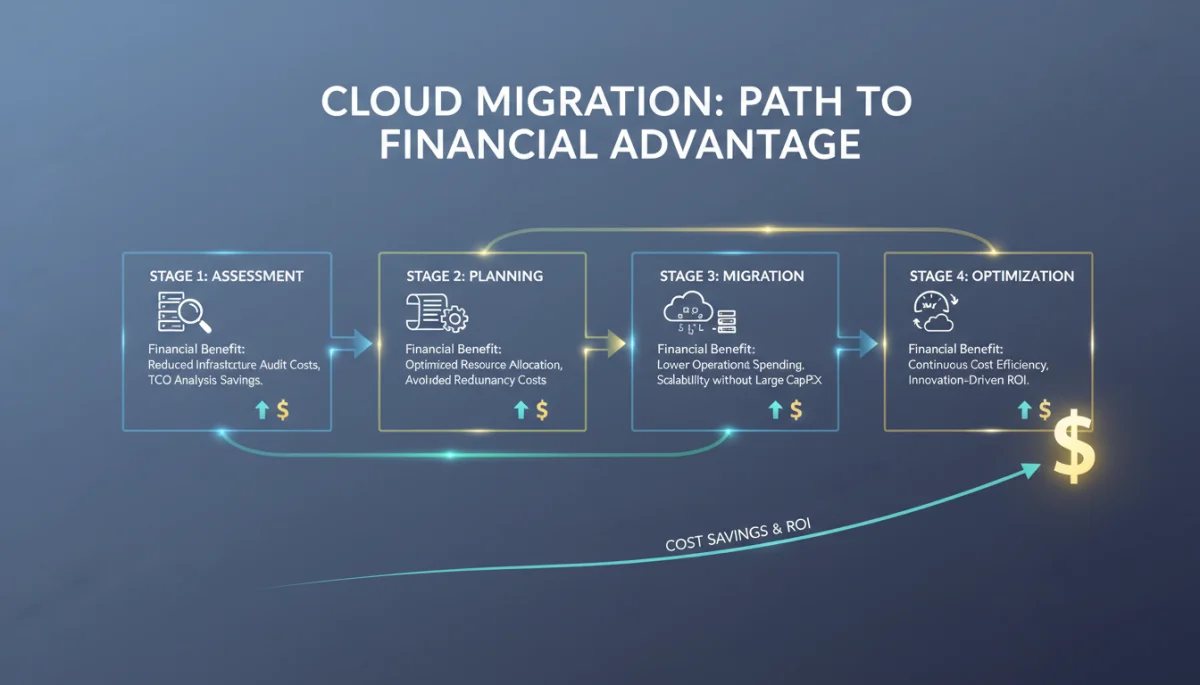
Effective cloud migration cost management begins long before the actual migration takes place. Strategic planning involves a detailed assessment of your existing infrastructure, identifying workloads suitable for migration, and choosing the right cloud services. This phase is critical for establishing a baseline for cost comparison and setting clear objectives for financial savings.
A well-defined strategy should consider various migration approaches, such as rehosting (lift-and-shift), refactoring, or re-platforming, each with different cost implications. Rehosting might offer quicker initial savings by leveraging existing architectures, while refactoring can lead to greater long-term optimization by redesigning applications for cloud-native efficiencies. The choice depends on your specific business needs, technical capabilities, and financial goals.
Cloud Provider Selection and Pricing Models
Choosing the right cloud provider is paramount. Each major cloud vendor (AWS, Azure, Google Cloud) offers distinct pricing models, discounts, and service offerings. Evaluating these options against your workload requirements and budget constraints is a key part of strategic planning.
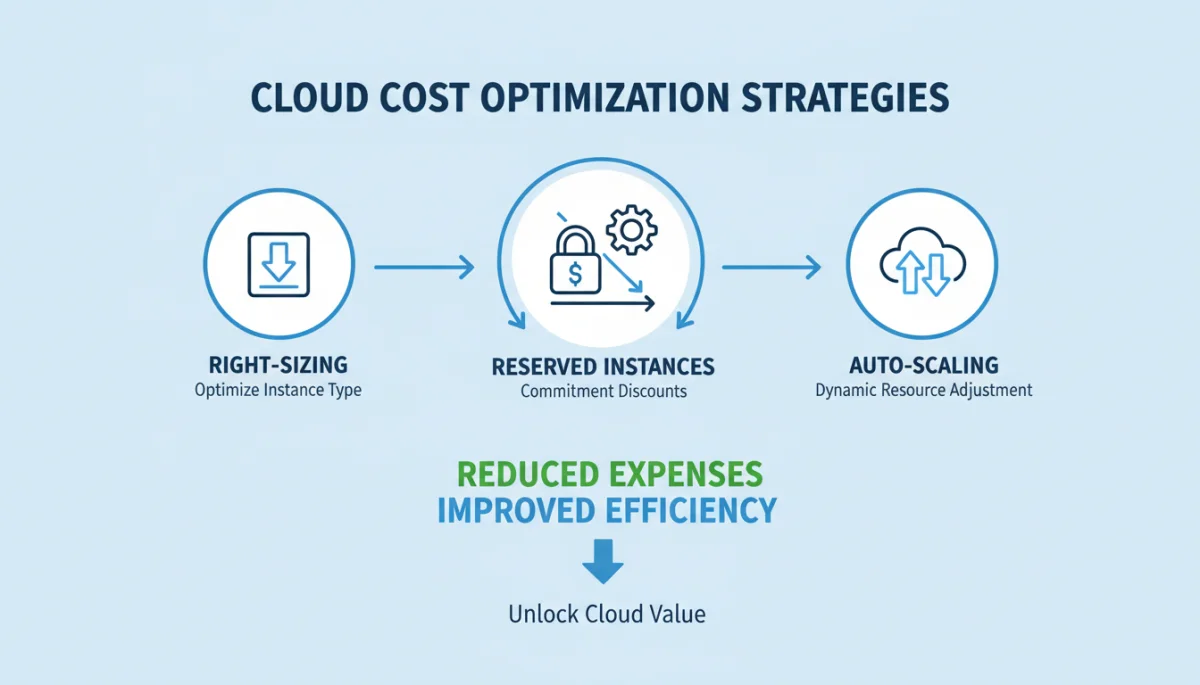
- Reserved instances/savings plans: Committing to a certain usage level for 1-3 years can yield significant discounts.
- Spot instances: Utilizing unused cloud capacity at a much lower cost, suitable for fault-tolerant workloads.
- Serverless computing: Paying only for the compute resources consumed, eliminating idle server costs.
Understanding these different pricing structures and how they align with your anticipated usage patterns is crucial for optimizing costs. Negotiating enterprise agreements can also unlock further savings for larger organizations.
Furthermore, assessing your current application portfolio to identify interdependencies and resource requirements will inform your migration strategy. Prioritizing low-risk, high-impact workloads for initial migration can provide early wins and build confidence for more complex transitions. This phased approach allows for continuous learning and refinement of cost optimization tactics.
In summary, strategic planning is not merely about moving to the cloud; it is about intelligently designing the journey to maximize financial benefits. This involves meticulous assessment, informed provider selection, and a deep understanding of various pricing models and migration strategies to achieve optimal cloud migration cost management.
Implementing Cost-Saving Cloud Solutions
Once the strategic plan is in place, the focus shifts to implementing practical, real-world solutions that directly impact your cloud expenditure. This involves leveraging cloud-native tools and adopting best practices to ensure continuous optimization. The goal is to avoid over-provisioning and to align resource consumption closely with actual demand, thereby eliminating unnecessary costs.
One of the most effective immediate solutions is right-sizing. Many organizations migrate virtual machines to the cloud without adjusting their specifications, often leading to over-provisioned resources. By analyzing actual CPU, memory, and network usage, you can select the smallest instance types that still meet performance requirements, significantly reducing compute costs.
Automated Cost Optimization Tools
Manual cost management in the cloud can be overwhelming. Fortunately, cloud providers and third-party vendors offer a suite of tools designed to automate cost optimization:
- Cloud cost management platforms: These tools provide centralized visibility into spending, identify waste, and recommend optimization actions.
- Auto-scaling groups: Automatically adjust compute capacity based on demand, ensuring you only pay for what you need.
- Scheduled on/off for non-production environments: Shutting down development and testing environments during off-hours can save substantial amounts.
These automation capabilities are indispensable for maintaining cost efficiency in dynamic cloud environments. They allow IT teams to focus on strategic initiatives rather than day-to-day cost monitoring, enhancing overall productivity.
Another powerful solution involves leveraging serverless architectures and managed services. By offloading infrastructure management to the cloud provider, you reduce operational overhead and often pay only for execution time or requests, leading to substantial cost reductions for suitable workloads. This paradigm shift from managing servers to consuming services is a cornerstone of modern cloud cost management.
In conclusion, implementing a combination of right-sizing, automation, and leveraging cloud-native services provides a robust framework for controlling cloud costs. These solutions are not one-time fixes but require ongoing attention and adaptation to continually optimize your cloud spending effectively.
Continuous Monitoring and Governance
Achieving optimal cloud migration cost management is not a one-time event; it is an ongoing process that demands continuous monitoring and robust governance. Without these elements, even the most meticulously planned migration can quickly become a financial burden. Establishing clear policies and mechanisms for tracking consumption ensures that spending remains aligned with business objectives.
Cloud environments are inherently dynamic, with resources being provisioned and de-provisioned constantly. This fluidity necessitates real-time visibility into spending patterns. Implementing tagging strategies, where resources are labeled with metadata such as department, project, or cost center, provides granular insights into who is spending what, enabling accountability and informed decision-making.
Establishing Cloud Governance Policies
Effective governance involves defining clear rules and responsibilities for cloud resource provisioning and usage. This prevents uncontrolled sprawl and ensures adherence to budget limits:
- Budget alerts: Set up notifications to warn teams when spending approaches predefined thresholds.
- Resource quotas: Limit the amount of resources users or departments can provision.
- Policy enforcement: Use automated policies to prevent the creation of unapproved or oversized resources.
These policies act as guardrails, guiding users towards cost-efficient practices while maintaining necessary operational flexibility. Regular audits of resource usage against these policies are crucial for identifying deviations and implementing corrective actions.
Furthermore, regular cost reviews with stakeholders are vital. These reviews should analyze spending trends, identify areas of inefficiency, and discuss opportunities for further optimization. This collaborative approach fosters a culture of cost consciousness across the organization, making everyone a participant in effective cloud cost management.
In essence, continuous monitoring and robust governance are the engines that drive sustainable cost optimization in the cloud. They provide the necessary visibility, control, and accountability to ensure that your cloud investment delivers maximum value over the long term.
Leveraging Financial Operations (FinOps) Principles
To truly master cloud migration cost management, organizations are increasingly adopting FinOps principles. FinOps is an evolving operational framework that brings financial accountability to the variable spend model of cloud, enabling organizations to make business decisions with a cloud-first approach. It’s a cultural practice that involves people, process, and technology, fostering collaboration between finance, operations, and business teams.
The core idea behind FinOps is to empower every team to manage their cloud usage and costs effectively. This moves beyond simply tracking expenses to actively optimizing them, much like DevOps revolutionized software development. By integrating financial accountability into daily operations, FinOps ensures that technical decisions are always made with a clear understanding of their financial impact.
Key Pillars of FinOps
The FinOps framework is built upon several key principles that guide organizations towards financial efficiency in the cloud:
- Visibility: Providing granular insight into cloud spending for all stakeholders.
- Optimization: Continuously seeking ways to reduce waste and improve efficiency (e.g., right-sizing, reserved instances).
- Collaboration: Fostering communication and shared responsibility between engineering, finance, and business teams.
- Allocation: Accurately attributing costs to specific departments, projects, or applications.
- Forecasting: Predicting future cloud spend based on historical data and projected growth.
Implementing FinOps requires a shift in organizational culture, moving from a reactive approach to cost management to a proactive and collaborative one. It involves educating teams on cloud economics and providing them with the tools and data needed to make informed decisions about resource consumption. This empowerment leads to more efficient resource utilization and significant cost savings.
Moreover, FinOps encourages a continuous feedback loop where cost data informs future architectural and operational decisions. This iterative process ensures that optimization efforts are ongoing and adapt to changing business needs and cloud service offerings. Embracing FinOps is not just about cutting costs; it’s about maximizing the business value derived from your cloud investment.
Ultimately, by integrating financial discipline into the technical and operational aspects of cloud management, FinOps provides a comprehensive approach to sustained cost efficiency. It transforms how organizations perceive and manage their cloud infrastructure, turning cost management into a strategic advantage.
Future-Proofing Your Cloud Investment
As businesses continue to evolve in the digital landscape, ensuring the long-term value and cost-effectiveness of your cloud investment is paramount. Future-proofing your cloud strategy involves more than just current cost optimization; it requires anticipating future needs, embracing innovation, and maintaining flexibility. This proactive stance is essential for sustainable cloud migration cost management.
One critical aspect of future-proofing is designing for scalability and elasticity from the outset. Architecting applications to dynamically scale up or down based on demand ensures that you only pay for the resources you truly need, even as your business grows or experiences fluctuating workloads. This prevents costly over-provisioning and allows for efficient resource utilization.
Adopting Cloud-Native Architectures
Moving towards cloud-native architectures, such as microservices and serverless functions, is a powerful way to future-proof your investment. These architectures are designed to be highly scalable, resilient, and cost-efficient:
- Microservices: Allow for independent scaling and deployment of application components, optimizing resource use.
- Serverless computing: Eliminates the need to manage servers, reducing operational overhead and paying only for execution.
- Containerization: Provides portability and efficiency, allowing applications to run consistently across different environments.
Embracing these modern architectural patterns not only improves performance and agility but also inherently drives down costs by optimizing resource consumption and operational complexity.
Furthermore, staying informed about new cloud services and pricing models is vital. Cloud providers continuously innovate, introducing new offerings that can provide more cost-effective solutions for specific workloads. Regularly reviewing your cloud architecture against these new options can uncover fresh opportunities for optimization and efficiency gains.
In essence, future-proofing your cloud investment means building a resilient, adaptable, and cost-aware cloud environment. By focusing on scalable architectures, embracing cloud-native approaches, and continuously evaluating new technologies, organizations can ensure their cloud infrastructure remains a strategic asset that delivers sustained value and cost efficiency for years to come.
| Key Aspect | Brief Description |
|---|---|
| Strategic Planning | Assess current infrastructure, define migration goals, and select optimal cloud services for cost efficiency. |
| Cost Optimization | Implement right-sizing, auto-scaling, and leverage serverless architectures to reduce operational expenses. |
| Continuous Monitoring | Utilize tagging, budget alerts, and regular reviews to track and control cloud spending effectively. |
| FinOps Adoption | Integrate financial accountability across teams to foster a culture of shared cloud cost management. |
Frequently Asked Questions About Cloud Cost Management
The primary challenges include unpredictable variable costs, lack of visibility into resource consumption, managing unused or underutilized resources, data egress fees, and the complexity of aligning existing licenses with cloud models. Over-provisioning resources during migration is also a common and costly mistake.
Right-sizing significantly impacts cloud costs by ensuring that migrated workloads utilize the smallest possible instance types that meet performance requirements. This reduces compute expenses by eliminating over-provisioned resources, which are a common source of unnecessary spending in cloud environments.
FinOps integrates financial accountability into cloud operations, fostering collaboration between finance, engineering, and business teams. It provides frameworks for cost visibility, optimization, and allocation, empowering teams to make data-driven decisions that align technical choices with financial objectives, leading to sustained cost efficiency.
Reserved instances (RIs) or savings plans offer significant discounts for committing to consistent usage over 1-3 years. They are excellent for predictable, steady-state workloads. However, for highly variable or short-term workloads, on-demand or spot instances might be more cost-effective. A balanced approach is often best.
Automation tools, such as auto-scaling groups and scheduled on/off for non-production environments, dynamically adjust resources based on demand. This eliminates manual oversight, reduces human error, and ensures that you only pay for resources when they are actively needed, leading to substantial and consistent cost savings.
Conclusion
Successfully navigating cloud migration cost management is not merely about reducing expenses; it’s about maximizing the value and efficiency of your cloud investment. By adopting a holistic approach that encompasses strategic planning, implementing practical cost-saving solutions, ensuring continuous monitoring and governance, and embracing FinOps principles, organizations can transform their cloud journey into a truly cost-effective and future-proof endeavor. The cloud offers immense potential for innovation and agility, and with diligent cost management, businesses can fully realize these benefits, driving sustainable growth and competitive advantage in the digital age.
