Developer to DevOps: A Career Transition Roadmap

Making the shift from a traditional developer role to a DevOps engineer requires a strategic acquisition of new skills in automation, infrastructure, and collaborative methodologies to bridge development and operations.
Are you a developer looking to expand your horizons and play a more pivotal role in the software delivery lifecycle? The journey From Developer to DevOps: A Roadmap for Career Transition offers a compelling path to greater impact and career growth. This transition isn’t just about learning new tools; it’s about embracing a new philosophy that integrates development and operations, fostering efficiency and innovation.
Understanding the DevOps Paradigm Shift
The DevOps movement represents a fundamental change in how organizations approach software development and operations. It’s a cultural and professional shift, emphasizing communication, collaboration, integration, and automation to improve the speed and quality of software delivery. For developers, this means moving beyond writing code to understanding the entire ecosystem where that code lives and operates.
Traditional silos between development and operations teams often led to inefficiencies, slower deployments, and increased friction. DevOps aims to break down these barriers, creating a unified team responsible for the entire application lifecycle, from ideation through development, testing, deployment, and ongoing operation. This holistic approach ensures that developers gain a deeper insight into infrastructure and operational challenges, while operations teams better understand development needs.
Key Pillars of DevOps
At its core, DevOps stands on several foundational principles that guide its implementation and philosophy. These pillars are essential for any developer looking to transition into this domain.
- Culture: Fostering collaboration, transparency, and shared responsibility between development and operations teams.
- Automation: Automating repetitive tasks across the software delivery pipeline, from code commits to deployment.
- Lean Practices: Eliminating waste and maximizing efficiency in all processes.
- Measurement: Tracking metrics to continuously improve performance and identify bottlenecks.
- Sharing: Promoting knowledge sharing and feedback loops across the entire team.
Embracing these pillars is not merely a technical exercise; it’s a cultural transformation. Developers must adopt a mindset that extends their ownership beyond just the code to include its deployment, performance, and stability in production environments. This expanded responsibility often leads to more robust and reliable software, delivered faster and with fewer issues. Understanding this paradigm shift is the first crucial step in your journey to becoming a successful DevOps professional.
The essence of DevOps is about creating a continuous feedback loop and improvement cycle. It’s about ensuring that every stage of the software lifecycle is optimized for speed, reliability, and security. For a developer, this means learning to think like an operator and an architect, not just a coder. This integrated perspective is what makes DevOps so powerful and increasingly vital in today’s fast-paced technological landscape.
Essential Technical Skills for DevOps Transition
To successfully navigate the transition from developer to DevOps, a robust set of technical skills is indispensable. While your existing development background provides a strong foundation, you’ll need to acquire proficiency in specific areas that bridge the gap between coding and infrastructure management. These skills enable you to automate, manage, and monitor the entire software delivery pipeline effectively.
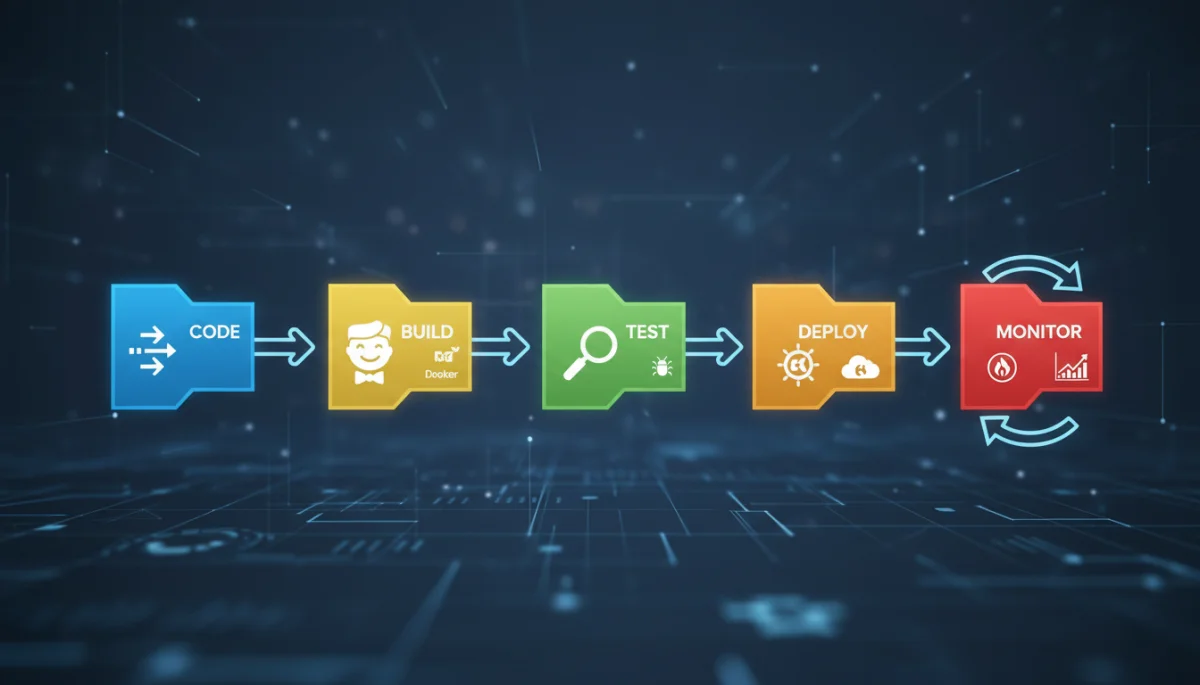
One of the primary areas to focus on is scripting and automation. Developers are already familiar with writing code, but in DevOps, this extends to scripting languages like Python, Bash, or PowerShell to automate routine tasks, provision infrastructure, and manage configurations. This automation is critical for building efficient CI/CD pipelines and ensuring consistency across environments.
Mastering CI/CD Tools and Practices
Continuous Integration (CI) and Continuous Delivery/Deployment (CD) are at the heart of DevOps. Understanding and implementing CI/CD pipelines is a non-negotiable skill for any aspiring DevOps engineer. This involves familiarity with various tools and methodologies.
- Version Control Systems: Deep understanding of Git and platforms like GitHub, GitLab, or Bitbucket for collaborative code management.
- CI/CD Servers: Proficiency with tools such as Jenkins, GitLab CI/CD, CircleCI, Travis CI, or Azure DevOps for automating build, test, and deployment processes.
- Containerization: Expertise in Docker for packaging applications and their dependencies, ensuring consistency across environments.
- Orchestration: Knowledge of Kubernetes for managing and scaling containerized applications in production.
Beyond these, knowledge of cloud platforms like AWS, Azure, or Google Cloud Platform is becoming increasingly vital. DevOps roles often involve deploying and managing applications in cloud environments, necessitating an understanding of cloud services, networking, and security best practices. Infrastructure as Code (IaC) tools such as Terraform or Ansible are also crucial for provisioning and managing cloud resources programmatically, further enhancing automation capabilities.
Monitoring and logging are another critical skill set. Once applications are in production, DevOps engineers are responsible for ensuring their health and performance. This involves setting up monitoring tools like Prometheus, Grafana, ELK Stack (Elasticsearch, Logstash, Kibana), or Splunk to gather metrics, logs, and traces, enabling proactive issue detection and resolution. Understanding how to interpret this data and respond to incidents is key to maintaining system reliability.
In essence, the technical journey to DevOps is about expanding your toolkit from application-specific languages and frameworks to a broader range of systems, automation, and infrastructure management technologies. It’s about seeing the bigger picture of software delivery and having the skills to influence every stage of it.
The Role of Automation and Infrastructure as Code (IaC)
Automation and Infrastructure as Code (IaC) are not just buzzwords in DevOps; they are fundamental practices that define the efficiency, scalability, and reliability of modern software delivery. For a developer transitioning to DevOps, mastering these concepts is paramount, as they underpin virtually every aspect of a streamlined operational workflow. Automation reduces manual errors, accelerates processes, and frees up valuable time for more strategic initiatives, while IaC ensures environments are consistent and reproducible.
Infrastructure as Code treats infrastructure configuration and provisioning the same way developers treat application code. This means defining infrastructure resources—like virtual machines, networks, and databases—using configuration files that can be version-controlled, reviewed, and deployed automatically. This approach eliminates the “snowflake” servers phenomenon, where environments diverge over time due to manual changes, leading to inconsistencies and deployment issues.
Implementing IaC with Popular Tools
Various tools facilitate the implementation of Infrastructure as Code, each with its strengths and use cases. Becoming proficient in at least one or two of these is crucial for a DevOps role.
- Terraform: A cloud-agnostic tool for provisioning and managing infrastructure across multiple cloud providers and on-premises environments.
- Ansible: An open-source automation engine for configuration management, application deployment, and task automation. It uses a simple YAML syntax.
- CloudFormation (AWS): AWS’s native IaC service, allowing users to define AWS resources in templates.
- Azure Resource Manager (ARM) Templates: Microsoft Azure’s native service for defining and deploying infrastructure.
Beyond provisioning, automation extends to configuration management. Tools like Ansible, Puppet, and Chef help ensure that servers and applications are configured correctly and consistently across all environments. This prevents configuration drift and simplifies the process of scaling up or down, as new instances can be provisioned with the exact desired state automatically. This level of automation is what truly distinguishes modern DevOps practices from traditional IT operations.
The benefits of adopting automation and IaC are manifold. They lead to faster deployment cycles, reduced operational costs, improved security posture through consistent configurations, and enhanced disaster recovery capabilities. For developers, this means their code can reach production more quickly and reliably, and they gain a deeper understanding of the infrastructure it runs on. It’s about embedding operational concerns directly into the development workflow, making everyone responsible for the full lifecycle of the software.
Cultivating a DevOps Mindset and Soft Skills
While technical skills are undoubtedly crucial, the transition to DevOps also heavily relies on cultivating a specific mindset and honing a set of soft skills. DevOps is as much about culture and collaboration as it is about tools and automation. A developer who understands the technical intricacies but lacks the ability to communicate, collaborate, and adapt will find the transition challenging. This shift requires a holistic approach, where interpersonal skills are as valued as coding prowess.
One of the most important aspects of the DevOps mindset is a strong emphasis on collaboration and communication. Breaking down silos between development and operations teams means fostering an environment where information flows freely, feedback is sought and given constructively, and everyone works towards a shared goal. This often involves daily stand-ups, cross-functional team meetings, and a willingness to understand different perspectives.

Key Soft Skills for DevOps Success
Developing these soft skills can significantly enhance your effectiveness and impact as a DevOps professional. They are the glue that holds the technical aspects together.
- Communication: Clearly articulating ideas, issues, and solutions to both technical and non-technical stakeholders.
- Collaboration: Working effectively with diverse teams, sharing knowledge, and actively participating in problem-solving.
- Problem-Solving: Approaching complex issues with a systematic and analytical mindset, often involving cross-domain knowledge.
- Adaptability: Embracing change, learning new technologies rapidly, and adjusting to evolving project requirements and tools.
- Empathy: Understanding the challenges faced by both developers and operations teams to build more effective solutions.
Beyond communication, problem-solving skills become even more critical in a DevOps context. You’ll be dealing with complex distributed systems, where issues can arise from various layers—code, infrastructure, network, or third-party services. The ability to diagnose, troubleshoot, and resolve these issues efficiently, often under pressure, is a hallmark of an effective DevOps engineer. This often involves a deep understanding of monitoring tools and log analysis.
Furthermore, a continuous learning attitude is indispensable. The DevOps landscape is constantly evolving, with new tools, methodologies, and best practices emerging regularly. A successful DevOps professional is someone who is naturally curious, eager to experiment, and committed to staying current with the latest advancements. This proactive approach to learning ensures that you remain a valuable asset in a rapidly changing technological environment. Cultivating these soft skills transforms a technically capable developer into a well-rounded and impactful DevOps leader.
Learning Path and Resources for Aspiring DevOps Engineers
Embarking on the journey from developer to DevOps requires a structured learning path and access to quality resources. While hands-on experience is invaluable, a strong theoretical foundation, coupled with practical exercises, will accelerate your progress. There are numerous avenues for learning, from online courses and certifications to community involvement and personal projects, each offering unique benefits.
Starting with foundational concepts is key. Understand the core principles of operating systems (Linux is often preferred), networking basics, and virtualization. These are the building blocks upon which more complex DevOps practices are built. Many free online resources, like tutorials and documentation, can help you grasp these fundamentals before diving into specific tools.
Recommended Learning Resources
To solidify your understanding and gain practical experience, consider a blend of structured learning and self-exploration.
- Online Courses and Certifications: Platforms like Coursera, Udemy, Pluralsight, and edX offer specialized DevOps courses. Cloud provider certifications (AWS Certified DevOps Engineer, Azure DevOps Engineer Expert, Google Cloud Professional DevOps Engineer) are highly valued.
- Books and Blogs: Classic texts like ‘The Phoenix Project’ and ‘The DevOps Handbook’ provide foundational insights. Industry blogs and technical articles keep you updated on current trends.
- Hands-on Labs and Personal Projects: Set up a home lab using virtualization (e.g., VirtualBox, Vagrant) or free-tier cloud accounts. Experiment with CI/CD pipelines, containerization, and IaC by building and deploying your own small applications.
- Community and Open Source: Participate in DevOps communities, forums, and open-source projects. This provides opportunities for learning from experienced professionals and contributing to real-world solutions.
Practical application is crucial. Simply reading about tools like Docker or Kubernetes isn’t enough; you need to install them, configure them, and deploy applications using them. Building a personal project from scratch, applying DevOps principles throughout its lifecycle, can be an incredibly effective way to internalize concepts and demonstrate your skills to potential employers. This could involve creating a simple web application, setting up a CI/CD pipeline for it, and deploying it to a cloud environment using IaC.
Remember that the learning journey is continuous. The landscape of tools and best practices in DevOps evolves rapidly, so developing a habit of lifelong learning is essential. Stay curious, experiment with new technologies, and always look for ways to optimize and automate processes. This proactive approach to learning will ensure your skills remain relevant and in demand.
Career Opportunities and Growth in DevOps
The demand for skilled DevOps professionals continues to surge across industries, making it an incredibly promising career path for developers looking to expand their expertise. As organizations increasingly recognize the value of rapid, reliable software delivery, the role of a DevOps engineer becomes central to their success. This transition opens doors to diverse and impactful career opportunities, often accompanied by competitive compensation and significant growth potential.
DevOps roles are not monolithic; they encompass a spectrum of specializations. You might find yourself in positions such as DevOps Engineer, Site Reliability Engineer (SRE), Cloud Engineer, Release Engineer, or Automation Engineer. Each of these roles emphasizes different aspects of the DevOps lifecycle, allowing individuals to specialize based on their interests and strengths.
Diverse Career Paths and Specializations
As you gain experience, you can gravitate towards areas that particularly appeal to you, leading to specialized career paths within DevOps.
- DevOps Engineer: Focuses on building and maintaining CI/CD pipelines, automating infrastructure, and improving deployment processes.
- Site Reliability Engineer (SRE): Blends software engineering principles with operations to build and run large-scale, fault-tolerant systems.
- Cloud Engineer: Specializes in designing, implementing, and managing cloud infrastructure using specific cloud platforms (AWS, Azure, GCP).
- Automation Engineer: Concentrates on developing scripts and tools to automate various aspects of development, testing, and operations.
Beyond these individual contributor roles, the growth trajectory in DevOps can lead to leadership and architectural positions. With sufficient experience, a DevOps professional might advance to a Lead DevOps Engineer, DevOps Architect, or even Head of DevOps, where they would be responsible for defining organizational DevOps strategy, mentoring teams, and overseeing large-scale transformations. These roles require not only deep technical expertise but also strong leadership and strategic planning capabilities.
The impact of a DevOps professional extends beyond technical implementation; it involves driving cultural change within an organization. By fostering collaboration and efficiency, DevOps engineers contribute directly to a company’s ability to innovate faster, deliver higher-quality products, and respond more effectively to market demands. This strategic importance ensures that DevOps skills remain highly sought after and provide a stable, evolving career path for years to come. The continuous learning aspect of DevOps also means that professionals in this field are always at the forefront of technological advancements, making it a dynamic and intellectually stimulating career.
Navigating Challenges and Sustaining Growth
The transition to DevOps, while rewarding, is not without its challenges. Developers embarking on this path will encounter various hurdles, from technical complexities to cultural resistance within organizations. Successfully navigating these challenges and sustaining continuous growth requires resilience, a proactive approach, and a commitment to lifelong learning. Understanding potential obstacles upfront can help you prepare and strategize effectively.
One common challenge is the sheer breadth of tools and technologies in the DevOps ecosystem. It can be overwhelming to decide where to focus your learning efforts. The key is to start with foundational concepts and then specialize in tools that are widely used or align with your career interests. Avoid trying to master everything at once; instead, build proficiency incrementally, focusing on practical application.
Overcoming Common DevOps Hurdles
Addressing these challenges head-on is crucial for a smooth and successful transition into a DevOps role.
- Tool Overload: Prioritize learning foundational tools (e.g., Git, Docker, one CI/CD tool, one IaC tool) and then expand your knowledge based on project needs.
- Cultural Resistance: Be an advocate for DevOps principles. Demonstrate the value of automation and collaboration through small, impactful successes.
- Bridging Knowledge Gaps: Actively seek mentorship, participate in communities, and work on personal projects to fill in operational knowledge gaps.
- Burnout: The continuous nature of DevOps can be demanding. Prioritize work-life balance, automate repetitive tasks to reduce workload, and learn to delegate where possible.
Cultural resistance within organizations can be a significant barrier. Established teams might be reluctant to change their workflows or embrace new responsibilities. As a transitioning developer, you can act as a catalyst for change by demonstrating the benefits of DevOps through small, successful implementations. Show how automation can reduce toil, how collaboration improves problem-solving, and how continuous feedback leads to better products. Being an evangelist for the DevOps philosophy is as important as implementing its tools.
Sustaining growth in DevOps also means staying current with emerging trends. Technologies like serverless computing, AI/ML in operations (AIOps), and advanced security practices (DevSecOps) are continually evolving. Dedicate time for continuous learning through industry conferences, webinars, online courses, and networking with peers. This commitment to ongoing education ensures you remain adaptable and valuable in a rapidly changing field. By proactively addressing challenges and embracing continuous growth, you can forge a highly successful and fulfilling career in DevOps.
| Key Aspect | Brief Description |
|---|---|
| DevOps Mindset | Emphasizes collaboration, automation, continuous improvement, and shared responsibility across development and operations. |
| Technical Skills | Proficiency in scripting, CI/CD tools (Jenkins, GitLab), containerization (Docker, Kubernetes), and cloud platforms (AWS, Azure). |
| Infrastructure as Code (IaC) | Defining and managing infrastructure resources via code using tools like Terraform or Ansible for consistency and automation. |
| Career Outlook | High demand for diverse roles like DevOps Engineer, SRE, and Cloud Engineer with significant growth and leadership potential. |
Frequently Asked Questions About DevOps Transition
A developer primarily focuses on writing and testing application code, while a DevOps engineer is responsible for the entire software delivery lifecycle, including automation, infrastructure management, deployment, and monitoring, bridging the gap between development and operations.
The transition time varies widely based on individual learning pace and prior experience, but a dedicated developer can typically acquire foundational DevOps skills and secure an entry-level role within 6 to 18 months of focused study and practical application.
While existing development languages are useful, Python and Bash are highly important for scripting and automation in DevOps. Go and Ruby are also frequently used for specific tools and tasks, making them valuable additions to your skill set.
While not strictly mandatory, certifications from major cloud providers like AWS, Azure, or Google Cloud, along with specialized DevOps certifications, can significantly validate your skills and enhance your employability, especially for those new to the field.
Crucial soft skills include strong communication, collaboration, problem-solving, and adaptability. DevOps thrives on breaking down silos, so the ability to work effectively across teams and embrace continuous learning is paramount for success.
Conclusion
The journey From Developer to DevOps: A Roadmap for Career Transition is a transformative path that offers significant professional growth and impact in the modern tech landscape. By embracing the DevOps mindset, acquiring essential technical skills in automation and Infrastructure as Code, and continually honing soft skills like collaboration, developers can effectively bridge the gap between coding and operations. This transition not only enhances individual career prospects but also empowers organizations to deliver software with unprecedented speed, reliability, and efficiency. The dynamic nature of DevOps ensures a continuously engaging and rewarding career for those willing to commit to lifelong learning and innovation.
