Healthcare Resume: Essential Keywords for Employers

To maximize your healthcare resume, strategically incorporate essential keywords that employers actively seek, ensuring your application successfully navigates applicant tracking systems and captures recruiter attention.
Are you looking to land your dream job in the competitive healthcare sector? Understanding how to optimize your resume is crucial. This article will guide you through maximizing your healthcare resume: essential keywords for employers, helping you stand out from the crowd and secure those coveted interviews.
Understanding the Power of Keywords in Healthcare Recruitment
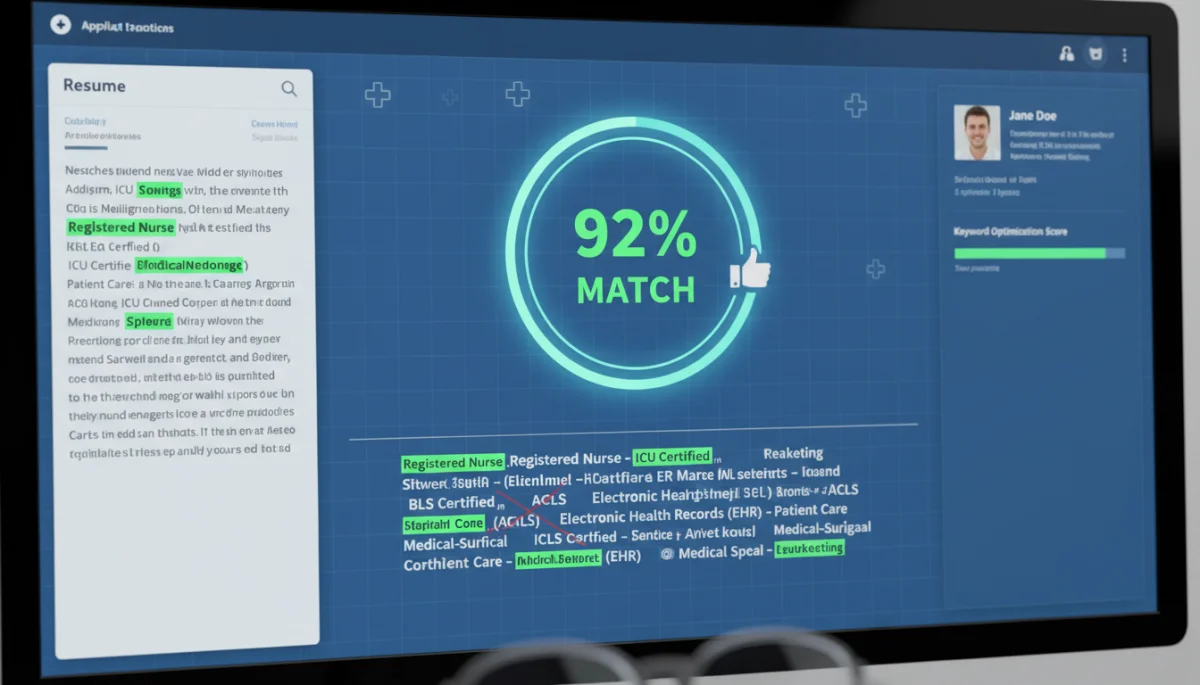
In today’s fast-paced job market, especially within the healthcare industry, employers rely heavily on technology to streamline the hiring process. Applicant Tracking Systems (ATS) are the gatekeepers, sifting through hundreds of resumes to identify candidates whose qualifications align with job descriptions. Without the right keywords, even the most qualified applicants can be overlooked. This section explores why keywords are indispensable for your healthcare resume.
Keywords act as signals, telling an ATS that your resume contains the specific skills, experiences, and certifications relevant to a particular role. These are not just buzzwords; they are the precise terms used by recruiters and hiring managers in job postings. Failing to incorporate them effectively is akin to speaking a different language than the one the system understands, leading to your application being filtered out before a human ever sees it.
The Role of Applicant Tracking Systems (ATS)
- Initial Screening: ATS perform the first pass, matching resume content against job description keywords.
- Efficiency: They handle large volumes of applications quickly, saving recruiters time.
- Keyword Density: Systems often look for a certain density or frequency of relevant keywords.
Beyond the initial ATS scan, keywords also serve as vital communication tools for human recruiters. When your resume lands on a hiring manager’s desk, they are often scanning for specific terms that indicate competence and experience. A well-optimized resume speaks directly to their needs, demonstrating that you possess the exact qualifications they are seeking. It’s about making their job easier by clearly presenting why you are a perfect fit.
Furthermore, the healthcare field is incredibly diverse, encompassing a myriad of specialties, roles, and technical requirements. The keywords for a registered nurse will differ significantly from those for a medical coder or a healthcare administrator. Therefore, a one-size-fits-all approach to resume writing is ineffective. Tailoring your resume with specific, targeted keywords for each application is not just recommended; it’s essential for success. This strategic approach ensures that your unique skills and experiences are recognized and valued.
In conclusion, recognizing the critical role of keywords in healthcare recruitment is the first step toward building a successful job application. By understanding how ATS and human recruiters utilize these terms, you can strategically optimize your resume to bypass initial filters and make a strong impression. This foundational knowledge empowers you to craft a resume that truly reflects your capabilities and aligns with employer expectations.
Identifying Core Clinical and Medical Keywords
For clinical roles, your resume must clearly articulate your hands-on experience and specialized medical knowledge. This section delves into identifying and incorporating core clinical and medical keywords that resonate with healthcare employers. These terms are the backbone of any strong healthcare resume, signaling your competency and practical skills.
Think about the procedures you perform, the patient populations you serve, and the medical equipment you operate. These are all rich sources of keywords. For instance, a nurse might highlight ‘patient assessment,’ ‘medication administration,’ or ‘wound care.’ A physician might emphasize ‘diagnosis and treatment,’ ‘surgical procedures,’ or ‘patient management.’ The key is to be specific and use the exact terminology found in job descriptions.
Common Clinical Keywords to Include
- Patient care: ‘Patient assessment,’ ‘patient education,’ ‘patient advocacy,’ ‘care planning.’
- Medical procedures: ‘Phlebotomy,’ ‘intravenous (IV) therapy,’ ‘ECG interpretation,’ ‘suturing.’
- Specialties: ‘Emergency medicine,’ ‘critical care,’ ‘pediatrics,’ ‘geriatrics,’ ‘oncology.’
- Equipment: ‘Electronic health records (EHR),’ ‘ventilators,’ ‘defibrillators,’ ‘monitoring systems.’
Beyond these general clinical terms, consider any sub-specialties or niche areas of practice. For example, if you specialize in cardiology, keywords like ‘cardiac catheterization,’ ‘echocardiography,’ or ‘coronary artery disease management’ become highly relevant. The more precise you are with your keywords, the better your chances of being matched with highly specific roles. Always cross-reference your skills with the job posting to ensure alignment.
Furthermore, certifications and licenses are critical clinical keywords. Terms like ‘Registered Nurse (RN),’ ‘Licensed Practical Nurse (LPN),’ ‘Certified Medical Assistant (CMA),’ ‘Basic Life Support (BLS),’ and ‘Advanced Cardiovascular Life Support (ACLS)’ are non-negotiable for many roles. List these clearly and prominently, often in a dedicated certifications section, to ensure they are easily identifiable by ATS and recruiters. Their presence immediately validates your professional qualifications.
In summary, mastering the identification and integration of core clinical and medical keywords is paramount for any healthcare professional seeking a new opportunity. By meticulously aligning your skills, procedures, specialties, and certifications with the language of job descriptions, you create a powerful and searchable resume that effectively communicates your clinical expertise to potential employers.
Leveraging Administrative and Operational Keywords
Healthcare isn’t just about direct patient care; it also relies heavily on efficient administrative and operational support. For roles outside of direct clinical practice, incorporating the right administrative and operational keywords is essential. This section focuses on identifying and utilizing these terms to showcase your organizational and management capabilities effectively.
These keywords demonstrate your ability to manage facilities, handle finances, oversee staff, and ensure smooth daily operations. For administrative assistants, terms like ‘scheduling,’ ‘data entry,’ and ‘office management’ are vital. For healthcare administrators, ‘budget management,’ ‘regulatory compliance,’ and ‘strategic planning’ come into play. It’s about highlighting your contribution to the overall efficiency and success of a healthcare organization.
Key Administrative and Operational Terms
- Management: ‘Project management,’ ‘team leadership,’ ‘staff supervision,’ ‘resource allocation.’
- Financial: ‘Billing and coding,’ ‘revenue cycle management,’ ‘claims processing,’ ‘financial analysis.’
- Compliance: ‘HIPAA compliance,’ ‘OSHA regulations,’ ‘accreditation standards,’ ‘risk management.’
- Technology: ‘Electronic health records (EHR) systems,’ ‘medical software,’ ‘database management.’
Consider the specific software and systems you are proficient in. Mentioning ‘Epic,’ ‘Cerner,’ ‘Meditech,’ or ‘NextGen’ if you have experience with these EHR platforms can be highly beneficial. Similarly, knowledge of medical billing software, scheduling systems, or even general office suites like Microsoft Office (Word, Excel, PowerPoint) should be included, especially if the job description emphasizes these tools. Specificity here is key to showing your readiness for the role.
Furthermore, keywords related to patient experience and quality improvement are increasingly important for administrative and operational roles. Terms such as ‘patient satisfaction,’ ‘quality assurance,’ ‘process improvement,’ and ‘lean methodologies’ highlight your commitment to enhancing healthcare delivery and operational excellence. These demonstrate a forward-thinking approach that aligns with modern healthcare objectives.
In conclusion, for those targeting administrative and operational positions within healthcare, a strategic inclusion of relevant keywords is crucial. By emphasizing your management, financial, compliance, and technological proficiencies, you can craft a resume that effectively communicates your value and suitability for roles that keep the healthcare system running smoothly and efficiently.
Highlighting Soft Skills and Interpersonal Keywords
While technical skills and certifications are often prioritized, soft skills are equally vital in the healthcare sector. Employers look for candidates who can effectively communicate, collaborate, and adapt. This section focuses on integrating interpersonal and soft skills keywords into your resume to present a well-rounded and appealing profile.
Soft skills are the attributes that enable you to interact harmoniously and effectively with patients, colleagues, and superiors. They demonstrate your professionalism, empathy, and ability to handle challenging situations. Including these keywords ensures that your resume reflects not just what you can do, but how you do it, which is increasingly important in team-oriented healthcare environments.
Essential Soft Skills for Healthcare Professionals
- Communication: ‘Active listening,’ ‘verbal communication,’ ‘written communication,’ ‘patient education,’ ‘interdisciplinary communication.’
- Teamwork: ‘Collaboration,’ ‘team player,’ ‘conflict resolution,’ ‘interdepartmental cooperation.’
- Problem-solving: ‘Critical thinking,’ ‘decision-making,’ ‘root cause analysis,’ ‘adaptability.’
- Empathy & Compassion: ‘Patient-centered care,’ ‘cultural sensitivity,’ ‘bedside manner,’ ’emotional intelligence.’
Consider how you can weave these keywords into your experience descriptions rather than just listing them. For example, instead of simply stating ‘good communication skills,’ describe an instance where you ‘effectively communicated complex medical information to patients and their families, ensuring understanding and compliance with treatment plans.’ This approach provides context and evidence of your abilities, making your resume more impactful and credible.
Furthermore, leadership and adaptability are highly valued soft skills, especially in dynamic healthcare settings. Keywords such as ‘mentoring,’ ‘training,’ ‘leadership development,’ ‘change management,’ and ‘resilience’ can showcase your potential for growth and your ability to navigate evolving challenges. These terms indicate that you are not just capable of performing tasks, but also of contributing to a positive and productive work environment.
In conclusion, integrating soft skills and interpersonal keywords into your healthcare resume is crucial for presenting a holistic view of your professional capabilities. By demonstrating your proficiency in communication, teamwork, problem-solving, and empathy, you enhance your appeal to employers who seek well-rounded individuals capable of thriving in complex and collaborative healthcare settings.
Optimizing Your Resume for Applicant Tracking Systems (ATS)
Even with the perfect list of keywords, if your resume isn’t formatted correctly for Applicant Tracking Systems (ATS), your efforts might be in vain. ATS are sophisticated but can be particular about how they process information. This section provides actionable strategies for optimizing your resume’s structure and content to ensure it passes ATS scrutiny and reaches human eyes.
The goal is to make your resume easily readable by both machines and humans. This means using a clean, straightforward layout, standard fonts, and avoiding overly complex designs or graphics that an ATS might struggle to interpret. Simplicity and clarity are your best allies when it comes to ATS optimization, ensuring that your valuable keywords are recognized and indexed correctly.
ATS-Friendly Resume Best Practices
- Standard Formatting: Use common resume sections (e.g., Summary, Experience, Education, Skills).
- Keyword Placement: Integrate keywords naturally throughout your experience descriptions, not just in a list.
- Font Choices: Stick to professional, readable fonts like Arial, Calibri, or Times New Roman.
- File Type: Save your resume as a .docx or .pdf, unless otherwise specified, as these are generally ATS-friendly.
One critical aspect of ATS optimization is mirroring the language of the job description. If a job posting uses ‘Electronic Health Records’ instead of ‘EHR,’ use the full term in your resume. If it lists ‘Basic Life Support (BLS)’ as a requirement, ensure you have that exact phrase. This direct matching significantly increases your chances of being flagged as a strong candidate by the ATS. Do not just copy and paste, but adapt your language to match the target job description.
Furthermore, avoid using headers, footers, or text boxes for crucial information like contact details or key skills, as ATS can sometimes miss content placed in these areas. Instead, incorporate this information directly into the main body of the document. A dedicated skills section that lists keywords clearly can also be highly effective, as long as these skills are also demonstrated within your experience descriptions to provide context.

In conclusion, optimizing your resume for Applicant Tracking Systems is a non-negotiable step in today’s job search. By adhering to ATS-friendly formatting, carefully incorporating keywords from job descriptions, and avoiding common pitfalls, you significantly improve your chances of getting your resume past the initial digital screening and into the hands of a human recruiter, paving the way for interview opportunities.
Tailoring Keywords for Specific Healthcare Roles
The healthcare industry is vast, with an immense variety of roles, each requiring a unique set of skills and keywords. A generic resume, even one with many keywords, will not be as effective as a tailored one. This section emphasizes the importance of customizing your keyword strategy for each specific healthcare role you apply for, ensuring maximum impact.
Every job description is a treasure map to the keywords that matter most to that particular employer. Before applying, thoroughly analyze the posting, highlighting all the skills, responsibilities, technologies, and certifications mentioned. These are the exact terms you need to integrate into your resume. This targeted approach demonstrates your genuine interest and direct relevance to the position.
Customizing Your Keyword Strategy
- Job Description Analysis: Identify recurring terms and phrases in the job posting.
- Industry Trends: Research current trends and in-demand skills within your specific healthcare niche.
- Company Culture: Look for keywords related to the company’s values or mission statement.
- Synonym Use: Employ relevant synonyms for keywords to broaden your reach, but prioritize exact matches.
For example, if you are applying for a role as a medical records technician, keywords like ‘medical coding,’ ‘ICD-10,’ ‘CPT codes,’ ‘health information management,’ and ‘data privacy’ will be paramount. Conversely, if you are targeting a position as a physical therapist, ‘rehabilitation,’ ‘mobility assessment,’ ‘manual therapy,’ and ‘orthopedic conditions’ will take precedence. The specificity of your keywords directly impacts your visibility.
Furthermore, consider the level of the position. A senior leadership role will require keywords related to ‘strategic leadership,’ ‘organizational development,’ ‘budget oversight,’ and ‘stakeholder engagement,’ whereas an entry-level position might focus more on foundational skills and eagerness to learn. Adapting your keyword selection to the seniority of the role ensures that your experience is presented at the appropriate level of complexity and responsibility.
In conclusion, tailoring your keywords for specific healthcare roles is a critical strategy for job search success. By meticulously analyzing job descriptions, understanding industry trends, and adapting your language to match the unique requirements of each position, you can create a highly targeted resume that speaks directly to the needs of potential employers and significantly increases your chances of securing an interview.
Future-Proofing Your Healthcare Resume Keywords
The healthcare landscape is constantly evolving, with new technologies, regulations, and patient care models emerging regularly. To maintain a competitive edge, it’s essential to not only include current essential keywords but also to anticipate future trends. This section explores strategies for future-proofing your healthcare resume keywords, ensuring long-term relevance and career growth.
Staying abreast of industry changes means continuously learning and adapting your skill set. This proactive approach should be reflected in your resume. By incorporating keywords related to emerging technologies, innovative practices, and evolving compliance standards, you demonstrate foresight and a commitment to professional development, making you a more attractive candidate for future opportunities.
Emerging Trends and Future Keywords
- Telemedicine: ‘Telehealth platforms,’ ‘remote patient monitoring,’ ‘virtual consultations.’
- AI & Data Analytics: ‘AI in healthcare,’ ‘predictive analytics,’ ‘big data,’ ‘health informatics.’
- Value-Based Care: ‘Population health management,’ ‘care coordination,’ ‘patient outcomes,’ ‘cost reduction strategies.’
- Digital Literacy: ‘Digital health tools,’ ‘cybersecurity in healthcare,’ ‘data privacy.’
Actively participating in professional development, continuous education, and industry conferences can expose you to these emerging keywords. For instance, if you’ve completed a course on ‘health informatics’ or participated in a project involving ‘AI-driven diagnostics,’ ensure these experiences and the associated keywords are prominently featured. This showcases your commitment to staying at the forefront of healthcare innovation.
Furthermore, demonstrating adaptability and a growth mindset through your resume is a powerful way to future-proof your career. Keywords such as ‘continuous learning,’ ‘professional development,’ ‘innovation,’ and ‘adaptability to change’ can signal to employers that you are not only capable of meeting current demands but are also prepared to embrace future challenges and advancements within the healthcare sector. This makes you a valuable long-term asset.
In conclusion, future-proofing your healthcare resume keywords is a strategic investment in your career longevity. By proactively identifying and integrating terms related to emerging technologies, evolving care models, and a commitment to continuous learning, you can ensure your resume remains relevant and compelling in a rapidly changing industry, positioning you for sustained success and growth.
| Key Keyword Category | Brief Description of Importance |
|---|---|
| Clinical & Medical | Demonstrates hands-on patient care experience and specialized medical knowledge. |
| Administrative & Operational | Highlights organizational, financial, and compliance management skills. |
| Soft Skills & Interpersonal | Showcases communication, teamwork, and empathy crucial for patient and colleague interactions. |
| ATS Optimization | Ensures resume is scannable by applicant tracking systems for initial screening. |
Frequently Asked Questions About Healthcare Resume Keywords
You should update your resume for every job application. Tailor the keywords to match the specific job description you are applying for. Additionally, regularly review industry trends and add new, relevant keywords to your master resume every few months to stay current with evolving demands and technologies in healthcare.
Yes, keyword stuffing can be detrimental. While it’s important to include relevant terms, they must be integrated naturally within your experience and skills sections. Overloading your resume with keywords without context can make it unreadable to humans and may even be flagged by ATS as spam, reducing your chances of success.
Keywords should be strategically placed throughout your resume. Key areas include your professional summary or objective, experience descriptions (using action verbs), a dedicated skills section, and your education and certifications. Ensure they appear organically to provide context and demonstrate proficiency rather than just listing them.
Thoroughly analyze the job description. Highlight all the skills, responsibilities, tools, and certifications mentioned. These are your primary keywords. Also, research the company and industry trends for that specific role. Tools like word clouds can help identify frequently used terms in multiple job postings, guiding your selection.
Absolutely. Certifications and licenses such as RN, LPN, CMA, BLS, ACLS, and PALS are crucial keywords in healthcare. They immediately validate your qualifications and are often non-negotiable requirements for specific roles. List them clearly in a dedicated section to ensure they are easily identifiable by both ATS and human recruiters during the screening process.
Conclusion
In the competitive landscape of healthcare employment, mastering the art of keyword optimization on your resume is no longer an option but a necessity. By strategically integrating clinical, administrative, soft skills, and future-oriented keywords, and by carefully optimizing your document for Applicant Tracking Systems, you significantly enhance your visibility and appeal to potential employers. Remember, a well-crafted resume is your first and often only chance to make a strong impression, paving the way for a successful career in healthcare. Continuously adapt your approach, stay informed about industry trends, and always tailor your application to the specific role, ensuring your professional journey is both rewarding and progressive.
