Elevating U.S. Hotel Guest Experience Through Tech Investments
U.S. hotels are strategically investing in cutting-edge technology, including AI, IoT, and mobile solutions, to significantly enhance the guest experience, streamline operations, and drive satisfaction in a competitive market.
In today’s dynamic hospitality landscape, the ability to deliver an exceptional guest experience is paramount for success. For U.S. hotels, this often hinges on strategic technological adoption. Focusing on enhancing guest experience in U.S. hotels: key technology investments is no longer a luxury but a fundamental necessity for staying competitive and meeting evolving guest expectations.
The digital transformation of hotel operations
The hospitality industry in the United States is undergoing a profound digital transformation, reshaping how hotels operate and interact with guests. This shift is driven by a desire to streamline processes, reduce operational costs, and, most importantly, elevate the overall guest journey from booking to checkout. Technology is no longer just a supporting tool; it is now at the core of the hotel business model, enabling more personalized and efficient services.
This transformation encompasses various facets, from back-end management systems to guest-facing interfaces. Hotels are leveraging data analytics to understand guest preferences better, automating routine tasks to free up staff for more meaningful interactions, and deploying innovative solutions that create a seamless and memorable stay. The goal is to build a cohesive technological ecosystem that supports both operational efficiency and unparalleled guest satisfaction.
Automating check-in and checkout processes
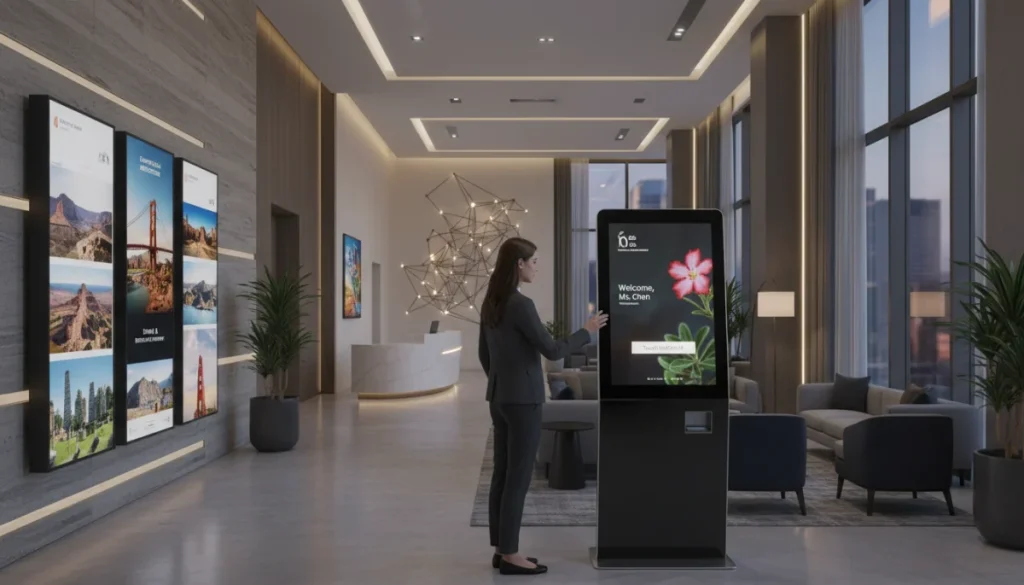
One of the most significant areas of technological investment is the automation of check-in and checkout. Guests increasingly prefer self-service options that minimize waiting times and offer greater flexibility. This not only improves guest satisfaction but also allows hotel staff to focus on more complex inquiries and personalized service.
- Mobile check-in via hotel apps, allowing guests to bypass the front desk entirely.
- Self-service kiosks equipped with facial recognition or QR code scanning for quick access.
- Digital key solutions, turning smartphones into room keys for enhanced convenience and security.
- Automated checkout procedures, including email billing and express departure options.
The integration of these automated processes ensures a smoother arrival and departure, setting a positive tone for the entire stay and leaving a lasting impression of efficiency and modernity. It reduces friction points and empowers guests with greater control over their experience.
The digital overhaul of hotel operations is not just about adopting new tools; it’s about fundamentally rethinking how services are delivered. By embracing technology, U.S. hotels are creating more agile, responsive, and guest-centric environments that cater to the demands of the modern traveler. This proactive approach ensures that hotels remain relevant and attractive in an increasingly digital world.
Personalization through artificial intelligence and data analytics
In the quest to enhance guest experience, personalization stands out as a critical differentiator. Artificial intelligence (AI) and robust data analytics are empowering U.S. hotels to move beyond generic service, offering tailored experiences that resonate deeply with individual guests. This capability allows hotels to anticipate needs and preferences, creating a truly bespoke stay.
By collecting and analyzing guest data – from past stays and preferences to real-time interactions – AI systems can construct detailed guest profiles. These profiles then inform various aspects of service, from recommending local attractions to customizing in-room amenities, ensuring every touchpoint feels uniquely designed for the individual. This level of personalized attention fosters loyalty and encourages repeat visits.
AI-powered recommendation engines
Recommendation engines, driven by AI algorithms, are becoming indispensable tools for hotels. These systems can suggest everything from dining options within the hotel to local tours and activities, based on a guest’s explicit preferences and inferred interests. This proactive approach adds significant value to the guest experience.
- Personalized dining suggestions based on dietary restrictions or past orders.
- Curated activity recommendations tailored to guest demographics and stated interests.
- Upselling and cross-selling relevant services, such as spa treatments or room upgrades, at opportune moments.
- Proactive communication about events or promotions that align with guest profiles.
The precision of AI-powered recommendations ensures that guests receive relevant and valuable information, enhancing their stay without feeling overwhelmed by irrelevant offers. It transforms passive information delivery into active, helpful guidance.
Beyond recommendations, AI also plays a crucial role in managing guest feedback and sentiment analysis. By processing reviews and comments from various platforms, AI can identify recurring themes and areas for improvement, allowing hotels to address issues swiftly and refine their service offerings. This continuous feedback loop is vital for maintaining high standards of guest satisfaction.
The strategic deployment of AI and data analytics allows hotels to anticipate and respond to guest needs with unprecedented accuracy. This not only elevates the guest experience but also optimizes operational efficiency by ensuring resources are directed where they can have the greatest impact. The future of hospitality is undeniably personalized, and AI is the engine driving this evolution.
Smart room technology and IoT integration
The concept of a ‘smart room’ is rapidly evolving from a futuristic vision to a standard expectation in many U.S. hotels. Internet of Things (IoT) devices are at the heart of this transformation, connecting various in-room amenities to create an integrated, intuitive, and highly personalized environment for guests. This integration offers unparalleled convenience and control, allowing guests to tailor their surroundings to their exact preferences.
From lighting and temperature control to entertainment systems and digital concierges, IoT devices empower guests to manage their stay with ease. This seamless control enhances comfort and contributes significantly to a memorable experience, making the room feel like a personalized sanctuary. Hotels are investing in these technologies to differentiate themselves and cater to tech-savvy travelers.
Voice-activated controls and digital concierges
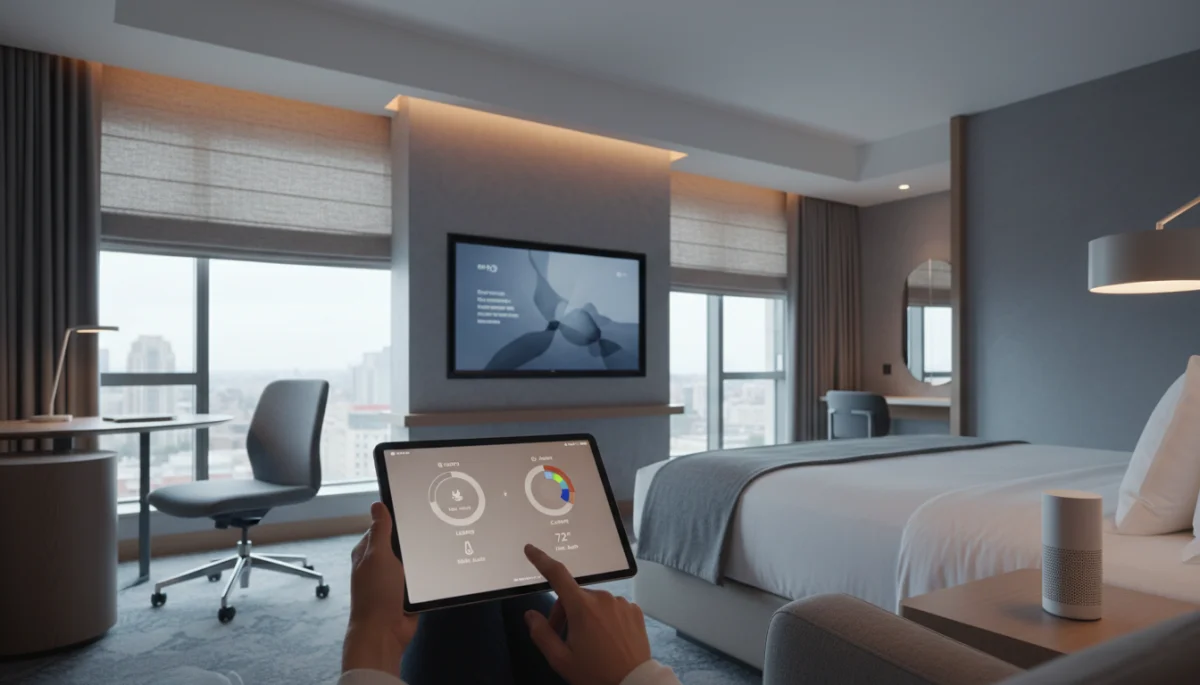
Voice-activated technology is becoming a prominent feature in smart hotel rooms. Guests can use simple voice commands to adjust lighting, set the thermostat, control entertainment, or even request hotel services. This hands-free interaction adds a layer of convenience and sophistication to the in-room experience.
- Controlling room temperature and lighting with voice commands.
- Accessing entertainment options, such as streaming services or music libraries.
- Requesting amenities like extra towels or room service directly through a smart speaker.
- Obtaining local information or making restaurant reservations via a digital concierge.
Digital concierges, often integrated with voice assistants, provide instant access to information and services, reducing the need for guests to call the front desk. This efficiency not only improves guest satisfaction but also frees up staff to handle more complex inquiries, enhancing overall service quality.
The benefits of smart room technology extend beyond guest convenience. Hotels can also leverage IoT data to optimize energy consumption, identify maintenance issues proactively, and gain insights into guest preferences for future enhancements. This dual advantage of improved guest experience and operational efficiency makes smart room investments highly valuable.
As technology continues to advance, the capabilities of smart rooms will only grow. U.S. hotels are committed to staying at the forefront of this innovation, ensuring that their guests enjoy the most comfortable, convenient, and personalized stay possible through cutting-edge IoT integration. This commitment solidifies their position as leaders in modern hospitality.
Enhanced connectivity and communication platforms
In an increasingly connected world, reliable and high-speed internet access is no longer an amenity but a fundamental expectation for hotel guests. U.S. hotels are recognizing that robust connectivity forms the backbone of a superior guest experience, enabling everything from seamless remote work to uninterrupted entertainment. Beyond Wi-Fi, modern hotels are also investing in sophisticated communication platforms that facilitate effortless interaction between guests and staff.
These platforms range from in-app messaging services to integrated property management systems that allow for real-time request fulfillment. The goal is to create a frictionless communication environment where guests can easily get assistance, make requests, and provide feedback, all while ensuring staff can respond promptly and efficiently. This improves satisfaction and builds trust.
High-speed Wi-Fi and advanced network infrastructure
Providing ubiquitous, high-speed Wi-Fi across the entire property is paramount. Guests expect to connect multiple devices without interruption, whether for business or leisure. This requires significant investment in advanced network infrastructure, including fiber optics and robust access points, to support high bandwidth demands.
- Seamless connectivity for multiple devices per guest, including laptops, smartphones, and tablets.
- Dedicated bandwidth for streaming services and video conferencing.
- Secure networks that protect guest data and privacy.
- Easy login processes, such as single sign-on or automatic reconnection for returning guests.
Beyond guest-facing Wi-Fi, a strong network infrastructure also supports internal hotel operations, enabling staff to utilize mobile devices for various tasks, from housekeeping management to maintenance requests. This internal efficiency directly translates to improved guest service.
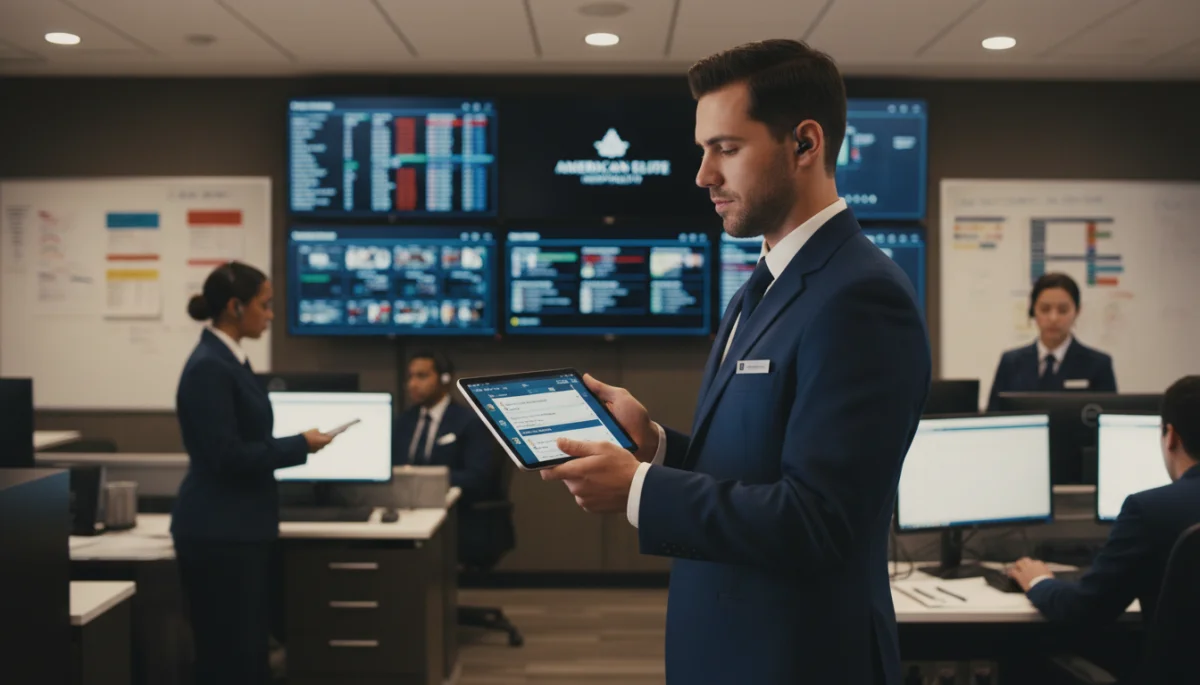
Modern communication platforms, such as guest messaging apps and AI-powered chatbots, allow guests to communicate with hotel staff via their preferred channels. These tools provide instant responses to common queries and route more complex requests to the appropriate department, ensuring no guest inquiry goes unanswered. This proactive and responsive communication significantly elevates the guest experience.
By prioritizing enhanced connectivity and sophisticated communication tools, U.S. hotels are creating an environment where guests feel constantly supported and connected. This investment not only meets contemporary expectations but also positions hotels as forward-thinking establishments committed to leveraging technology for ultimate guest satisfaction.
Sustainable technology solutions for eco-conscious travelers
As environmental awareness grows, eco-conscious travelers are increasingly seeking out hotels that demonstrate a commitment to sustainability. U.S. hotels are responding to this demand by integrating sustainable technology solutions, not only to reduce their environmental footprint but also to enhance the guest experience by aligning with their values. These investments reflect a broader trend towards responsible tourism and offer a distinct competitive advantage.
Sustainable technology encompasses a wide range of innovations, from energy-efficient building management systems to water conservation technologies and waste reduction initiatives. By adopting these solutions, hotels can significantly lower their operational costs while simultaneously appealing to a growing segment of environmentally responsible guests, fostering a positive brand image.
Energy-efficient building management systems
Advanced Building Management Systems (BMS) are central to a hotel’s sustainability efforts. These systems use smart sensors and AI to optimize energy consumption by intelligently controlling HVAC, lighting, and other electrical loads. They can detect occupancy patterns and adjust settings accordingly, ensuring energy is not wasted in unoccupied areas.
- Automated control of heating, ventilation, and air conditioning (HVAC) based on occupancy and external weather conditions.
- Smart lighting systems that adjust intensity based on natural light availability and room usage.
- Integration with guest room management systems to power down non-essential devices when guests are out.
- Real-time monitoring and analytics to identify and address energy inefficiencies.
Beyond energy, hotels are also implementing smart water management systems that monitor consumption, detect leaks, and optimize irrigation for landscaping. These technologies contribute to significant water savings, a crucial aspect of environmental stewardship, particularly in drought-prone regions of the U.S.
The adoption of sustainable technology is not just about environmental responsibility; it also enhances the guest experience by providing a more comfortable and guilt-free stay. Guests appreciate knowing that their accommodation is actively working to minimize its ecological impact, contributing to a sense of well-being and satisfaction. This commitment to sustainability can be a powerful draw for modern travelers.
Ultimately, investing in sustainable technology solutions allows U.S. hotels to achieve a triple bottom line: reducing environmental impact, lowering operational costs, and attracting a loyal segment of eco-conscious guests. This strategic approach ensures long-term viability and positions hotels as leaders in responsible hospitality.
Future trends and emerging technologies in hospitality
The landscape of hospitality technology is constantly evolving, with new innovations emerging that promise to further revolutionize the guest experience. U.S. hotels are keenly observing these future trends and beginning to experiment with emerging technologies to stay ahead of the curve and continue to surprise and delight their guests. This forward-thinking approach is crucial for maintaining a competitive edge in a rapidly changing market.
From augmented reality (AR) and virtual reality (VR) experiences to advanced robotics and blockchain for secure transactions, the potential applications of these technologies in hospitality are vast. Hotels are exploring how these tools can create more immersive, efficient, and secure environments, pushing the boundaries of what a guest stay can entail.
Augmented reality for immersive experiences
Augmented reality (AR) offers exciting possibilities for creating immersive and interactive guest experiences. Imagine using a smartphone to scan a hotel lobby and see historical facts pop up, or exploring a room virtually before booking. AR can transform static environments into dynamic, informative, and entertaining spaces.
- Interactive maps and wayfinding within large hotel properties using AR overlays.
- Virtual tours of rooms and amenities before arrival, enhancing booking confidence.
- Augmented reality games or scavenger hunts within the hotel for entertainment.
- Enhanced information display for local attractions and dining options.
Virtual reality (VR) is also gaining traction, offering guests the chance to experience a destination or a hotel’s facilities before they even arrive. This can be a powerful marketing tool, allowing potential guests to ‘try before they buy’ and build anticipation for their stay.
Beyond immersive experiences, robotics are slowly making their way into hotels, performing tasks such as luggage delivery, cleaning, and even basic concierge services. While still in early stages, robotic integration aims to free up human staff for more complex and personalized interactions, further enhancing service quality.
Blockchain technology is being explored for its potential to enhance security and transparency in hotel operations, particularly in areas like payment processing, loyalty programs, and identity verification. Its decentralized nature offers a robust solution for protecting sensitive guest data and ensuring trustworthy transactions.
The future of hotel technology is bright and full of potential. U.S. hotels that embrace these emerging trends will be well-positioned to offer unparalleled guest experiences, setting new standards for innovation and service in the hospitality industry. Continuous investment in these areas is key to long-term success and guest satisfaction.
| Key Technology | Guest Experience Benefit |
|---|---|
| Automated Check-in/out | Reduces wait times, offers flexibility, enhances convenience. |
| AI & Data Analytics | Delivers personalized recommendations and tailored services. |
| Smart Room Technology | Provides intuitive control over room environment, increasing comfort. |
| Enhanced Connectivity | Ensures reliable high-speed Wi-Fi and seamless communication. |
Frequently asked questions about hotel technology
The primary goals are to enhance the overall guest experience, streamline operational efficiency, personalize services, and attract a modern, tech-savvy clientele. These investments also aim to reduce costs and improve sustainability, ultimately boosting guest satisfaction and loyalty in a competitive market.
AI enhances guest experience by enabling deep personalization through data analytics. It powers recommendation engines for tailored suggestions on dining and activities, analyzes guest sentiment from feedback, and supports predictive services, making each stay feel uniquely customized to individual preferences and needs.
Smart rooms and IoT devices provide guests with intuitive control over their environment, from lighting and temperature to entertainment, often through voice activation. This integration enhances comfort, convenience, and personalization, while also allowing hotels to optimize energy use and proactively manage maintenance, improving both guest satisfaction and operational efficiency.
High-speed Wi-Fi is crucial because guests expect seamless connectivity for work, entertainment, and communication. It supports multiple devices, streaming services, and video conferencing, which are essential for modern travelers. Reliable internet underpins other digital services and is a fundamental component of a positive and productive guest stay.
Sustainable technologies benefit guests by aligning with their eco-conscious values, offering a guilt-free and more comfortable stay. Features like energy-efficient HVAC and smart water management contribute to a reduced environmental footprint, which many guests appreciate. This commitment to sustainability enhances the hotel’s brand image and fosters a sense of well-being for environmentally aware travelers.
Conclusion
The journey of enhancing guest experience in U.S. hotels is inextricably linked to strategic technology investments. From the seamless efficiency of automated check-ins and the profound personalization driven by AI, to the intuitive comfort of smart rooms and the critical foundation of robust connectivity, technology is reshaping every facet of the guest journey. Moreover, the integration of sustainable solutions reflects a growing awareness of environmental responsibility, appealing to a new generation of travelers. As the hospitality landscape continues to evolve, hotels that prioritize innovative technological adoption will undoubtedly lead the way, delivering unparalleled experiences that foster loyalty and redefine the standards of modern hospitality.
