Securing Remote Workforces: Essential IT Solutions
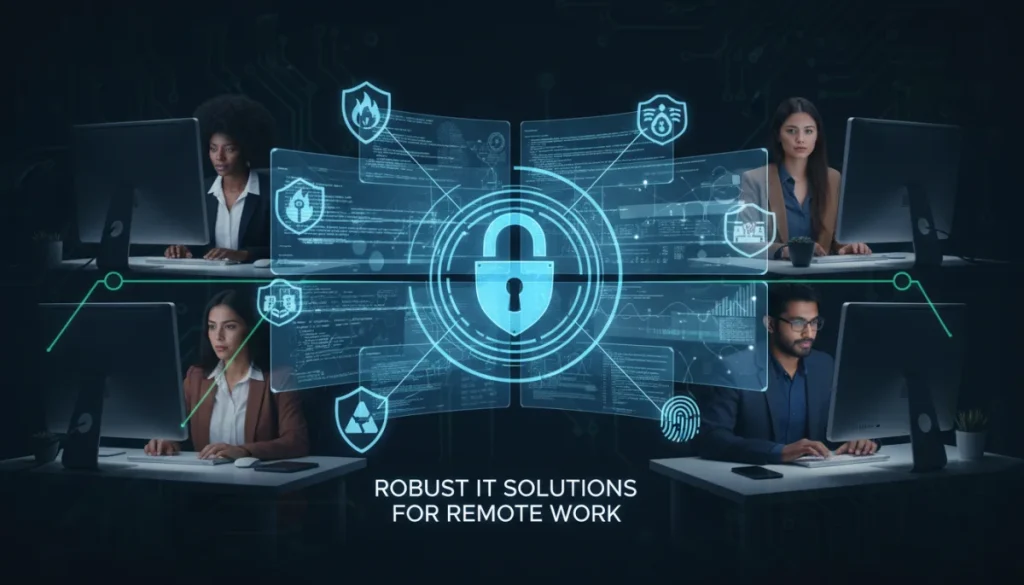
Securing remote workforces requires a comprehensive approach integrating robust IT solutions like endpoint security, secure remote access, and cloud security to protect sensitive data and maintain operational integrity.
The landscape of work has fundamentally shifted, making the need for robust IT strategies paramount. As organizations increasingly embrace distributed teams, understanding how to effectively navigate the complexities of securing remote workforces has become a critical business imperative. Are your current solutions truly protecting your valuable assets?
Understanding the unique challenges of remote work security
Remote work introduces a distinct set of security challenges that differ significantly from traditional office environments. Without the physical perimeter of an office network, organizations face a broader attack surface and increased vulnerability to cyber threats. It’s crucial to recognize these nuances to build an effective defense strategy.
One primary concern is the diverse array of devices accessing corporate resources. Employees often use personal devices (BYOD) or company-issued equipment from unsecured home networks, creating potential entry points for malicious actors. This decentralization complicates traditional security models and demands a more adaptable, zero-trust approach.
The expanded attack surface
The shift to remote operations has inherently expanded the digital footprint of most organizations. Each remote endpoint, whether a laptop, tablet, or smartphone, represents a potential vulnerability if not adequately secured. This requires a granular level of control and visibility that extends beyond the traditional corporate firewall.
- Home network vulnerabilities: Personal routers often lack enterprise-grade security features.
- Shadow IT: Employees may use unauthorized apps or services, bypassing security protocols.
- Phishing and social engineering: Remote workers can be more susceptible to targeted attacks.
Another significant challenge lies in data sovereignty and compliance. When data is accessed and stored across various geographical locations and personal devices, ensuring adherence to regulations like GDPR, CCPA, or HIPAA becomes more complex. Organizations must implement solutions that provide consistent data protection and audit trails, regardless of the data’s physical location or the user’s access point.
The conclusion is clear: securing remote workforces demands a proactive and adaptable strategy that addresses both technological vulnerabilities and human factors. A one-size-fits-all approach is no longer sufficient in this distributed operational model.
Endpoint security: the first line of defense
In a remote work setup, every device becomes a potential gateway to your corporate network, making robust endpoint security an absolute necessity. This isn’t just about installing antivirus software; it’s about a comprehensive strategy that protects, detects, and responds to threats at the device level, no matter where it is located.
Modern endpoint protection platforms (EPP) go beyond traditional antivirus by incorporating advanced features like behavioral analysis, machine learning, and exploit prevention. These tools are designed to identify and block sophisticated threats that might evade older, signature-based detection methods, providing a critical layer of defense for remote devices.
Implementing advanced endpoint protection
Effective endpoint security for remote workers involves several key components. It starts with ensuring all devices have up-to-date operating systems and applications, as unpatched software is a common vector for attacks. Beyond that, organizations should leverage solutions that offer real-time threat detection and response capabilities.
- Next-generation antivirus (NGAV): Utilizes AI and machine learning to detect unknown threats.
- Endpoint detection and response (EDR): Provides continuous monitoring and rapid incident response capabilities.
- Device encryption: Protects data on lost or stolen devices, a common risk for remote workers.
Beyond technical controls, user education plays a vital role. Remote employees must be trained to recognize phishing attempts, practice strong password hygiene, and understand the importance of reporting suspicious activities. A technically sound solution is only as strong as the weakest link in the human chain.
Ultimately, a strong endpoint security strategy forms the foundational layer for securing remote workforces. It ensures that individual devices, which are often operating outside the traditional network perimeter, are adequately protected against a wide array of cyber threats.
Secure remote access: VPNs and zero trust
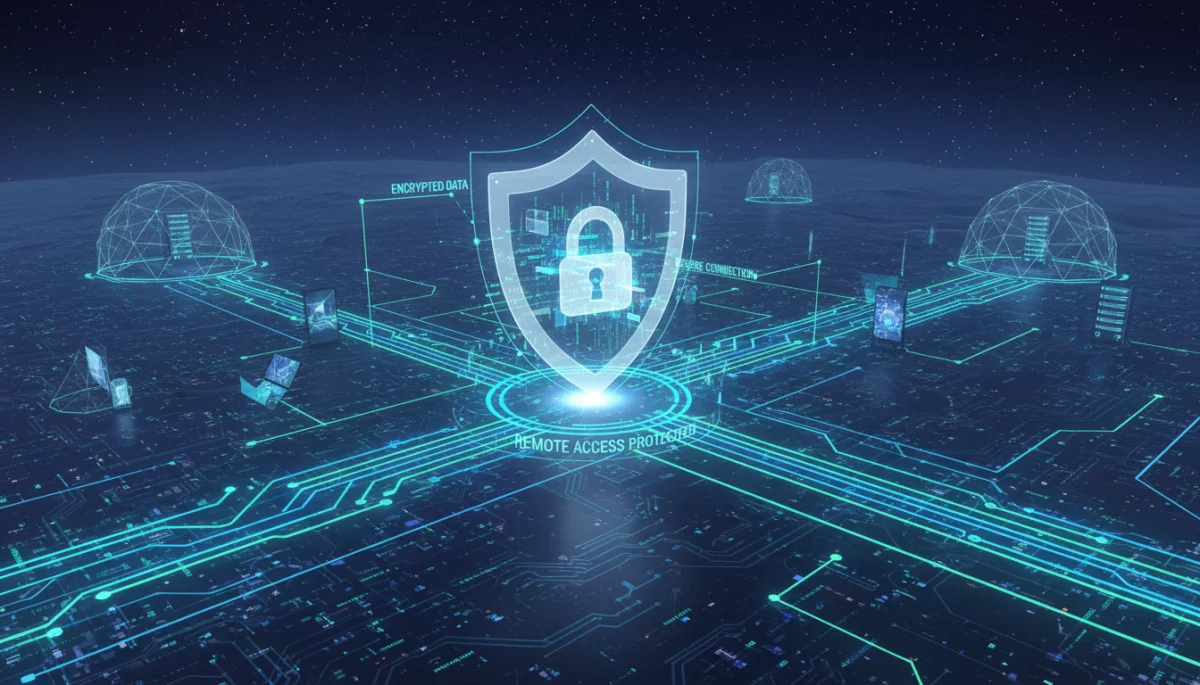
Enabling remote access to corporate resources securely is fundamental to supporting a distributed workforce. Traditional Virtual Private Networks (VPNs) have long been the standard, but the evolving threat landscape and the demands of modern remote work are pushing organizations towards more advanced models like Zero Trust Network Access (ZTNA).
VPNs create an encrypted tunnel between the remote user’s device and the corporate network, effectively extending the corporate perimeter to the user. While effective for basic secure connectivity, VPNs often grant broad access once authenticated, which can be a vulnerability if the endpoint itself is compromised.
Transitioning to zero trust network access (ZTNA)
ZTNA operates on the principle of ‘never trust, always verify.’ Instead of granting broad network access, ZTNA solutions provide granular, context-aware access to specific applications or resources. This means every access request is verified, regardless of whether the user is inside or outside the traditional network perimeter.
- Micro-segmentation: Limits user access to only the specific resources they need.
- Continuous verification: Authenticates users and devices at every access attempt.
- Reduced attack surface: Prevents lateral movement within the network if a device is compromised.
Implementing ZTNA requires a shift in mindset from perimeter-based security to identity- and context-based security. It integrates with identity and access management (IAM) systems and leverages factors like device posture, user location, and time of day to make dynamic access decisions. This provides a significantly more resilient security posture for remote operations.
In conclusion, while VPNs still have their place, adopting ZTNA is increasingly becoming the preferred approach for organizations serious about securing remote workforces. It offers a more adaptive, granular, and robust framework for controlling access to critical business assets.
Cloud security solutions for distributed teams
As remote work drives greater adoption of cloud-based applications and infrastructure, securing these cloud environments becomes paramount. Cloud security is not merely an extension of on-premise security; it requires specialized tools and strategies to protect data and applications hosted by third-party providers.
Many organizations utilize Software-as-a-Service (SaaS) applications for collaboration, CRM, and other essential business functions. While SaaS providers handle infrastructure security, organizations are responsible for securing their data within these applications, managing user access, and ensuring compliance with data governance policies.
Key cloud security considerations
Effective cloud security for remote teams involves a multi-faceted approach, encompassing identity management, data protection, and continuous monitoring. Understanding the shared responsibility model in the cloud is crucial, as security duties are divided between the cloud provider and the customer.
- Cloud Access Security Brokers (CASBs): Enforce security policies across multiple cloud services.
- Data Loss Prevention (DLP): Prevents sensitive data from leaving the controlled cloud environment.
- Cloud Security Posture Management (CSPM): Identifies and remediates misconfigurations in cloud infrastructure.
Furthermore, robust identity and access management (IAM) is critical in the cloud. This includes multi-factor authentication (MFA) for all cloud services, granular role-based access control (RBAC), and regular access reviews to prevent unauthorized access to sensitive cloud resources.
To summarize, cloud security is an indispensable component of securing remote workforces. By implementing dedicated cloud security solutions, organizations can ensure the integrity and confidentiality of their data and applications, regardless of where they are hosted or accessed.
Data protection and compliance in a remote world
Data is the lifeblood of any organization, and its protection becomes even more complex when employees are working remotely across various locations and devices. Ensuring data integrity, confidentiality, and availability, while simultaneously adhering to regulatory compliance, is a critical challenge for securing remote workforces.
The risk of data breaches increases with a distributed workforce due to factors like less controlled environments, potential use of personal devices, and reliance on public networks. Organizations must implement robust data protection strategies that span data in transit, data at rest, and data in use.
Implementing comprehensive data protection strategies
A holistic approach to data protection involves a combination of technical controls, organizational policies, and continuous employee training. Encryption is foundational, protecting data whether it’s stored on endpoints, in the cloud, or transmitted over networks.
- Encryption: Encrypt all sensitive data on devices, in transit, and at rest in the cloud.
- Data backup and recovery: Implement robust solutions to ensure business continuity after data loss.
- Data classification: Categorize data by sensitivity to apply appropriate protection levels.
Compliance with regulations such as HIPAA, PCI DSS, GDPR, and CCPA is non-negotiable. Remote work complicates compliance by extending the scope of data handling. Organizations need to ensure that their data protection measures are not only effective but also auditable, demonstrating adherence to all relevant legal and industry standards. This includes maintaining detailed logs of data access and processing activities.
Ultimately, effective data protection and compliance are cornerstones of securing remote workforces. By prioritizing these areas, businesses can mitigate risks, avoid costly penalties, and build trust with their customers and stakeholders.
Threat detection and incident response for remote operations
Even with the most robust preventative measures, security incidents are an inevitable reality. Therefore, having strong threat detection and incident response capabilities is crucial for minimizing the impact of breaches when securing remote workforces. Proactive monitoring and a well-defined response plan are essential.
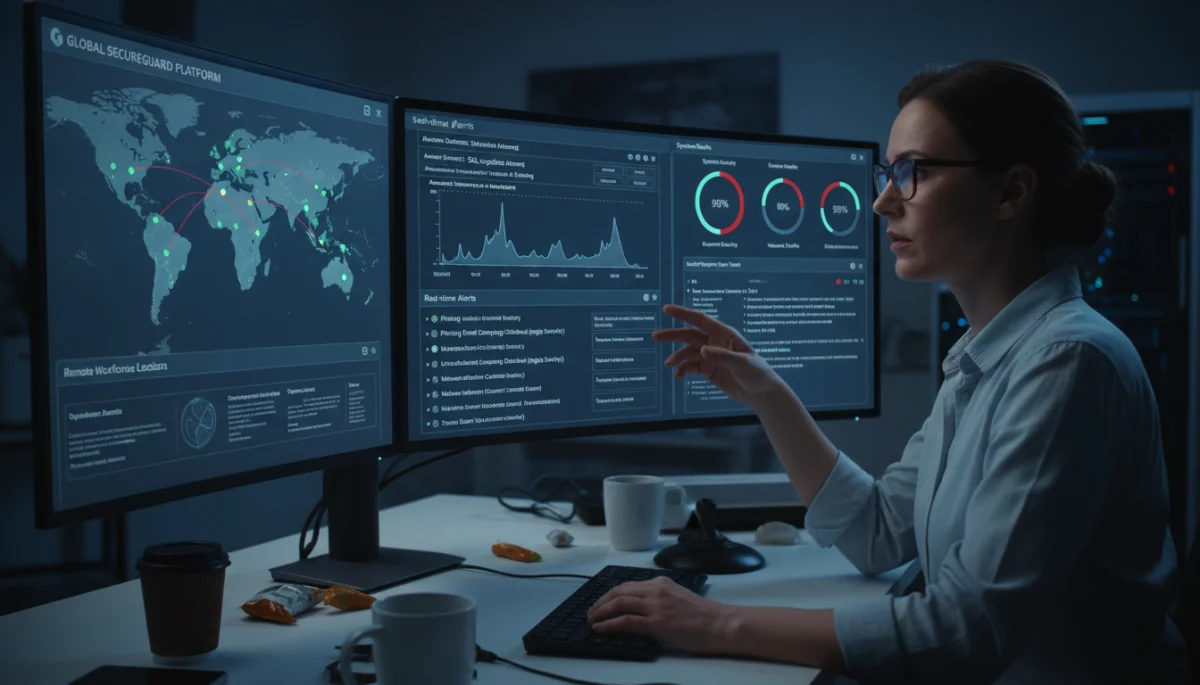
The distributed nature of remote work makes threat detection more challenging. Security teams need visibility into activities occurring on remote endpoints, cloud applications, and various network segments. Traditional security information and event management (SIEM) systems can be extended to gather logs from these diverse sources.
Building an effective incident response plan
An effective incident response plan for remote operations must be tailored to address the unique challenges of a distributed environment. This includes clear communication protocols, remote forensic capabilities, and strategies for isolating compromised remote devices without disrupting essential business functions.
- Security Information and Event Management (SIEM): Centralizes security data for analysis and threat detection.
- Security Orchestration, Automation, and Response (SOAR): Automates incident response workflows to speed up resolution.
- Regular incident response drills: Test the plan with remote teams to identify gaps and improve readiness.
Furthermore, continuous monitoring is not just about detecting threats but also about understanding baseline behaviors. Anomalies in user activity, device access patterns, or data transfers can signal a potential compromise. Leveraging User and Entity Behavior Analytics (UEBA) can help identify these deviations and flag suspicious activities.
In conclusion, while prevention is key, a strong threat detection and incident response framework provides the necessary resilience to protect organizations operating with remote workforces. It ensures that security teams can quickly identify, contain, and recover from cyber incidents, maintaining business continuity.
The human element: training and security awareness
Technology alone cannot fully secure a remote workforce; the human element remains one of the most critical factors. Employees are often the first line of defense, and their awareness and adherence to security best practices are paramount in preventing breaches. Effective training and ongoing security awareness programs are indispensable.
Remote workers may face different types of social engineering attacks, such as targeted phishing emails or vishing (voice phishing) attempts, which can exploit their isolation or lack of immediate peer support. Educating them on these evolving tactics is vital to building a resilient security posture.
Cultivating a security-aware culture
Building a strong security culture means moving beyond annual training sessions to continuous education and reinforcement. This involves regular communication about new threats, best practices, and the importance of security in their daily roles. It should be presented in an engaging and accessible manner.
- Regular security awareness training: Cover topics like phishing, strong passwords, and data handling.
- Simulated phishing attacks: Test employee vigilance and provide immediate feedback.
- Clear security policies: Ensure policies are accessible, understandable, and consistently enforced.
Empowering employees to be security advocates can significantly enhance an organization’s overall defense. Encourage them to report suspicious activities without fear of reprisal and provide clear channels for doing so. A culture where security is everyone’s responsibility is far more effective than one where it’s solely an IT concern.
To conclude, investing in the human element through comprehensive training and continuous security awareness programs is as crucial as implementing technical solutions for securing remote workforces. A well-informed and vigilant workforce is an organization’s strongest asset against cyber threats.
| Key Solution | Brief Description |
|---|---|
| Endpoint Security | Protects individual devices from malware and cyber threats using advanced detection. |
| Secure Remote Access | Ensures safe connection to corporate resources, moving from VPNs to Zero Trust. |
| Cloud Security | Secures data and applications hosted in cloud environments, managing access and compliance. |
| Security Awareness | Educates employees on cybersecurity best practices to mitigate human-related risks. |
Frequently asked questions about remote workforce security
The biggest security risk for remote workforces often stems from the expanded attack surface due to diverse devices and unsecured home networks. Phishing attacks and social engineering also pose significant threats, targeting individuals outside the traditional corporate network defenses.
ZTNA is crucial because it operates on a ‘never trust, always verify’ principle, providing granular, context-aware access to specific applications. This significantly reduces the attack surface compared to traditional VPNs, preventing unauthorized lateral movement if a device is compromised.
Organizations ensure data compliance by implementing strong encryption, robust data loss prevention (DLP) tools, and clear data classification policies. Regular audits and adherence to regulations like GDPR or HIPAA, regardless of data location, are also essential.
Employee training is vital as it empowers remote workers to be the first line of defense. Regular education on phishing, strong passwords, and security policies helps build a security-aware culture, significantly reducing human-related risks and strengthening overall protection.
Essential IT solutions for remote endpoint security include next-generation antivirus (NGAV), Endpoint Detection and Response (EDR) platforms, and comprehensive device encryption. These tools collectively provide advanced threat detection, rapid response, and data protection for all remote devices.
Conclusion
The imperative to prioritize securing remote workforces has never been clearer. As businesses continue to leverage the flexibility and benefits of distributed teams, a proactive and multi-layered approach to IT security is not just recommended, but absolutely essential. By strategically implementing robust endpoint security, adopting secure remote access models like Zero Trust, fortifying cloud environments, ensuring stringent data protection and compliance, and continuously investing in threat detection and employee awareness, organizations can build a resilient defense against the evolving cyber threat landscape. Embracing these essential IT solutions creates a secure foundation, enabling remote work to thrive without compromising organizational integrity or data privacy.
