U.S. Business Loan Programs: Best Growth Capital Terms?

Understanding the optimal U.S. business loan programs for growth capital requires evaluating factors such as interest rates, repayment schedules, eligibility criteria, and collateral requirements across diverse financing options.
Navigating the complex landscape of U.S. business financing can be daunting, especially when seeking the ideal growth capital. This article provides a comprehensive comparison of U.S. business loan programs, helping you discern which option offers the best terms for your company’s expansion and sustained success.
Understanding the Landscape of U.S. Business Financing
The U.S. market offers a wide array of financing options for businesses, each with distinct features, benefits, and drawbacks. For any business aiming for growth, securing the right capital is paramount. This initial exploration sets the stage for a deeper dive into specific loan programs, highlighting the fundamental differences that can impact your financial strategy.
From startups to established enterprises, the need for capital to fund operations, expand markets, or invest in new technologies is constant. The choice of loan program can significantly influence a business’s financial health and trajectory, making an informed decision critical.
Key Factors Influencing Loan Choices
- Business Stage: Startups often face different challenges and opportunities than mature businesses.
- Capital Need: The amount and purpose of the funds required dictate suitable loan types.
- Credit Profile: Both personal and business credit scores play a crucial role in eligibility and terms.
- Industry Specifics: Certain industries may have access to specialized funding or face unique lending criteria.
Understanding these foundational elements is the first step toward aligning your business needs with the most appropriate financing solution. The subsequent sections will elaborate on the various programs available, providing a clearer picture of what each entails.
Ultimately, the goal is to empower business owners with the knowledge to make strategic decisions about their growth capital. By thoroughly understanding the available options, businesses can avoid pitfalls and leverage financing to their advantage, ensuring sustainable expansion.
SBA Loan Programs: A Cornerstone for Small Businesses
The U.S. Small Business Administration (SBA) offers several loan programs designed to support small businesses that might not qualify for traditional bank loans. These programs do not lend money directly but rather guarantee a portion of loans made by approved lenders, thereby reducing the risk for banks and encouraging them to lend to small businesses. This guarantee makes SBA loans highly attractive due to their competitive terms and lower down payments.
The most popular SBA programs include the 7(a) loan, the 504 loan, and microloans. Each serves a specific purpose and caters to different business needs. Understanding the nuances of each can help a business owner determine if an SBA loan is the right fit for their growth ambitions.
SBA 7(a) Loan Program
The 7(a) loan program is the SBA’s primary program for providing financial assistance to small businesses. It offers flexible financing for a variety of general business purposes, including working capital, equipment purchases, inventory, and even real estate acquisition. The maximum loan amount is $5 million, and repayment terms can extend up to 25 years for real estate and 10 years for other uses. Interest rates are typically tied to the prime rate plus a spread, making them very competitive.
- Flexibility: Can be used for almost any legitimate business purpose.
- Competitive Rates: Often lower interest rates compared to conventional loans.
- Longer Terms: Extended repayment periods reduce monthly payments.
- Government Guarantee: Reduces risk for lenders, increasing access to capital.
The application process for an SBA 7(a) loan can be more rigorous and time-consuming than for other loan types, requiring extensive documentation and a solid business plan. However, the favorable terms often outweigh the complexity for eligible businesses.
SBA 504 Loan Program
The 504 loan program provides long-term, fixed-rate financing for major fixed assets that promote business growth and job creation. This program is typically used for purchasing or renovating commercial real estate, or acquiring heavy machinery and equipment. It involves a partnership between a borrower, a conventional lender, and a Certified Development Company (CDC).
Under the 504 program, the CDC provides up to 40% of the total project costs, a traditional lender provides 50%, and the borrower contributes at least 10% as a down payment. This structure allows businesses to preserve working capital while investing in significant assets. The fixed interest rates and longer terms (up to 20 years for real estate) offer stability and predictable payments, which are crucial for long-term planning.
SBA microloans, on the other hand, are smaller loans, up to $50,000, provided through non-profit community-based organizations. These are ideal for startups and very small businesses needing modest capital for working capital, inventory, or equipment, often with less stringent eligibility requirements.
In conclusion, SBA loan programs are invaluable resources for small businesses seeking favorable terms and government backing. While the application process can be detailed, the benefits of competitive rates, longer repayment periods, and lower down payments make them a powerful tool for growth capital.
Traditional Bank Loans: Stability and Established Relationships
Traditional bank loans remain a cornerstone of business financing, offering a variety of products tailored to different needs. These loans are typically offered by commercial banks, credit unions, and other depository institutions. They are often characterized by their stringent eligibility requirements, competitive interest rates, and the importance of an established banking relationship. For many businesses, a traditional bank loan represents a reliable and cost-effective source of capital.
Banks offer a range of products, from term loans and lines of credit to commercial mortgages and equipment financing. The specific terms and conditions will vary based on the borrower’s creditworthiness, the loan amount, and the purpose of the funds. Building a strong relationship with a bank can often lead to more favorable terms over time.
Types of Traditional Bank Loans
- Term Loans: Lump sum disbursed upfront with fixed repayment schedules and interest rates. Ideal for specific, larger investments like equipment or facility expansion.
- Lines of Credit: Flexible access to funds up to a certain limit, allowing businesses to draw and repay as needed. Excellent for managing working capital fluctuations.
- Commercial Mortgages: Long-term financing for the purchase or refinancing of commercial real estate. Typically offer competitive fixed or variable rates over extended periods.
- Equipment Loans: Specifically designed to finance the purchase of business equipment, often using the equipment itself as collateral.
Eligibility for traditional bank loans often hinges on a strong credit history, both personal and business, a solid business plan, and sufficient collateral. Banks typically prefer businesses with a proven track record of profitability and stable cash flow, making them a better fit for more established enterprises.
The application process, while thorough, can be streamlined for existing bank customers. Lenders will scrutinize financial statements, tax returns, and projections to assess the business’s ability to repay the loan. This due diligence ensures that banks are lending responsibly and that businesses are taking on debt they can manage.
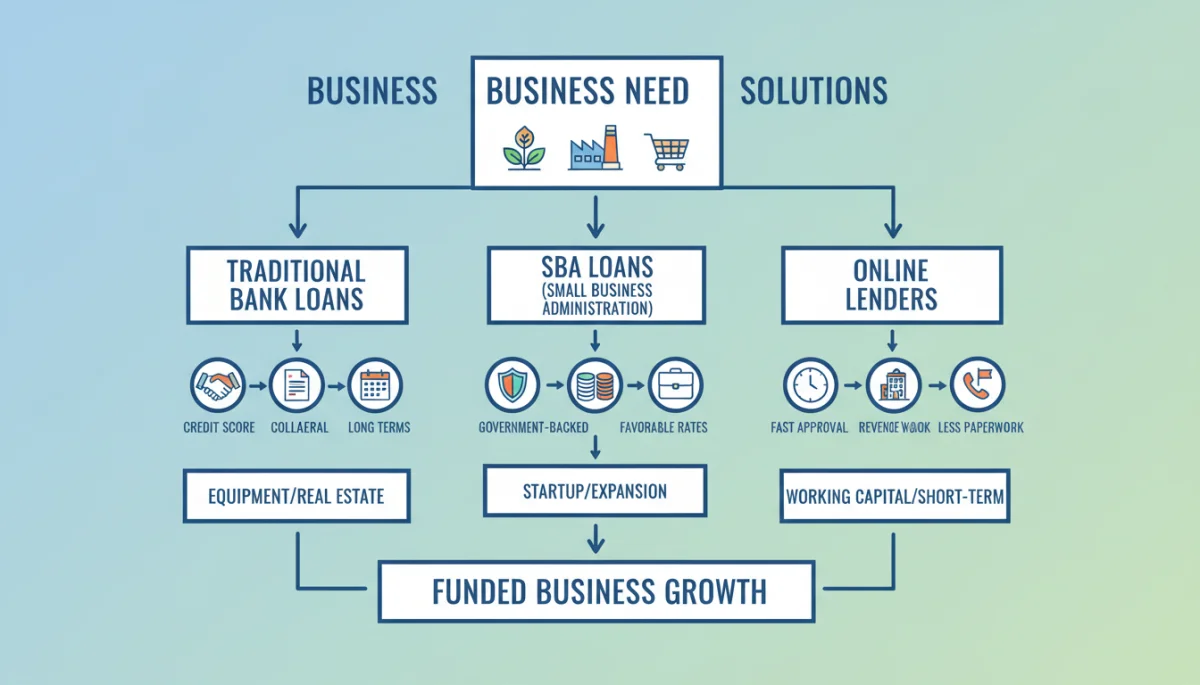
In summary, traditional bank loans provide stability, competitive rates, and the advantage of established relationships. While they may require a stronger financial profile and a more detailed application process, they can be an excellent option for businesses seeking reliable and substantial growth capital.
Alternative Lending Options: Speed and Flexibility
Beyond traditional banks and government-backed programs, a burgeoning sector of alternative lenders has emerged, offering faster and more flexible financing solutions. These lenders, often technology-driven, cater to businesses that may not meet the strict criteria of conventional banks or require quicker access to funds. While they often come with higher interest rates, their ease of application and speed of approval can be a significant advantage for businesses in urgent need of capital or those with less-than-perfect credit scores.
Alternative lending encompasses a broad spectrum of products, from online term loans and merchant cash advances to invoice factoring and peer-to-peer lending. Each option is designed to address specific financial gaps and offer distinct advantages for different business scenarios. The rise of these platforms has democratized access to capital, particularly for small and medium-sized enterprises (SMEs).
Popular Alternative Financing Methods
- Online Term Loans: Similar to traditional term loans but with a streamlined online application, faster approval, and funding. Ideal for businesses needing quick capital for various purposes.
- Merchant Cash Advances (MCAs): Funds provided in exchange for a percentage of future credit card sales. While fast, MCAs often have higher effective interest rates and are best suited for businesses with high credit card transaction volume.
- Invoice Factoring: Selling your outstanding invoices to a third party at a discount to get immediate cash. This is a good option for businesses with long payment cycles and immediate working capital needs.
- Peer-to-Peer (P2P) Lending: Borrowing directly from individual investors or groups through online platforms. Offers an alternative to traditional banking and can provide competitive rates depending on the platform and borrower’s profile.
The primary appeal of alternative lenders lies in their speed and often less stringent eligibility requirements. Many online lenders can provide funding within days, sometimes even hours, which is crucial for businesses facing immediate opportunities or challenges. They also tend to be more forgiving of lower credit scores or shorter business histories compared to traditional banks.
However, the convenience often comes at a cost. Interest rates and fees associated with alternative lending can be significantly higher, and repayment terms might be shorter. It is essential for businesses to carefully evaluate the total cost of borrowing and ensure that the benefits of speed and flexibility outweigh the increased financial burden.
In conclusion, alternative lending provides vital flexibility and speed for businesses that need quick access to capital or face hurdles with traditional financing. While potentially more expensive, these options can be crucial for bridging financial gaps and seizing time-sensitive growth opportunities.
Evaluating Loan Terms: Interest Rates, Fees, and Repayment
When comparing U.S. business loan programs, a thorough evaluation of the terms is paramount. Beyond the headline interest rate, several other factors contribute to the true cost and flexibility of a loan. Understanding these elements—interest rates, fees, and repayment structures—is crucial for making an informed decision that aligns with your business’s financial health and growth objectives. Overlooking any of these details can lead to unexpected costs or difficulties in managing debt.
The ‘best terms’ are not universally defined; they depend entirely on your business’s specific situation, risk tolerance, and cash flow projections. A seemingly low-interest rate might come with prohibitive fees or a rigid repayment schedule that doesn’t suit your operational cycle.
Key Components of Loan Terms
- Interest Rate (APR): This is the most obvious cost, but it’s important to differentiate between stated interest rates and the Annual Percentage Rate (APR), which includes fees. A lower APR indicates a cheaper loan overall.
- Fees: Common fees include origination fees, application fees, closing costs, and prepayment penalties. These can significantly increase the total cost of borrowing.
- Repayment Schedule: Weekly, bi-weekly, or monthly payments, and whether they are fixed or variable. A schedule that aligns with your cash flow is vital for avoiding defaults.
- Collateral Requirements: Some loans require assets as security, which can be a significant consideration for businesses with limited collateral.
- Covenants: Conditions imposed by lenders, such as maintaining certain financial ratios or not incurring additional debt, which can impact operational flexibility.
For instance, an SBA loan might offer a lower APR due to government guarantees, but the application process could involve higher upfront fees for packaging assistance. Conversely, an online loan might have a higher APR but fewer upfront fees and a faster disbursement, which could be more valuable for immediate needs.
Businesses should always request a detailed breakdown of all costs associated with a loan. This includes not only the interest rate but also any and all fees, ensuring a clear understanding of the total financial obligation. Comparing the total cost of different loan offers, rather than just the interest rate, provides a more accurate picture.
Furthermore, consider the flexibility of repayment. Can you make extra payments without penalty? Is there an option to defer payments if you hit a temporary rough patch? These details can be critical for long-term financial management. The best terms are those that not only offer a competitive rate but also provide the necessary flexibility and transparency to support your business’s sustained growth without undue burden.
Matching Loan Programs to Business Growth Stages
The ideal business loan program often depends on the specific growth stage of your company. What works for a nascent startup may not be suitable for a rapidly expanding enterprise or a mature business looking to optimize operations. Understanding this alignment is key to selecting a financing option that truly supports your current needs and future aspirations. Each stage presents unique challenges and opportunities, demanding a tailored approach to capital acquisition.
For example, a startup might prioritize flexibility and lower initial costs, even if it means slightly higher interest rates, while an established business might seek the lowest possible APR and longer terms for significant asset acquisition. The strategic fit of the loan program can profoundly impact a business’s ability to achieve its growth objectives efficiently.
Financing for Startups and Early-Stage Businesses
Startups typically have limited operating history, minimal collateral, and sometimes lower credit scores. For these businesses, options like SBA microloans, crowdfunding, or even venture capital can be more accessible than traditional bank loans. Angel investors and grants can also play a crucial role in providing initial capital without the burden of debt repayment in the early, high-risk phases.
- SBA Microloans: Smaller amounts, often up to $50,000, for working capital, inventory, or equipment, with support from non-profit lenders.
- Crowdfunding: Raising small amounts of capital from a large number of individuals, often through online platforms.
- Angel Investors/Venture Capital: Equity financing for high-growth potential businesses, exchanging ownership for capital and expertise.
These options recognize the inherent risks of new ventures and provide pathways to funding that traditional lenders might shy away from. The focus here is often on proving the business model and achieving initial traction.
Financing for Growing and Established Businesses
As a business matures and demonstrates consistent revenue and profitability, a wider range of financing options becomes available. Traditional bank term loans, lines of credit, and SBA 7(a) or 504 loans become viable and often more attractive due to their competitive terms and lower costs. These options are well-suited for funding expansion, purchasing real estate, or investing in significant capital expenditures.
For businesses seeking rapid expansion, considering a combination of debt and equity financing might be optimal. For instance, a bank loan for operational growth paired with a strategic equity investment for market entry or product development can provide a robust financial foundation.
The key takeaway is that financing is not a one-size-fits-all solution. Businesses must continually reassess their growth stage, financial health, and strategic objectives to select the most appropriate loan programs. This dynamic approach ensures that capital acquisition remains a supportive, rather than a hindering, factor in their journey towards sustained success.
Preparing Your Business for a Loan Application
Regardless of the loan program you choose, thorough preparation is crucial for a successful application. Lenders, whether traditional banks or alternative providers, will require a clear understanding of your business’s financial health, operational stability, and future prospects. A well-organized and comprehensive application not only increases your chances of approval but can also lead to more favorable loan terms. This proactive approach minimizes delays and demonstrates your business’s professionalism and readiness for growth.
The preparation process involves gathering essential documents, developing a robust business plan, and understanding your credit profile. Skipping any of these steps can result in a rejected application or less competitive offers.
Essential Documents and Information
- Business Plan: A detailed outline of your business, including mission, market analysis, management team, financial projections, and how the loan will be used.
- Financial Statements: Including profit and loss statements, balance sheets, and cash flow statements for the past 2-3 years.
- Tax Returns: Both business and personal tax returns for recent years.
- Credit Reports: Personal and business credit scores are critical. Review them in advance to identify and rectify any inaccuracies.
- Legal Documents: Business registration, licenses, permits, and articles of incorporation.
- Collateral Information: Details of any assets you plan to offer as security for the loan.
Beyond these documents, lenders will also assess your industry experience, management team’s expertise, and the overall economic outlook for your sector. They want to see a clear path to profitability and a realistic plan for debt repayment.
It is also advisable to clearly articulate the purpose of the loan and how it will contribute to your business’s growth. Whether it’s for purchasing new equipment, expanding into new markets, or increasing working capital, a clear justification strengthens your application. Quantify the expected return on investment where possible.
Finally, consider seeking advice from financial advisors or business consultants. Their expertise can be invaluable in navigating the application process, optimizing your financial presentation, and identifying the most suitable loan products for your specific situation. Their guidance can help you present your business in the best possible light and secure the growth capital you need.
| Loan Program | Key Characteristics |
|---|---|
| SBA Loans | Government-guaranteed, competitive rates, longer terms, ideal for small businesses. |
| Traditional Bank Loans | Stable, competitive rates, require strong credit, best for established businesses. |
| Alternative Lending | Fast, flexible, less stringent, higher rates, good for urgent capital or specific needs. |
| Term Loans | Lump sum for specific investments, fixed payments over a set period. |
Frequently Asked Questions About Business Loans
The primary factors include interest rates (APR), repayment terms, associated fees, collateral requirements, and eligibility criteria. Businesses should also assess their current financial health, growth stage, and the specific purpose for which the capital is needed to ensure the loan aligns with their strategic objectives.
SBA loans are government-guaranteed, making them less risky for lenders and often offering more favorable terms, lower down payments, and longer repayment periods. Traditional bank loans are directly funded by financial institutions and typically require stronger credit profiles and collateral, but can offer quicker processing for established clients.
Generally, alternative lending options tend to have higher interest rates and fees compared to traditional bank or SBA loans due to their increased flexibility, speed, and often less stringent eligibility requirements. However, the total cost can vary significantly, so a thorough comparison of APR and fees is essential.
Commonly required documents include a detailed business plan, recent financial statements (profit and loss, balance sheet, cash flow), business and personal tax returns, credit reports, legal business documents, and information on any proposed collateral. Lenders use these to assess creditworthiness and repayment capacity.
To improve loan approval chances, businesses should maintain strong credit scores, develop a robust business plan, ensure clear financial records, demonstrate consistent cash flow, and have a clear purpose for the loan. Consulting a financial advisor can also help optimize the application and presentation of your business to lenders.
Conclusion
The journey to securing growth capital for your U.S. business is multifaceted, requiring careful consideration of the diverse loan programs available. From the government-backed advantages of SBA loans to the stability of traditional bank financing and the flexibility of alternative lenders, each option presents a unique set of terms and requirements. By diligently comparing interest rates, fees, repayment schedules, and aligning these with your business’s specific stage and strategic needs, you can make an informed decision that propels your company towards sustainable growth. Thorough preparation and an understanding of the nuances of each program are not just beneficial but essential for navigating the complex financial landscape effectively.
