U.S. Trade Policies: Tariffs & Profit Margins Explained
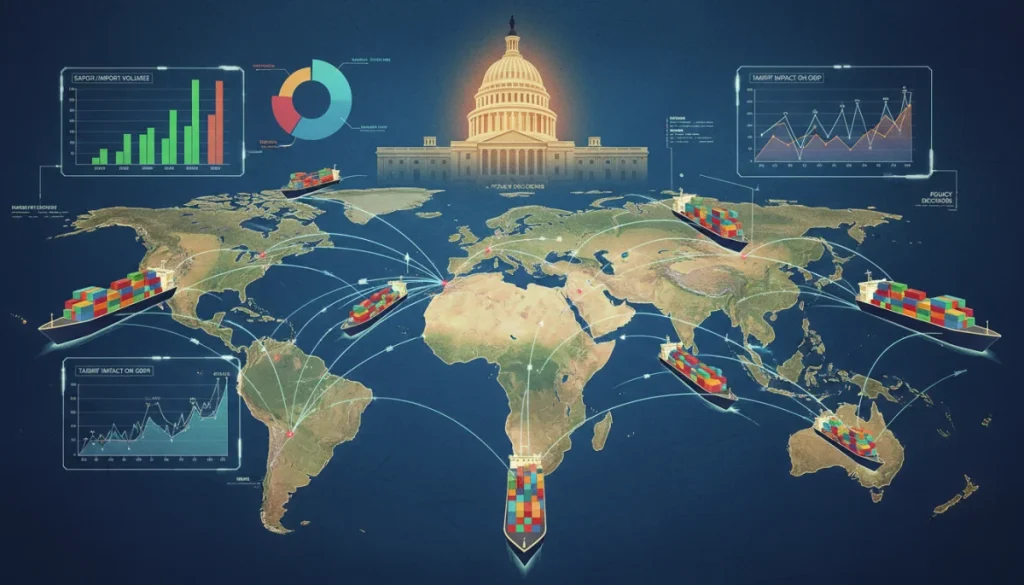
The latest U.S. trade policies, particularly the implementation of tariffs on key imports, significantly influence business profit margins by increasing operational costs and altering market dynamics.
Understanding the latest U.S. trade policies: How tariffs on key imports affect profit margins is crucial for any business operating in today’s dynamic global economy. These policies, often designed to protect domestic industries or address perceived unfair trade practices, can create significant ripple effects throughout supply chains and ultimately impact a company’s bottom line. Delving into the intricacies of these regulations is essential for strategic planning and maintaining competitiveness.
The mechanics of U.S. trade policies and tariffs
U.S. trade policies are a complex web of laws, regulations, and international agreements designed to govern the exchange of goods and services between the United States and other countries. Tariffs, a primary tool within this policy framework, are essentially taxes levied on imported goods. These taxes can be ad valorem (a percentage of the import’s value) or specific (a fixed charge per unit).
The implementation of tariffs is often driven by various economic and political objectives. Governments might impose tariffs to protect domestic industries from foreign competition, incentivize local production, or retaliate against perceived unfair trade practices by other nations. The process typically involves investigations by bodies like the U.S. International Trade Commission (USITC) and decisions by the executive branch.
Types of tariffs and their application
There are several classifications of tariffs, each with distinct implications for businesses. Understanding these distinctions is vital for accurately assessing potential impacts on profit margins. For instance, specific tariffs are easier to calculate but do not account for price fluctuations, while ad valorem tariffs adjust with the value of the imported good.
- Ad valorem tariffs: Calculated as a percentage of the imported good’s value.
- Specific tariffs: A fixed monetary charge per unit of the imported good.
- Compound tariffs: A combination of ad valorem and specific tariffs.
- Retaliatory tariffs: Imposed in response to trade actions by another country.
The application of these tariffs can vary widely across different product categories and countries of origin, making it imperative for businesses to closely monitor specific policy changes relevant to their supply chains. The immediate effect is an increase in the cost of importing goods, which then triggers a series of downstream consequences for businesses.
In conclusion, U.S. trade policies and the tariffs they employ are multifaceted instruments with significant power to reshape economic landscapes. Businesses must develop a nuanced understanding of these mechanisms to effectively navigate the challenges and opportunities they present.
Direct impact on import costs and raw materials
The most immediate and discernible effect of tariffs on businesses is the direct increase in the cost of imported goods and raw materials. When tariffs are imposed, importers must pay an additional tax to the government, which directly raises their acquisition costs. This fundamental shift can have profound implications for businesses that rely heavily on international supply chains.
For manufacturers, this often means higher expenses for components, machinery, and raw materials sourced from abroad. Similarly, retailers face increased costs for finished goods brought into the country. These elevated input costs can quickly erode profit margins if not managed effectively through strategic adjustments.
Supply chain re-evaluation and diversification
Many companies respond to increased import costs by re-evaluating their entire supply chain. This often involves looking for alternative suppliers in countries not subject to the same tariffs, or even exploring domestic sourcing options. While this can mitigate some tariff-related expenses, it often comes with its own set of challenges.
- New supplier vetting: Requires time and resources to ensure quality and reliability.
- Logistical adjustments: Changes in shipping routes, lead times, and transportation costs.
- Quality control issues: Potential for inconsistent product quality from new sources.
- Increased administrative burden: Managing relationships with multiple new suppliers.
Diversifying supply chains can be a prudent long-term strategy, but the short-term transition can be costly and disruptive. Businesses must weigh the benefits of tariff avoidance against the potential risks and expenses associated with altering established supply networks.
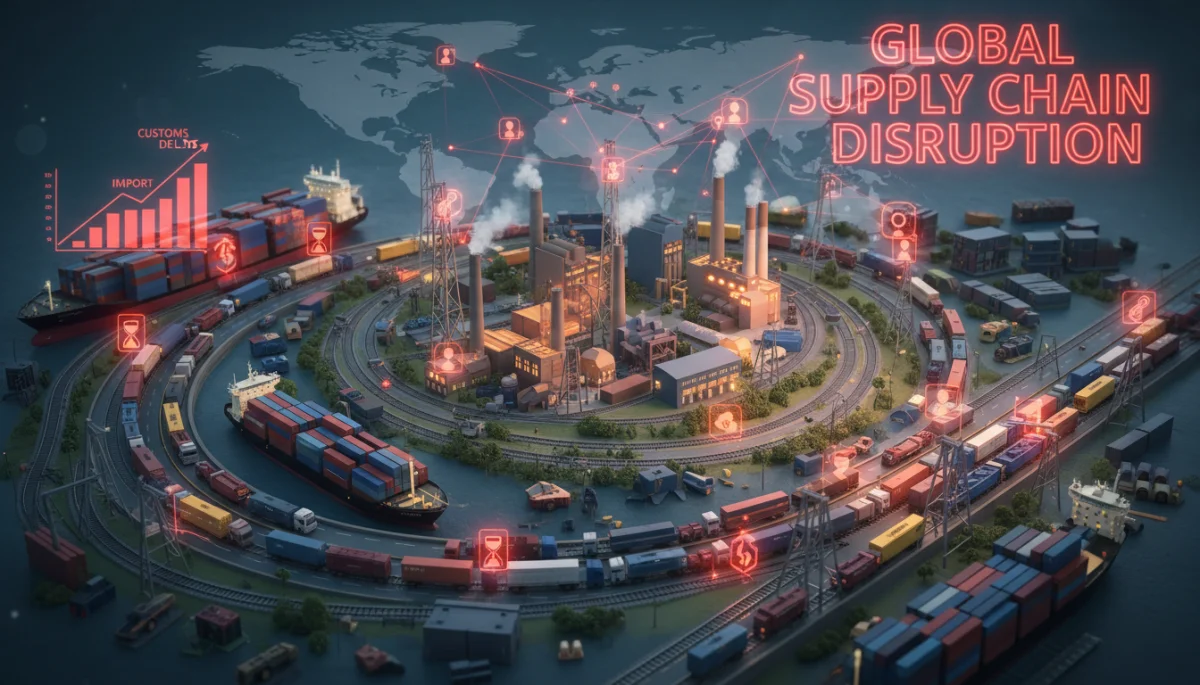
Furthermore, the increased cost of raw materials can lead to a domino effect throughout an industry. Companies that process these materials will see their expenses rise, which may then be passed on to their customers. This ripple effect can eventually reach the end consumer through higher prices, potentially impacting demand for various products.
Ultimately, the direct impact of tariffs on import costs necessitates a thorough analysis of a company’s cost structure and a proactive approach to supply chain management. Ignoring these changes can lead to significant reductions in profitability.
Passing costs to consumers: pricing strategies
When faced with increased import costs due to tariffs, businesses often confront a critical decision: absorb the additional expenses, or pass them on to consumers through higher prices. This choice involves delicate balancing acts, considering market demand, competitive landscape, and brand perception. Pricing strategies become central to maintaining profit margins.
If a company decides to absorb the costs, its profit margins will directly shrink. This might be a viable short-term strategy for businesses with strong financial reserves or those operating in highly competitive markets where price sensitivity is high. However, sustained absorption can be unsustainable.
Navigating consumer price sensitivity
The ability to pass on tariff-induced costs to consumers largely depends on the elasticity of demand for a company’s products. For essential goods with inelastic demand, consumers may be more willing to accept higher prices. However, for discretionary items, price increases can lead to a significant drop in sales volume.
- Market research: Understanding consumer willingness to pay.
- Competitive analysis: Assessing how competitors are adjusting prices.
- Brand loyalty: Strong brands may have more leeway for price adjustments.
- Value proposition: Emphasizing unique benefits to justify higher prices.
Businesses must carefully analyze their market position and consumer behavior before implementing price changes. A misstep can lead to reduced sales, loss of market share, and long-term damage to brand reputation.
Alternatively, some companies might opt for a hybrid approach, absorbing a portion of the costs while passing on the remainder. This strategy aims to minimize the impact on both profit margins and consumer demand. It requires careful calculation and continuous monitoring of market reactions.
In essence, pricing strategies become a crucial lever for businesses to manage the financial repercussions of tariffs. The chosen approach must align with broader business objectives and market realities to effectively preserve profitability.
Impact on international competitiveness and market share
U.S. trade policies and tariffs not only affect domestic businesses directly but also have significant implications for their international competitiveness and overall market share. When tariffs increase the cost of imported goods, it can make domestically produced alternatives more attractive, but it can also raise costs for U.S. exporters who rely on imported components.
For U.S. companies that export products, tariffs imposed by other countries in retaliation can severely hinder their ability to compete globally. This can lead to decreased export volumes, reduced revenues, and a loss of market share in key international markets. The interconnectedness of global trade means that unilateral tariff actions often invite reciprocal measures.
Challenges for U.S. exporters
U.S. exporters often find themselves caught in the crossfire of trade disputes. Even if they do not import directly, their finished products might incorporate components that have been subject to tariffs, increasing their production costs. Moreover, foreign tariffs on U.S. goods make them more expensive and less competitive overseas.
- Reduced export demand: Foreign buyers may opt for cheaper alternatives.
- Supply chain complexity: Sourcing domestic components can be challenging.
- Market access issues: Tariffs can create barriers to entering new markets.
- Reputational damage: Being perceived as less reliable due to policy instability.
The erosion of international competitiveness can have long-lasting effects, as regaining lost market share can be incredibly difficult. Businesses need to consider the broader geopolitical context and potential retaliatory measures when assessing the risks associated with U.S. trade policies.
Conversely, domestic industries that benefit from protective tariffs may see an initial boost in sales as imported goods become more expensive. However, this protection can also lead to reduced innovation and efficiency if there is less pressure from foreign competition. The long-term effects of such protection can be mixed, potentially leading to complacency.
Ultimately, the impact on international competitiveness and market share underscores the complex and often unpredictable nature of trade policies. Businesses must remain agile and adaptable to navigate these evolving global trade dynamics.

Strategic responses to tariff challenges
In the face of evolving U.S. trade policies and the imposition of tariffs, businesses must develop robust strategic responses to mitigate negative impacts on their profit margins. Proactive planning and diversified approaches are key to navigating these challenges successfully. Simply reacting to each new policy change is often insufficient.
One primary strategy involves a thorough analysis of the existing supply chain to identify vulnerabilities and opportunities. This includes mapping out all suppliers, understanding their origins, and assessing the potential impact of tariffs on each component. Armed with this information, companies can then explore alternative sourcing options or negotiate better terms with existing suppliers.
Diversification and localization
Many businesses are increasingly looking towards diversification of their supply chains, reducing reliance on single countries or regions that are prone to tariff disputes. This might involve establishing manufacturing facilities in multiple locations or sourcing from a broader range of international suppliers.
- Multi-country sourcing: Spreading risk across different geopolitical landscapes.
- Nearshoring/reshoring: Bringing production closer to home or back to the U.S.
- Inventory management: Optimizing stock levels to buffer against supply disruptions.
- Technological adoption: Utilizing automation to reduce labor costs and increase efficiency.
Localization, or bringing production closer to the end market, can also be an effective strategy. While it might involve initial investment, it can reduce transportation costs, shorten lead times, and make businesses less susceptible to international trade fluctuations. This also aligns with consumer preferences for locally sourced products in many instances.
Beyond supply chain adjustments, businesses can also focus on innovation and product differentiation. By offering unique products or services, companies can create a stronger value proposition that justifies potential price increases. Investing in research and development can lead to proprietary technologies or processes that provide a competitive edge, insulating them somewhat from tariff impacts.
In conclusion, a multi-pronged strategic approach, encompassing supply chain optimization, diversification, localization, and innovation, is essential for businesses to effectively respond to the challenges posed by U.S. trade policies and tariffs.
Long-term economic implications and adaptation
The long-term economic implications of U.S. trade policies extend far beyond immediate profit margin adjustments. These policies can fundamentally reshape global trade patterns, foster new industrial landscapes, and influence international relations. Businesses must consider these broader trends when formulating their long-term adaptation strategies.
Sustained tariff regimes can lead to a phenomenon known as trade diversion, where trade shifts from more efficient, tariff-affected suppliers to less efficient, non-tariff-affected ones. While this might protect some domestic industries, it can also lead to higher overall costs for consumers and reduced global economic efficiency. Businesses that can adapt to these new trade flows will be better positioned.
Technological advancement and automation
One significant long-term adaptation strategy involves accelerating technological advancement and automation. By investing in robotics, artificial intelligence, and advanced manufacturing processes, companies can reduce their reliance on labor-intensive production, which can offset some of the increased material costs due to tariffs.
- Increased efficiency: Automation can streamline production and reduce waste.
- Reduced labor costs: Less dependence on human labor in manufacturing.
- Enhanced quality control: Automated systems can improve product consistency.
- Supply chain resilience: Automation within logistics can mitigate disruptions.
This shift towards automation not only helps mitigate tariff impacts but also positions businesses for future competitiveness in an increasingly digital and automated global economy. However, it requires significant capital investment and a skilled workforce capable of managing these advanced technologies.
Another long-term implication is the potential for increased domestic investment and job creation in sectors that benefit from tariff protection. While this can be a positive outcome for the national economy, it also raises questions about the efficiency and sustainability of industries that rely on ongoing protection from foreign competition. Businesses need to evaluate whether these opportunities are genuine and sustainable.
Ultimately, adapting to the long-term economic implications of U.S. trade policies requires foresight, strategic investment, and a willingness to embrace significant operational changes. Companies that can successfully navigate these shifts will emerge stronger and more resilient in the evolving global marketplace.
Navigating policy uncertainty and future outlook
The landscape of U.S. trade policies is often characterized by uncertainty, with changes driven by shifts in political administrations, geopolitical events, and evolving economic conditions. For businesses, navigating this unpredictability is a continuous challenge that demands vigilance and flexible planning. Understanding the potential future outlook is vital for sustained success.
Policy uncertainty makes long-term investment decisions more complex. Companies might delay expanding operations, investing in new technologies, or entering new markets if they are unsure about future tariff regimes or trade agreements. This hesitancy can stifle economic growth and innovation, impacting profit margins over time.
Forecasting and scenario planning
To counter policy uncertainty, businesses are increasingly employing sophisticated forecasting and scenario planning techniques. This involves developing various hypothetical trade policy scenarios and assessing their potential impact on operations, supply chains, and financial performance. By preparing for multiple outcomes, companies can build greater resilience.
- Economic modeling: Simulating the effects of different tariff levels.
- Political analysis: Monitoring government rhetoric and policy proposals.
- Market intelligence: Gathering data on global trade flows and competitor actions.
- Contingency planning: Developing alternative strategies for various scenarios.
Engaging with trade associations, lobbying groups, and government relations experts can also provide valuable insights into potential policy shifts. Staying informed allows businesses to anticipate changes rather than merely react to them, enabling more proactive adjustments to their strategies.
The future outlook for U.S. trade policies suggests continued emphasis on strategic competition, particularly with major economic powers. This could mean ongoing targeted tariffs, increased scrutiny of intellectual property, and efforts to reshore critical supply chains. Businesses should prepare for a world where trade policy remains a significant factor in global commerce.
In conclusion, navigating policy uncertainty and anticipating the future outlook are critical for businesses aiming to protect and enhance their profit margins amidst evolving U.S. trade policies. Agility, informed decision-making, and robust contingency planning are paramount.
| Key Aspect | Brief Description |
|---|---|
| Direct Cost Increase | Tariffs directly raise import costs for raw materials and finished goods, impacting immediate profit margins. |
| Supply Chain Disruption | Forces businesses to re-evaluate and potentially diversify sourcing, leading to new logistical challenges. |
| Pricing Strategies | Businesses must decide whether to absorb costs or pass them to consumers, affecting sales and market share. |
| Global Competitiveness | Tariffs can reduce the competitiveness of U.S. exports and alter international market dynamics. |
Frequently asked questions about U.S. trade policies
The primary purpose of U.S. tariffs is often to protect domestic industries from foreign competition, encourage local production, or address perceived unfair trade practices by other nations. They serve as a tool to influence international trade flows and safeguard national economic interests.
Tariffs directly affect profit margins by increasing the cost of imported goods and raw materials. This additional expense, if not passed on to consumers, reduces the difference between revenue and costs, thereby shrinking the net profit generated by a business.
Yes, businesses can mitigate tariff impacts by diversifying their supply chains and seeking suppliers in countries not subject to tariffs. However, this often involves new logistical challenges, potential quality control issues, and the need for thorough vetting of new partners.
Long-term economic consequences of sustained tariffs can include trade diversion, higher consumer prices, reduced global economic efficiency, and altered international trade patterns. They can also spur domestic investment in protected sectors but potentially reduce overall innovation.
Businesses can prepare for U.S. trade policy uncertainty through forecasting, scenario planning, and diversifying supply chains. Engaging with trade associations and staying informed on geopolitical developments also helps anticipate changes and develop robust contingency plans.
Conclusion
The intricate landscape of U.S. trade policies and the application of tariffs represent a significant factor for businesses operating within and exporting from the United States. These measures directly influence import costs, compel shifts in supply chain strategies, and necessitate careful consideration of pricing. While tariffs aim to protect domestic industries, their ripple effects extend to international competitiveness and long-term economic adaptation. Businesses that prioritize informed decision-making, strategic diversification, and proactive engagement with policy developments will be best equipped to navigate this ever-evolving environment and safeguard their profit margins.
